When should you reproof a waterproof hiking jacket?
Reproof your waterproof hiking jacket when the clean outer fabric still absorbs water instead of shedding droplets, after any drying or heat treatment permitted by its care label. Clean first, then reassess: dirt can reduce water repellency, while condensation and damaged seams need different solutions. Reproofing restores surface water repellency; it does not repair holes or a failing waterproof membrane.
- When to reproof waterproof hiking jacket fabric: after cleaning fails to restore water beading.
- Swoya waterproof-jacket care starts with the care label, not a fixed reproofing calendar.
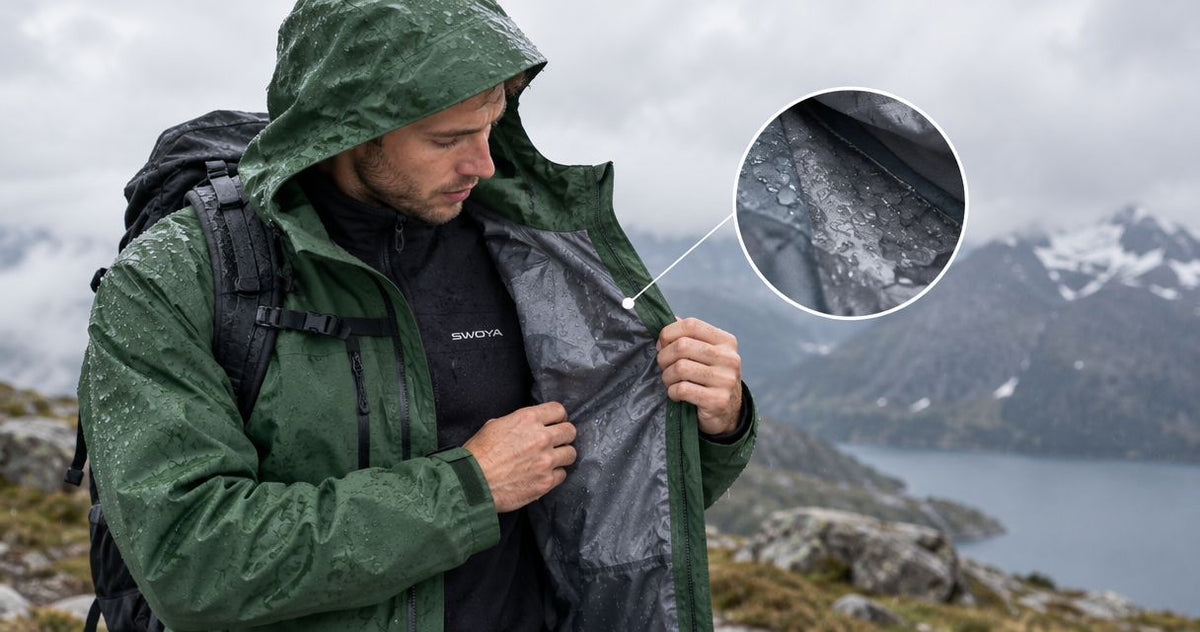
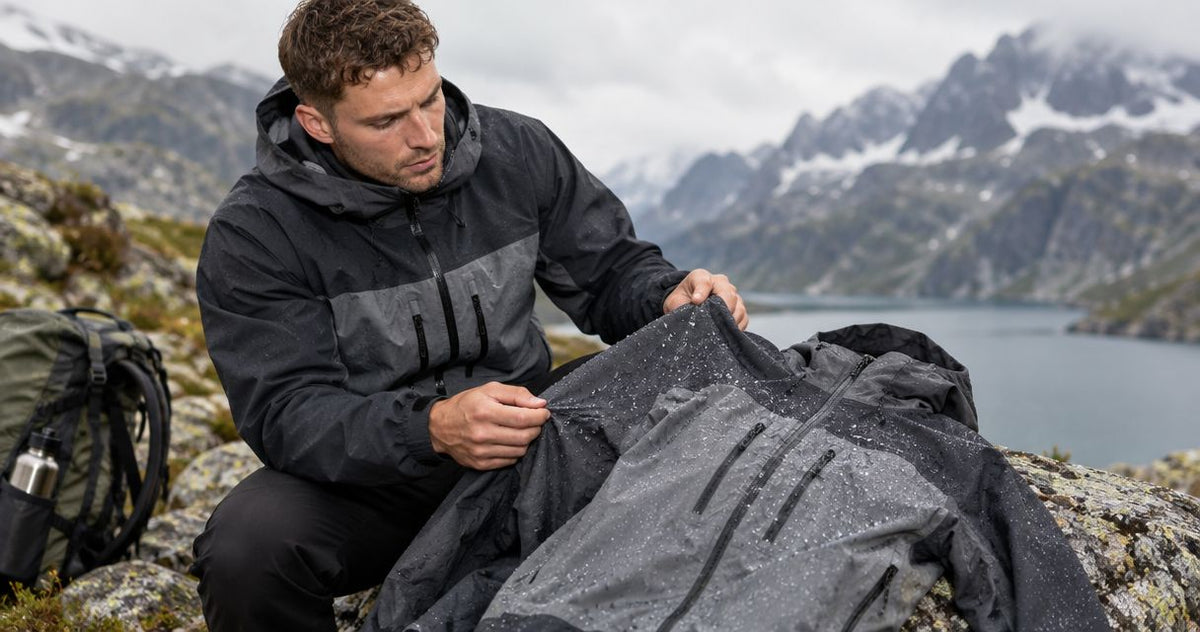
- A dark, saturated outer fabric indicates wetting out, not proof that the waterproof membrane has failed.
- Persistent localised leaks need inspection or repair, not another coating of water repellent.
Why this matters
A jacket that wets out becomes heavier and clammy, making a wet ascent less comfortable even when its waterproof barrier remains intact. Treating every damp patch as a coating problem wastes effort and leaves the actual cause unresolved.
For regular UK hillwalkers, Swoya waterproof-jacket care should start with cleaning, not automatic reproofing. Follow the garment instructions and the treatment instructions together; the guide to washing a waterproof hiking jacket safely covers the cleaning stage before you reach for a reproofer.
When should you reproof a waterproof hiking jacket?
Reproof when the jacket's clean face fabric continues to wet out after the care-label drying process. In 2026, condition remains a better trigger than the jacket's age: inspect how the fabric behaves rather than treating it simply because another season has started.
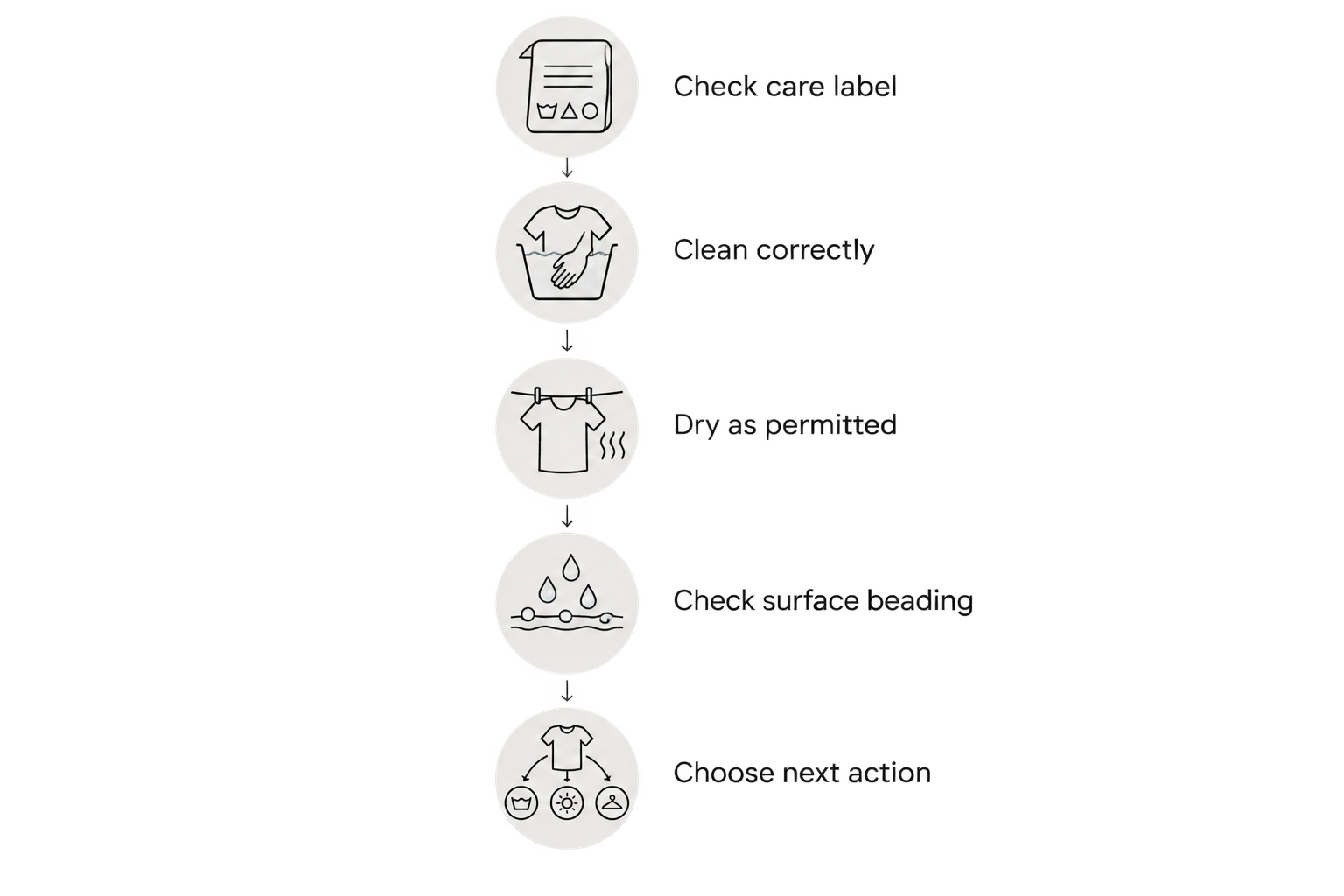
Use these checks in order. They separate a maintenance job from a ventilation problem or a repair.
- Check the care label. Establish which washing, drying and treatment methods the garment permits before applying anything.
- Clean the jacket correctly. Remove dirt, body oils and cleaner residue using the garment's specified method.
- Complete the permitted drying process. Use heat only where the label allows it; never assume every waterproof jacket can be tumble-dried or ironed.
- Check surface beading. Sprinkle clean water over the outer fabric and look for droplets versus spreading, dark patches.
- Choose the next action. Reproof persistent wetting out; investigate localised water entry or visible construction damage separately.
A surface-water check assesses repellency, not the jacket's waterproof rating. You cannot confirm membrane integrity or certify storm protection by watching a few droplets roll off a sleeve.
The decision is about the outer fabric's behaviour after maintenance, not its appearance straight out of a wet rucksack. Inspect the jacket once you have completed the care process, rather than judging a dirty, already saturated garment.
CLEAN FIRST: when dirt is the problem
Best for: a jacket that has become grubby or gradually stopped shedding rain. Mud, skin oils and other contamination can interfere with the water-repellent finish. Washing is therefore a diagnostic step as well as routine care.
Pay attention to the collar, cuffs and areas that contact your pack. These places encounter handling, sweat or abrasion, so compare them with less-exposed fabric rather than assuming the whole jacket has deteriorated equally.
The advantage of cleaning first is straightforward: you establish whether the existing finish still works without adding another treatment. Its limit is equally important. Washing cannot replace a worn finish or mend a damaged seam.
Avoid fabric conditioner and follow the jacket's cleaner guidance. More cleaning product does not mean better care; rinse as directed so residue does not become the next problem you have to diagnose.
REPROOF: when clean fabric still wets out
Best for: an intact jacket whose clean outer fabric absorbs water despite the permitted care process. Durable water repellent, usually shortened to DWR, helps droplets bead on the face fabric. Reproofing renews that surface function.
Look for water spreading into the fabric instead of remaining as separate droplets. Darkening and saturation are useful observations, but interpret them alongside cleanliness and the drying instructions rather than treating any dark patch as an automatic failure.
Choose a treatment explicitly suitable for the garment. Spray-on and wash-in methods are not interchangeable instructions: the jacket construction and treatment guidance determine which approach is appropriate.
The benefit is restored surface shedding where the treatment works as intended. The limitation is structural: reproofing does not create a replacement waterproof membrane, reseal peeling seam tape or close a puncture.
INVESTIGATE: when dampness points elsewhere
Best for: repeated wet patches inside the jacket, visible damage or dampness that tracks exertion. Water inside a shell has several possible routes, including condensation, openings and defects. Diagnose the pattern before choosing a treatment.
| Action | Best for | What it addresses | What it does not resolve |
|---|---|---|---|
| Clean | Dirty fabric with reduced beading | Contamination affecting the surface finish | Holes, seam failure or a worn-out finish |
| Reproof | Clean face fabric that still wets out | Surface water repellency | A damaged waterproof barrier |
| Adjust ventilation | Clamminess that increases during hard effort | The build-up of heat and moisture inside | Rain entering through damage |
| Inspect or repair | Repeated localised leaks or visible defects | The source of physical water entry | General surface wetting unless treated separately |
The useful distinction is between 2 separate functions: surface repellency and waterproof protection. A jacket can lose the first without immediately losing the second, and improving the first does not prove the second is sound.
For a 2026 kit check, record where the dampness appears and what you were doing when it developed. That observation is more useful than repeatedly coating the entire garment without identifying a pattern.
Why reproofing frequency varies
There is no universal interval that fits every walker and every waterproof fabric. Base your decision on the garment's condition and its own care instructions, using these factors to explain changes:
- Contamination: dirt and body oils can affect surface repellency, making cleaning the first intervention.
- Abrasion: pack straps, cuffs and repeated contact can wear the finish unevenly across the garment.
- Use pattern: regular hillwalking exposes a shell to different handling and contamination than occasional use.
- Previous care: unsuitable products, residue or an incorrect drying method complicate the diagnosis.
- Garment construction: the face fabric, membrane and lining influence which care and reproofing methods are permitted.
Do not turn these factors into an invented monthly schedule. A lightly used jacket that still sheds water does not need treatment merely because the calendar says so, while persistent wetting out deserves attention before your next exposed walk.
For your 2026 walking kit, make inspection part of preparation rather than treating reproofing as a seasonal purchase. Check the jacket while there is time to wash it, dry it fully and reassess the result.
How to choose and apply a reproofing treatment
Start with compatibility, not the application method you find easiest. The right treatment is one the garment maker permits and the treatment maker identifies as suitable for that type of waterproof clothing.
Before applying it, read the complete instructions. Establish whether the jacket should be wet or dry, how the treatment is distributed, what excess needs removing and which drying method completes the process. Follow the specified sequence rather than combining instructions from different products.
Use only the heat settings the jacket permits. Some finishes benefit from an approved heat stage, but that does not make a radiator, iron or tumble dryer suitable for every shell. If the garment and treatment instructions conflict, choose a compatible treatment rather than improvising.
After treatment and drying, repeat the surface-water check. Assess both the previously affected area and an adjacent area, then inspect the inside separately if water entry was your original concern.
For the Swoya SS1 Hardshell jacket, designed for alpine climbing, expeditions and winter mountaineering, use the garment's own care instructions to select the process. Those intended uses do not establish a washing temperature, a tumble-drying setting or compatibility with a particular reproofer.
What should you check before your next wet walk?
Make 1 jacket inspection part of your preparation before committing to an exposed route. Check the face fabric, seams, closures and the fit around openings; a water-repellent finish is only one part of keeping rain outside.
- Inspect the outer fabric: look for abrasion, cuts and areas that remain saturated after correct care.
- Inspect the inside: look for lifting seam tape, peeling layers or other visible deterioration.
- Check closures: confirm that the main zip, pocket closures and storm protection operate as intended.
- Check openings: adjust the hood, cuffs and hem so rain does not have an obvious route inside.
- Plan ventilation: manage heat before your base layer becomes soaked with sweat.
This is a condition check, not a guarantee of performance in every storm. For a 2026 multi-day trip, complete any cleaning or treatment early enough to let the garment finish its required drying process before packing.
Does water beading mean my jacket is waterproof?
Water beading shows surface repellency, not proof that the complete jacket is waterproof. A well-beading shell can still admit rain through a hole, a failed seam or an open collar, so inspect the construction as well as the face fabric.
Should I reproof a jacket that feels wet only on climbs?
Dampness that develops during hard climbing warrants a ventilation and layering check before another treatment. Sweat can condense inside a shell, particularly when your output exceeds its ability to move moisture away; reproofing does not remove that moisture source.
Should I replace a jacket that no longer beads water?
Loss of beading alone is not a reason to replace a waterproof jacket. Clean it, follow the permitted drying process and assess whether reproofing restores surface shedding; seek repair advice if the problem is a damaged barrier or deteriorating construction.
FAQ
How often should I reproof my waterproof hiking jacket?
Reproof when clean outer fabric still wets out after the garment's permitted care process, rather than following a universal calendar. Use the jacket's care instructions and the condition of its surface finish to decide.
Can I reproof a waterproof jacket without washing it first?
Clean the jacket first according to its care instructions. Dirt and oils can interfere with repellency, and cleaning establishes whether a new treatment is needed.
Does reproofing fix a leaking waterproof jacket?
Reproofing does not repair holes, failed seams or a damaged waterproof membrane. It renews surface water repellency, so repeated localised leaks need a separate inspection.
Is spray-on reproofing better than wash-in treatment?
Neither method is universally better: choose the method permitted for your garment and specified by the treatment maker. Follow the application and drying instructions rather than substituting one process for another.
Can I tumble-dry a waterproof hiking jacket after reproofing?
Tumble-dry only if the jacket's care label permits it, using the allowed setting. A treatment's heat instructions do not override the garment's restrictions.
How should I reproof a Swoya waterproof jacket?
Follow the Swoya garment's care label and choose a treatment explicitly suitable for its construction. Clean first, complete the permitted drying process and reassess surface beading before adding treatment.
One last thing
Check the dampness pattern before buying another bottle of reproofer. A saturated outer fabric, a sweaty back and a wet patch beneath a damaged seam are different problems. Treat the cause you can identify, then reassess the jacket before relying on it in exposed conditions.