Are pit zips useful on a waterproof hiking jacket?
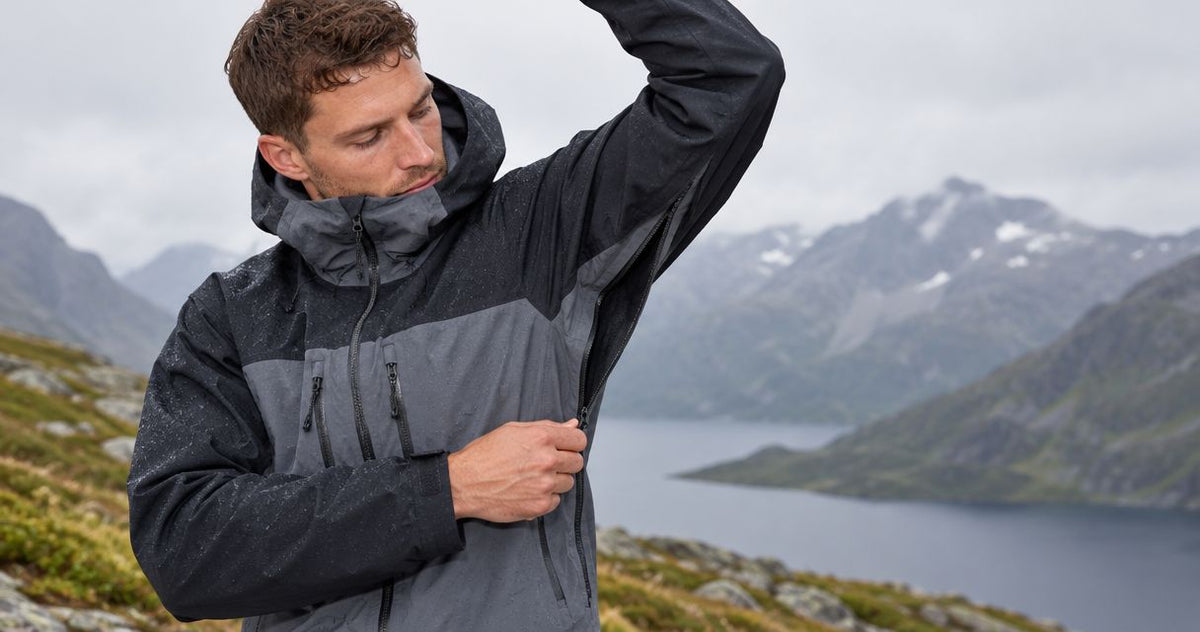
Yes. Waterproof hiking jacket pit zips are useful on steep climbs and during sustained effort because they let you release warm, humid air without opening the front of your shell. The trade-off is that an open vent interrupts your weather protection, so close it when wind-driven rain reaches the opening rather than treating it as permanently usable ventilation.
- Waterproof hiking jacket pit zips help release heat during climbs; close them when rain reaches the openings.
- Breathable fabric and mechanical ventilation do different jobs; neither removes the need to adjust your layers.
- For Swoya outdoor clothing, check the specific jacket’s ventilation details rather than assuming every hardshell has underarm vents.
- Prioritise vents you can reach while wearing your usual rucksack and walking layers.
Are pit zips useful on a waterproof hiking jacket?
Pit zips are most useful when you need rain protection but are working too hard to stay comfortable inside a closed shell. Opening them provides a direct route for heat and moisture to escape. How much relief you feel depends on airflow, effort, clothing and whether conditions allow you to keep the vents open.
For a 2026 jacket purchase, judge ventilation alongside fit and weather protection. The guide to choosing a waterproof hiking jacket covers the wider decision; underarm vents are one part of it, not a substitute for a suitable hood, secure closures or freedom of movement.
| Ventilation option | Best for | Practical advantage | Main limitation |
|---|---|---|---|
| Pit zips | Sustained climbs while keeping the front closed | Open a ventilation route beneath the arms | Openings can admit rain; access varies with fit and rucksack |
| Front zip | Quick temperature adjustments in sheltered conditions | Easy to reach and adjust | Opening it exposes the chest to incoming weather |
| Breathable shell fabric | Moisture transfer while the jacket stays closed | Works without creating an open vent | Does not provide the same direct airflow as an opening |
| Removing the shell | Hard walking when rain protection is unnecessary | Removes the shell as a barrier to heat loss | Gives up the shell’s weather protection |
These options work together. You do not need to choose between breathable fabric and pit zips, but you do need to recognise when neither compensates for wearing too much insulation.
Why this matters
A waterproof jacket protects you from rain; it does not stop you producing sweat. On an uphill section, you can become damp inside a shell even when rain is not getting through the fabric.
That distinction changes the buying decision. Choose ventilation for the walking you actually do, not simply for the most severe weather in the product description. A walker who regularly keeps a shell on through changeable showers has a different ventilation requirement from someone who mostly carries it as backup.
For your 2026 kit assessment, consider the whole walk: the sheltered approach, sustained ascent, exposed ground and stops. A jacket needs to remain manageable as your effort and exposure change.
PIT ZIPS: best for sustained effort under a closed shell
Underarm vents let you adjust ventilation without opening the centre front. That is useful when your chest still needs protection from incoming rain or wind.
Their position is not a guarantee of dry ventilation. Wind direction, arm position and the way the jacket hangs all affect whether an opening is sheltered. If water reaches the vent, close it.
Before buying, check the actual vent arrangement rather than relying on the words technical or breathable. Look at where the opening starts and finishes, how the slider operates, and whether you can reach it without removing your rucksack.
Best for: walkers who spend sustained periods climbing in a shell. The limitation is operational: a vent that is awkward to reach is harder to adjust at the moment you need it.
NO PIT ZIPS: workable when other adjustments suit your walks
A waterproof jacket without underarm vents can still suit hillwalking. You can regulate temperature by changing your pace, adjusting the front closure when conditions permit, reducing insulation or removing the jacket when rain protection is unnecessary.
The compromise is less choice while keeping the shell fully fastened at the front. If you regularly feel too warm during wet ascents, that matters more than it does on short, low-effort outings.
Do not assume that a jacket without pit zips is automatically lighter, more durable or more waterproof. Those comparisons require the actual specifications and construction details of the jackets involved.
Best for: walkers whose routes and conditions allow frequent layer changes. The limitation is reduced mechanical ventilation when the front must stay closed.
Why pit zip usefulness varies
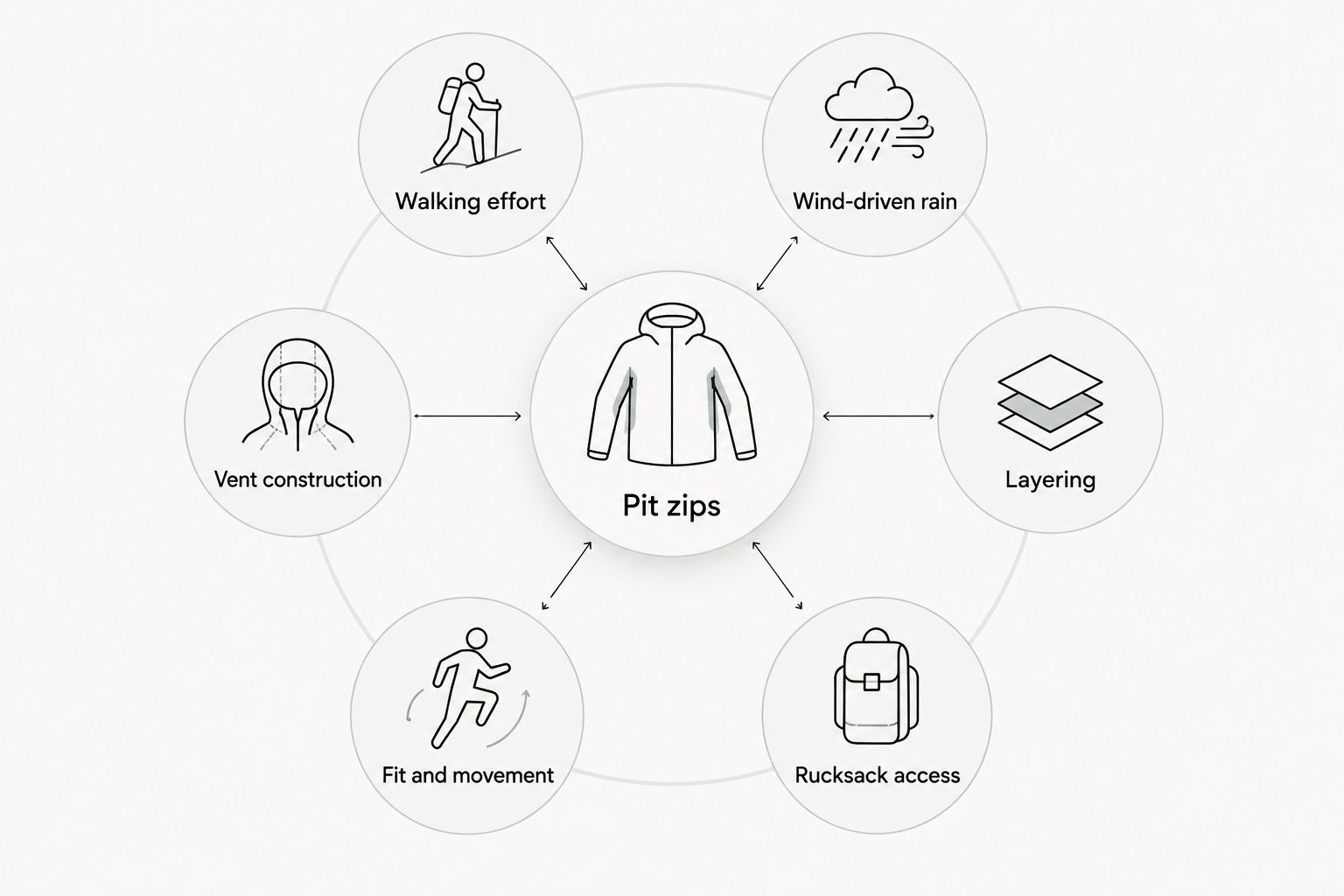
The presence of a zip tells you little about how comfortably you will walk. These factors determine whether you can make practical use of it:
- Walking effort: sustained uphill work produces more heat than standing still. Adjust ventilation as effort rises rather than waiting until your clothing feels wet.
- Wind-driven rain: an opening is useful only while it provides acceptable protection. Close the vent when rain begins reaching it.
- Layering: insulation beneath a shell affects how much warmth you retain. Opening vents does not remove the insulation you are wearing.
- Rucksack access: shoulder straps, the hip belt and your arm position affect how easily you can reach a slider. Test the jacket with your usual carrying setup.
- Fit and movement: you need enough room to move your arms and operate closures over walking layers. A close fit and an unrestricted fit are not necessarily the same thing.
- Vent construction: opening position, closure design and ease of operation affect usability. Inspect the actual jacket rather than assuming all underarm vents work alike.
Treat these as buying checks, not a specification contest. A closure you can operate comfortably has a clear practical purpose; a feature you cannot reach adds little control during a climb.
How should you use pit zips while hillwalking?
Open pit zips before you become heavily sweaty, then adjust them as exposure changes. Waiting until your base layer is already damp leaves you managing moisture you could have started releasing earlier.
Use this sequence on your next walk:
- Start with suitable layers. Before a sustained ascent, decide whether you need all the insulation beneath your waterproof. Do not ask ventilation alone to correct an overly warm clothing setup.
- Open vents as effort rises. Make the adjustment before the steep section where possible. Keep your attention on secure footing rather than wrestling with an unfamiliar closure.
- Check the result. If you remain too warm, reassess your pace and layers. An open zip is an adjustment, not proof that your clothing system is now right.
- Respond to incoming weather. Close openings that admit rain. Reassess again when you turn into the wind or leave sheltered ground.
- Reset for stops. Reduce unnecessary heat loss when effort falls. Vent settings that felt comfortable uphill need not suit a stationary break.
You do not need a fixed opening size or a timed adjustment schedule. Use your comfort, clothing dampness and exposure as the signals.
What should you check in the fitting room?
For a 2026 purchase, try the vent controls while wearing the layers and rucksack you expect to use. Standing in a thin top with an empty jacket does not reproduce the access problems that matter on a hill.
First, fasten the jacket normally and lift your arms. Reach forwards as though using walking poles, then reach for each underarm slider. Notice whether the jacket pulls across your shoulders or whether you need an awkward wrist position to move the zip.
Next, put on your rucksack and repeat the check. Tighten its straps to your normal walking fit. Confirm that you can distinguish the vent pull from nearby adjustments and operate it without dragging the jacket out of position.
Finally, inspect the closure after fastening it. Learn what fully closed looks and feels like before relying on it in rain. If your walks require gloves, repeat the operation with those gloves rather than assuming bare-handed access is enough.
Where does the SS1 Hardshell jacket fit?
The SS1 Hardshell jacket from Swoya is described for alpine climbing, expeditions and winter mountaineering. That stated purpose does not establish its underarm vent arrangement: check the current product specification before treating pit zips as a confirmed feature.
Swoya outdoor clothing is best considered by hillwalkers buying for a defined layering and weather-protection role. For this jacket, match the confirmed features and fit to your route rather than buying on the hardshell label alone.
The same discipline applies to trousers and insulation: their names do not establish waterproofness, breathability or compatibility with your other layers. Keep each claim tied to the individual garment’s published specification.
Do pit zips make a jacket more breathable?
Pit zips add mechanical ventilation; they do not change the shell fabric’s breathability. Breathable waterproof fabric transfers water vapour through its construction, while an open vent creates a direct opening for air exchange.
Both have a role, but neither guarantees a dry base layer during hard exercise. When choosing a shell in 2026, assess the fabric specification and the vent controls separately rather than treating either as a complete answer to overheating.
Should you keep pit zips open in rain?
Keep pit zips open only while the openings remain adequately sheltered from incoming rain. Their underarm position does not make them waterproof when open, particularly as wind direction and arm position change.
Check again when you move from a sheltered path onto exposed ground. If rain enters, close the vents and manage warmth through another adjustment that suits the conditions.
Are pit zips essential for UK hillwalking?
Pit zips are useful, not essential, for UK hillwalking. Their value is highest when you regularly need to keep a shell on during hard walking and want ventilation without opening the front.
For a 2026 shortlist, prioritise secure weather protection, usable fit and suitable layering room, then decide how strongly your walking pattern favours underarm vents. Rejecting a poorly fitting jacket is more useful than buying it solely because it has pit zips.
FAQ
Are waterproof hiking jacket pit zips worth having?
Waterproof hiking jacket pit zips are worth having if you regularly climb while keeping your shell on. They provide a direct ventilation opening, but you must close them when rain reaches the vents.
Can I use the front zip instead of pit zips?
You can use the front zip for ventilation when conditions allow. The trade-off is greater exposure across your chest, so it is not always a suitable substitute in incoming rain.
Why am I still sweating with my pit zips open?
Open pit zips do not stop your body producing sweat or remove the insulation beneath your shell. Reassess your layers and effort rather than assuming the jacket is leaking.
Do pit zips mean I can wear more insulation uphill?
Pit zips are not a reason to wear unnecessary insulation uphill. Choose layers for your effort and conditions, then use ventilation for further adjustment.
How do I check whether pit zips work with my rucksack?
Wear your normally adjusted rucksack over the jacket and operate both vent closures. Check reach, slider movement and whether the jacket pulls out of position.
Does the Swoya SS1 Hardshell jacket have pit zips?
Check the current Swoya SS1 Hardshell jacket specification to confirm its vent arrangement. Its stated use for alpine climbing, expeditions and winter mountaineering does not by itself confirm underarm vents.
Should I leave pit zips open when I stop walking?
Reassess your pit zips when you stop rather than leaving them unchanged. Reduced effort changes your warmth requirement, especially on exposed ground.
One last thing
Test whether you can close the vents, not just open them. Opening a zip indoors is the easy part; reaching it with a loaded rucksack and your walking gloves is the buying check that matters.
Practise before your next hill day. Familiar controls make it easier to respond promptly when a sheltered ascent becomes an exposed ridge.