Waterproof hiking jackets for winter: choosing room for layers
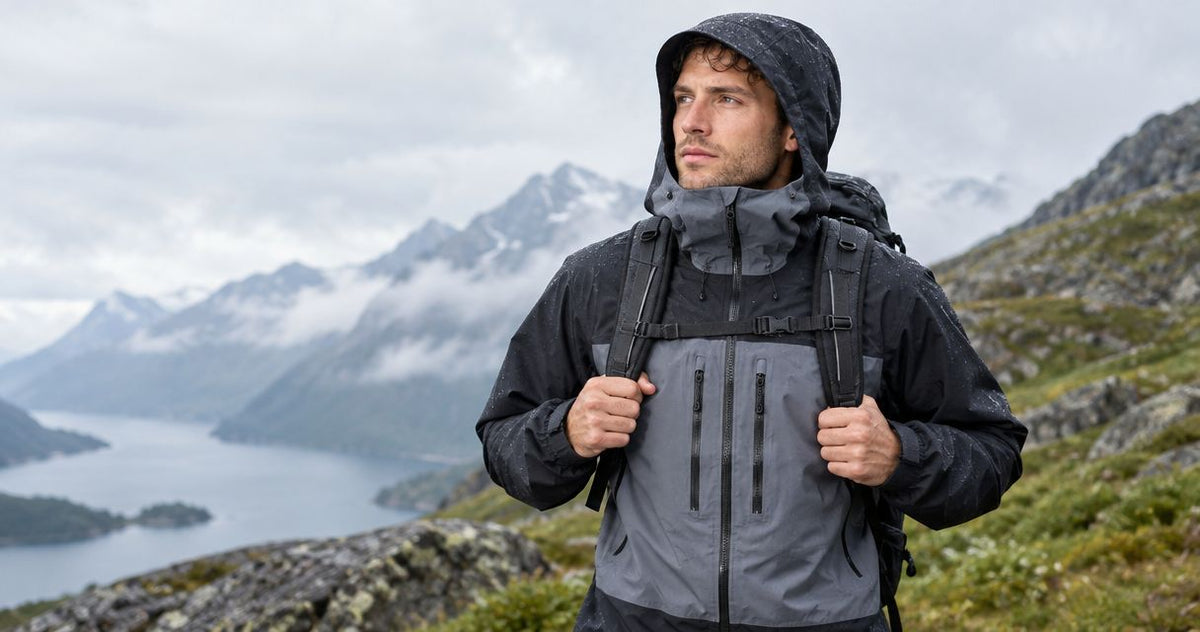
Winter hillwalkers’ waterproof jacket is an outer weather barrier worn over adjustable layers to keep rain out without restricting movement; choosing a waterproof hiking jacket for winter starts with checking that layered fit. You need room for insulation, but excess fabric must not compromise your hood, cuffs or access to equipment.
- Choose a waterproof hiking jacket for winter by testing movement over the layers you actually wear.
- Swoya’s SS1 Hardshell jacket merits consideration for winter layering; check its fit and full specifications before choosing.
- A hardshell provides weather protection; separate insulation lets you adjust warmth for climbs and stops.
- Test hood rotation, hem coverage and rucksack compatibility together, not as separate fitting decisions.
Why winter jacket fit matters for hillwalkers
A jacket that fits over a T-shirt is not automatically suitable over winter insulation. Added bulk changes shoulder movement, sleeve clearance and the space available around your neck. Tightening the fit further with rucksack straps exposes restrictions that a mirror check misses.
Your uphill and stopped configurations also differ. You need to release heat while working and retain it when resting, without rebuilding your clothing system each time. Choose space for useful layers, not the largest jacket you can tolerate.
For a wider look at shell selection, the best waterproof jackets for hiking guide provides the broader buying context. This 2026 guide concentrates on the winter fitting decisions that deserve a separate check.
Why waterproof protection matters for winter hillwalkers
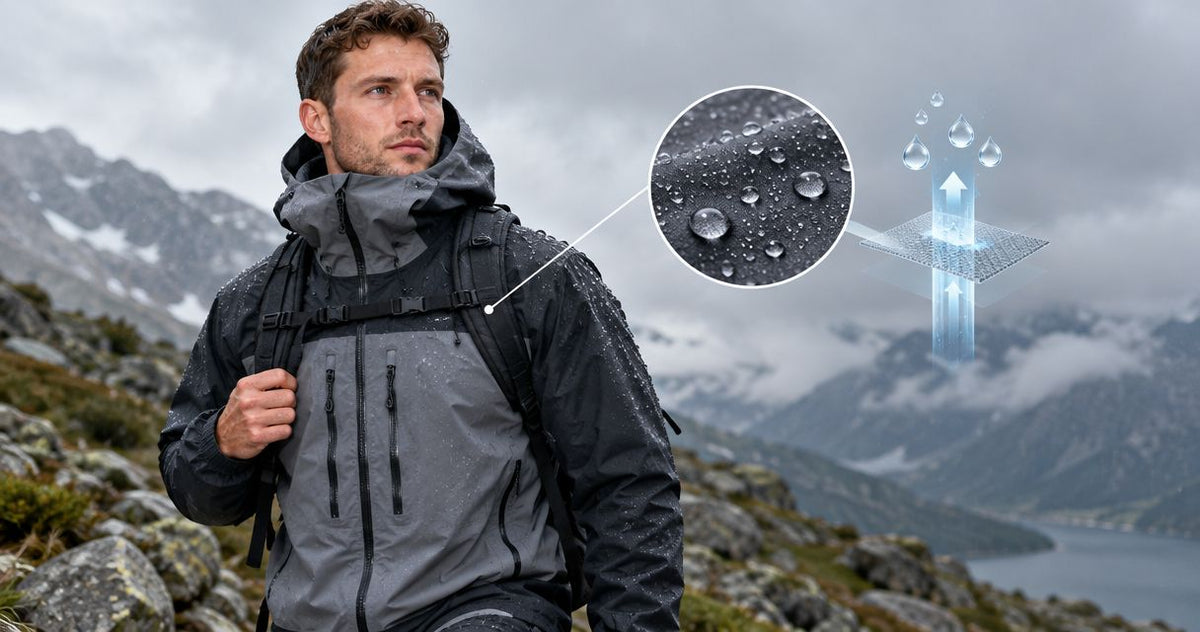
Waterproof protection and insulation solve different problems. A shell keeps external water out; insulating layers help retain warmth. A thicker-feeling jacket does not, by itself, establish either waterproof performance or suitability for your route.
Winter hillwalking also makes small usability problems consequential. A hood that turns poorly limits your view, a hem that rises exposes underlying layers, and awkward closures are harder to manage with gloves. Assess the jacket as part of your equipment rather than as a standalone garment.
For your 2026 kit review, start with the conditions you walk in regularly. Distinguish a sheltered woodland outing from an exposed ridge, and distinguish a steady climb from prolonged stops. The same shell must work with your planned clothing changes, not just your warmest possible outfit.
How to choose room for winter layers
Define your walking conditions first
Write down the conditions and activities your jacket must accommodate before comparing fabrics. Include exposure, expected precipitation, your usual walking pace and the insulation you carry. These determine what you need to fit underneath and which controls you need to operate while wearing gloves.
Keep clothing choices separate from route suitability. Extra insulation does not replace the skills and equipment required for winter terrain. Likewise, a jacket described for mountaineering does not establish that every walk or every wearer requires that design.
Use your existing kit as the starting point. Lay out a climbing outfit and a stopped outfit, then identify whether the extra warm layer belongs under the shell or is intended to go over it. That distinction changes the fitting test.
- List your usual terrain and level of exposure.
- Identify the layers you wear while climbing.
- Identify the insulation you add during stops.
- Include the gloves, hat and rucksack you actually use.
- Separate essential requirements from features you rarely use.
Build an adjustable layer system
Start with the base layer and midlayer you already own. Put them on together and check whether they bunch at the elbows, shoulders or waist before adding a shell. An uncomfortable underlying combination will not improve simply because the outer jacket is larger.
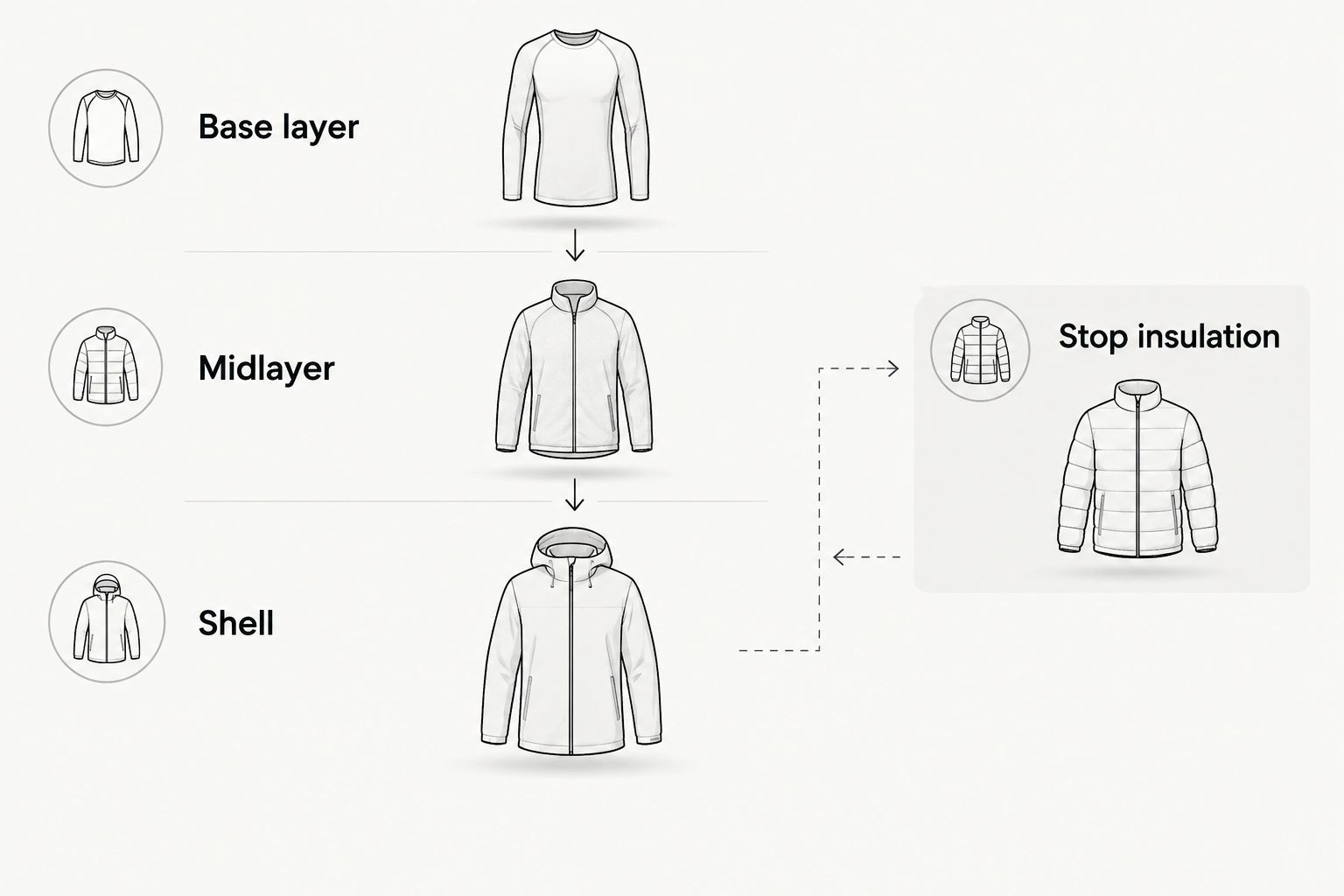
A conventional arrangement uses a base layer, midlayer and shell, with additional insulation selected for the conditions. That is a useful organising system, not a requirement to wear everything continuously. Adjust your clothing before you become unnecessarily hot during a climb.
Compare 2 configurations during fitting: your normal moving layers and your intended colder-weather layers. This reveals whether the shell accommodates the additional bulk without forcing you into an excessive fit for most of the walk.
- Base layer: check next-to-skin comfort and sleeve length.
- Midlayer: check shoulder bulk and freedom at the elbows.
- Shell: check coverage without compressing underlying garments.
- Stop insulation: decide whether it sits underneath or outside.
Check the shell’s stated purpose and specifications
Use the product description to establish intended use, then examine the technical information separately. Waterproof construction, seam sealing, hood adjustment and ventilation need explicit confirmation; a category name does not establish every detail. Never translate a technical-sounding phrase into an unlisted performance rating.
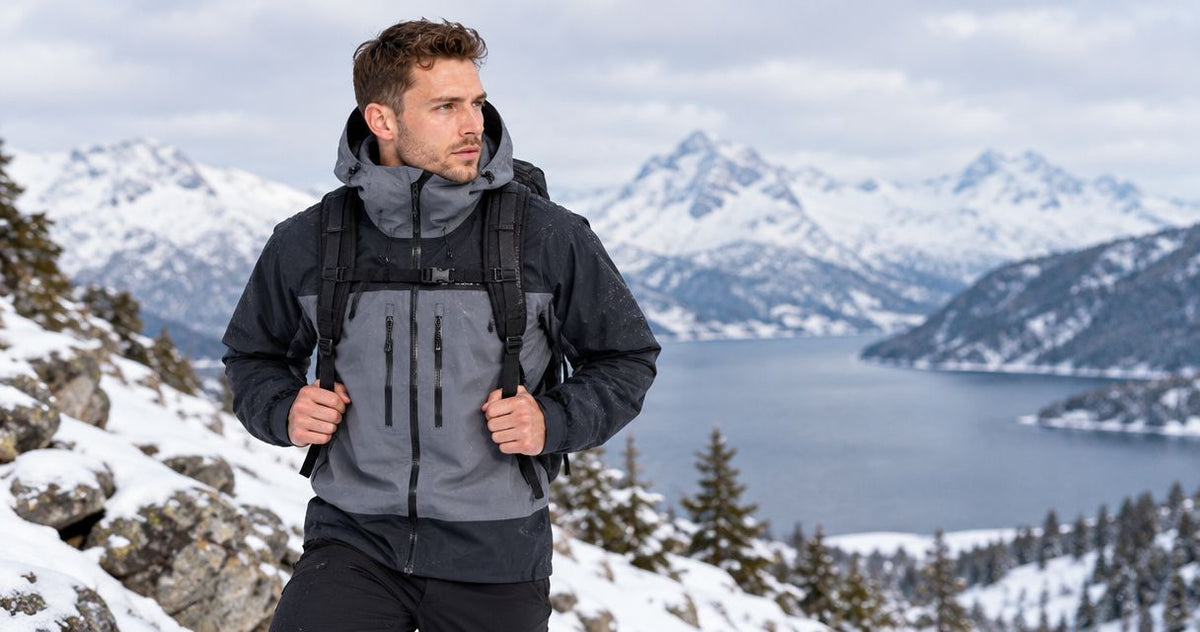
Swoya describes the SS1 Hardshell jacket as designed for alpine climbing, expeditions and winter mountaineering. That makes its intended use relevant to this shortlist, but intended use does not tell you how it fits over your particular insulation.
Swoya’s SS1 Hardshell jacket is best suited to buyers seeking a hardshell designed for winter mountaineering. Check the current full specifications against your requirements before choosing it; the design brief alone is not a fit recommendation.
For a 2026 purchase, separate a stated feature from an assumption. If a specification is absent from the information you are using, ask for confirmation rather than filling the gap with an industry norm.
- Confirm the jacket’s stated intended activities.
- Check the published waterproof construction and seam details.
- Check the available hood and cuff adjustments.
- Establish how you can release heat while moving.
- Confirm care instructions before committing to regular use.
Test movement with your layers underneath
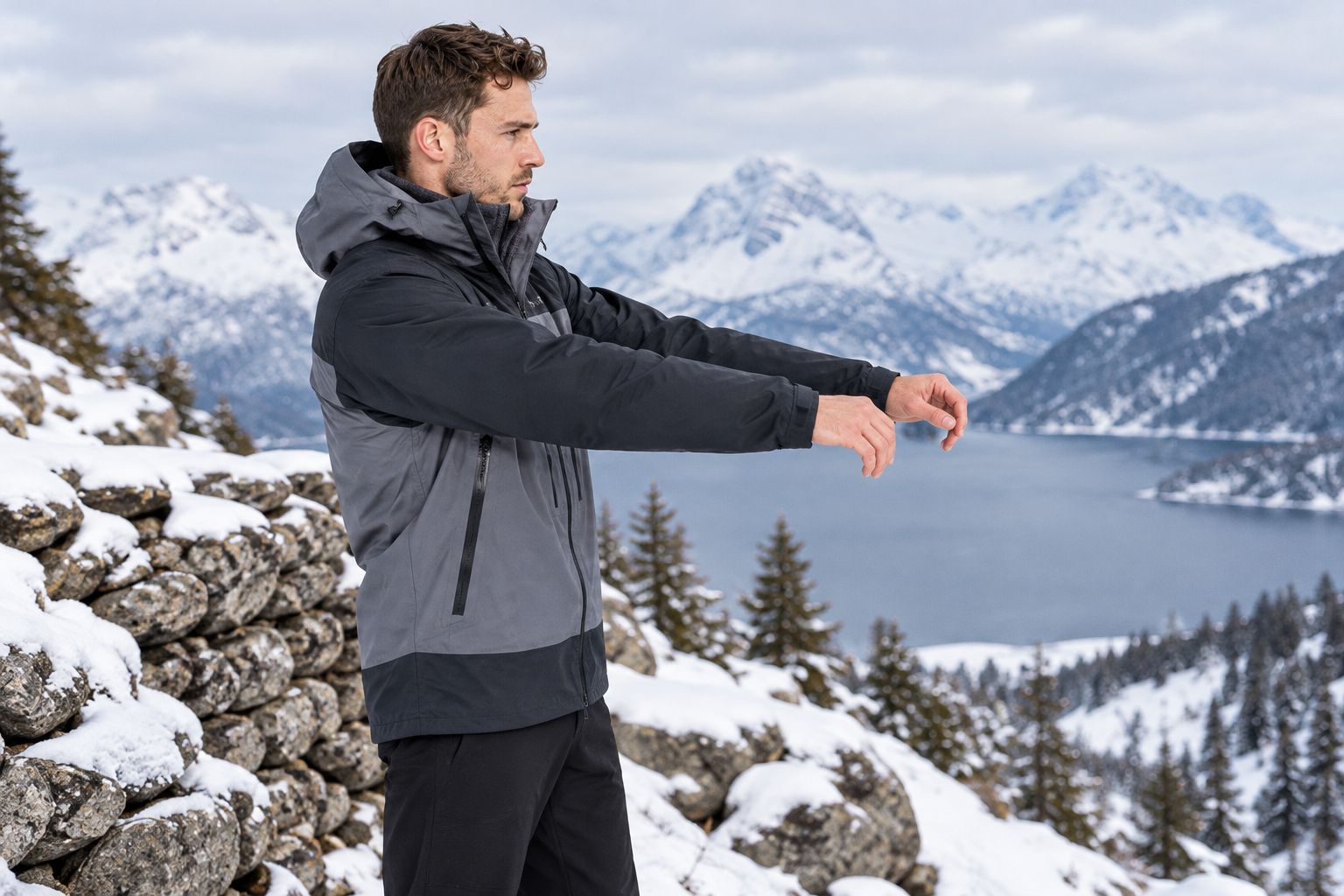
Try the shell over both planned configurations rather than guessing from the labelled size. Fasten it fully and perform 3 movements: reach overhead, stretch forward and bend into a high step. Watch for tension across the upper back and pulling through the sleeves.
Hold your forward reach for 30 seconds as a deliberate fitting check. The aim is to notice pressure and restriction, not to reproduce a laboratory test. Your shoulders should not need to fight the jacket, and your cuffs should not pull uncomfortably away from your wrists.
Inspect the hem afterwards. Some movement is normal, but a shell that leaves your intended layers exposed during routine reaching needs reassessment. Compare another size or cut rather than assuming every restriction is solved by loosening the hem.
- Reach overhead with the jacket fully fastened.
- Stretch forward as though using trekking poles.
- Lift a knee to check lower-hem interference.
- Check for tightness across the shoulders and elbows.
- Repeat with your bulkier planned insulation.
Fit the hood, gloves and rucksack together
Put on your usual hat and gloves, then load your rucksack as you would for a walk. Fasten the hipbelt and shoulder straps before adjusting the jacket. Straps alter how fabric sits across the chest and can obstruct pockets or gather loose material.
Turn your head fully in each direction. Check that you can see clearly without repeatedly repositioning the hood by hand. If you use a helmet for the planned activity, test the actual combination rather than assuming every generously sized hood is helmet-compatible.
Operate the main zip and available adjustment points with gloves on. A control that works only with bare fingers deserves attention before you reach an exposed section. Pocket placement matters for the same reason: judge access with the rucksack fastened.
- Turn your head with the hood adjusted.
- Look down towards your feet and then uphill.
- Check the collar against your chin and neck.
- Operate closures using your walking gloves.
- Check pocket access beneath straps and hipbelt.
- Remove obvious folds trapped under the rucksack.
Choose volume without losing control
Select the cut that accommodates your intended layers while remaining manageable over your normal walking outfit. A larger label is not proof of a better winter fit. Too much fabric can gather under straps and make adjustment more cumbersome.
Distinguish insulation choices as carefully as shell choices. The SF1 Fleece Green is described for layering and mountaineering, with a fitted hood and YKK zippers. The SD1 Down Jacket has a stated 700 fill power; that figure describes the down’s loft potential, not the jacket’s complete warmth or its fit beneath a shell.
Use your 2026 shortlist to compare complete combinations. If an insulating jacket is intended to go over your shell at stops, test that arrangement too. Do not automatically enlarge the shell to contain every warm garment you own.
- Choose room for the layers you intend to wear underneath.
- Check that adjustments still control the lighter configuration.
- Reject pressure points rather than accepting them as normal.
- Compare cuts as well as labelled sizes.
- Recheck the full combination before removing product tags.
Compare your winter layering options
Best for labels describe a use case, not an overall winner. The options below solve different parts of the clothing problem. None removes the need to check fit, weather protection and care requirements against your own walking conditions.
| Option | Best for | Practical advantage | Key limitation |
|---|---|---|---|
| Existing shell with your current midlayer | Checking whether you need a replacement | Lets you assess the combination you already know | Only suitable if condition, protection and layered fit remain adequate |
| SS1 Hardshell jacket | Buyers seeking a shell designed for winter mountaineering | Its stated design brief includes alpine climbing and expeditions | Intended use alone does not establish fit or detailed weather performance |
| SF1 Fleece Green beneath a suitable shell | Buyers seeking a dedicated layering garment | Its stated features include a fitted hood and YKK zippers | A fleece is not a replacement for a waterproof shell |
| SD1 Down Jacket with a suitable shell arrangement | Buyers assessing additional insulation | The stated down specification is 700 fill power | Fill power alone cannot establish total warmth, packed size or wet-weather suitability |
Compare the shell and fleece as separate components, not as a pre-validated combination. Their descriptions establish intended uses; your fitting checks establish whether their volume, hood arrangement and movement work together for you.


Common mistakes winter hillwalkers make
Sizing up before testing the intended layers
An extra size can create unused volume without fixing an unsuitable shoulder or sleeve cut. Test the actual combination first. Change the cut when necessary, rather than treating size as the only adjustment available.
Treating a hardshell as insulation
Weather protection and warmth are separate requirements. Choose your insulating layers for the conditions and check that the shell accommodates them; do not infer warmth from a jacket’s substantial appearance or technical description.
Checking the hood without winter accessories
A hood that behaves well over bare hair can fit differently over a hat or other equipment. Test the complete headwear arrangement and check visibility while turning, looking down and fastening the collar.
Choosing by a single specification
A waterproof rating cannot answer a fit question, and down fill power cannot establish a complete jacket’s warmth. Read each specification for the particular question it answers. Then assess construction, coverage and movement together.
Leaving the rucksack out of the fitting
A jacket can feel spacious until the hipbelt and shoulder straps are tightened. Repeat your checks with your normal load, paying particular attention to pocket access, trapped folds and tension across the upper back.
FAQ
What is the best waterproof hiking jacket for winter?
The best waterproof hiking jacket for winter fits your planned layers, provides appropriate weather protection and allows unrestricted movement. Choose by your conditions and complete clothing system rather than by the largest size or a single specification.
Should I size up for a winter waterproof jacket?
Size up only if your intended layers need the extra space and the larger jacket still adjusts securely. Test another cut if increasing the size creates excess fabric without resolving shoulder or sleeve restriction.
How many layers should I wear under a waterproof jacket?
Wear the layers required for your conditions and effort, rather than a fixed number. Compare your moving outfit with your colder-weather outfit when checking shell fit, and decide separately where stop insulation belongs.
Is the Swoya SS1 Hardshell jacket intended for winter use?
The Swoya SS1 Hardshell jacket is described as designed for alpine climbing, expeditions and winter mountaineering. Confirm its current full specifications and fit over your intended insulation before selecting it for a particular walk.
Can I wear a down jacket under a waterproof shell?
You can wear a down jacket underneath a shell when the combination fits without excessive compression or restricted movement. Check the bulk through the shoulders, chest and sleeves, and consider whether your stop insulation is instead intended to go outside.
Does a higher down fill power mean a warmer winter outfit?
Fill power alone does not establish the warmth of a complete outfit. The SD1 Down Jacket has a stated 700 fill power, but insulation quantity, garment construction, coverage and your other layers also matter.
How do I check a jacket hood for winter hillwalking?
Adjust the hood while wearing your planned headwear, then turn your head and look down towards your feet. Repeat with the collar fastened and check that you can operate the controls with gloves.
One last thing
Your warmest outfit is not necessarily your most useful fitting outfit. Repeat the final check over the layers you expect to wear for most of the walk, not only your thickest combination. That exposes excess volume which a heavily insulated fitting can hide.
For your final 2026 decision, choose the Swoya waterproof jacket and layering combination only when both configurations work: the one you climb in and the one you use when conditions demand more warmth. The label starts the shortlist; movement and coverage settle the fit.