How to choose a waterproof hiking jacket
Choose a waterproof hiking jacket by matching its rain protection, ventilation and fit to your routes, walking pace and layers. For UK hillwalking in 2026, prioritise sealed seams, a protective hood and unrestricted movement before comparing fabric ratings; a waterproof shell still needs moisture management inside and suitable insulation underneath.
- How to choose a waterproof jacket: prioritise sealed seams, hood coverage, ventilation and fit over a headline rating.
- A waterproof jacket manages external rain; ventilation helps release the heat and moisture you generate while walking.
- Swoya’s SS1 Hardshell jacket is designed for alpine climbing, expeditions and winter mountaineering; check its details against your route.
- Try your shell with walking layers and a loaded rucksack before deciding.
Why this matters
A jacket that blocks rain but restricts your stride, obscures your view or traps excess heat creates different problems on the hill. Your choice needs to work while you climb, check the route and stop on exposed ground—not just while you stand indoors.
Start with your conditions, then use this waterproof jackets for hiking guide to organise your shortlist. Compare jackets against the same requirements rather than choosing the largest number on a specification sheet.
How to choose a waterproof hiking jacket
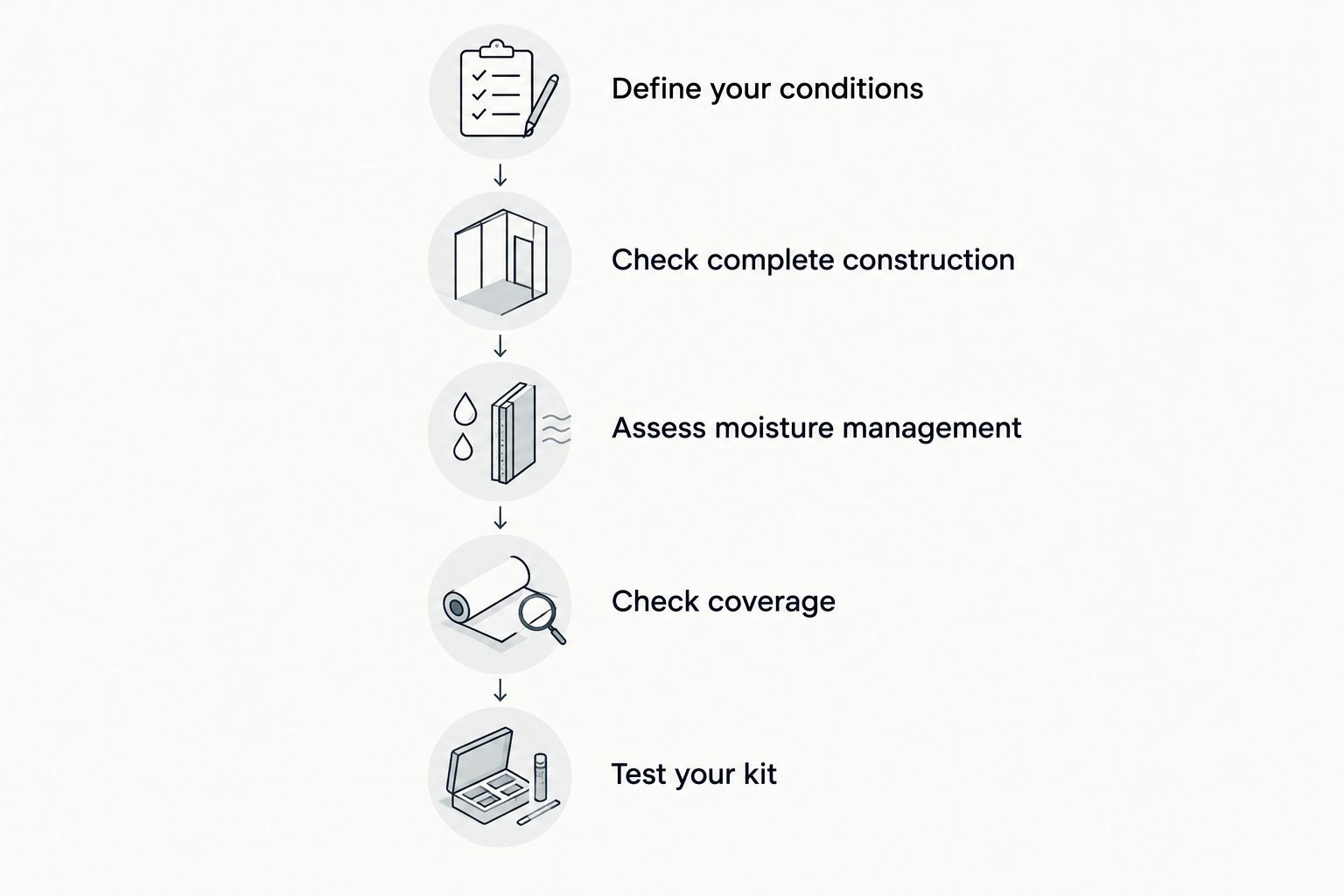
Use this sequence when buying a waterproof jacket in 2026. It keeps weather protection separate from comfort, then brings both together in a practical fit check.
- Define your conditions. Think about exposed ridges, sheltered paths, sustained rain and how long you expect to wear the jacket continuously.
- Check the complete construction. Look for waterproof fabric, sealed seams and closures designed to protect openings from rain.
- Assess moisture management. Read the breathability information, identify the test method and check how you can release heat mechanically.
- Check coverage. Adjust the hood, cuffs and hem; then turn your head, reach forward and bend down.
- Test the jacket with your kit. Wear your intended layers and rucksack, fasten the hipbelt and operate the pockets and main zip.
Do not skip the final step. A technically suitable fabric cannot compensate for sleeves that pull above your wrists or a hood that blocks your view when you turn.
WATERPROOFING: check more than the fabric
Waterproof fabric is only part of a waterproof jacket. Stitching creates holes, and openings at the neck, wrists and front zip need protection too. Check how the garment deals with each entry point.
Look for sealed seams rather than assuming the fabric specification covers the whole jacket. Inspect the main zip arrangement and pocket closures, then check whether adjusting the hood and cuffs gives you useful coverage without restricting movement.
What does hydrostatic head tell you?
Hydrostatic head describes the water pressure a fabric withstands under a specified test, usually expressed in millimetres. It is a fabric measurement, not a guarantee that every opening in the finished jacket will remain dry in every situation.
Read the rating alongside construction, coverage and the stated test method. Do not treat it as a forecast of how many hours you can walk in rain or as a complete measure of jacket quality.
What does a water-repellent finish do?
A durable water-repellent finish helps water bead on the outer fabric. It is different from the waterproof barrier beneath it. When the face fabric becomes saturated, the jacket can feel clammy even when the waterproof barrier remains intact.
Follow the garment’s care instructions when cleaning or restoring water repellency. Do not assume that visible beading proves the seams, zips and fabric are all functioning correctly.
CONSTRUCTION: compare the layer systems
Waterproof jackets use different ways to protect the waterproof barrier. The layer count describes construction, not how many separate garments you need to wear. For your 2026 shortlist, compare the complete jacket rather than treating one construction as automatically best.
| Construction | How it is built | Best for | Advantage | Limitation |
|---|---|---|---|---|
| 2-layer | Outer fabric and waterproof barrier, with a separate lining | Buyers who prefer a separate lining | Lining separates your clothing from the waterproof barrier | Assess bulk and movement with the lining in place |
| 2.5-layer | Outer fabric and waterproof barrier with a protective inner print or coating | Buyers prioritising a compact shell | Does not need a separate hanging lining | Check how the inner surface feels over your intended layers |
| 3-layer | Outer fabric, waterproof barrier and inner backer bonded together | Buyers wanting an integrated backer for regular use | Backer protects the barrier within a bonded construction | Layer count alone does not establish weight, comfort or performance |
A 3-layer jacket is not automatically the lightest option, and a 2.5-layer jacket is not automatically the right emergency shell. Fabric choice, cut and features still determine whether the finished garment suits your walks.
VENTILATION: manage the climb, not just the rain
You generate heat and water vapour while walking uphill. A waterproof jacket has to balance keeping rain out with allowing that moisture to escape. Breathability does not mean you will remain sweat-free at every pace.
Published breathability figures use different methods. Moisture vapour transmission rate and resistance to evaporative heat transfer describe performance differently, so compare like with like rather than ranking unrelated figures together.
Mechanical ventilation gives you another way to release heat. Check for usable vents and a main zip you can adjust easily; do not assume pockets act as vents unless the manufacturer identifies that function.
Vent before you become overheated. Adjust your layers and pace as well as the shell, and avoid opening the jacket so far that rain enters directly. Ventilation is a useful control, not a substitute for waterproof construction.
FIT: test movement with your walking kit
Try a waterproof jacket over the layers you expect to wear, not only a thin top. Too little room restricts movement and compresses insulation; excessive loose fabric can make adjustment and coverage harder to control. Check the fit with the main zip closed.
HOOD
Adjust the hood, then look left, right and down. It should follow your head closely enough to preserve your view. A large hood needs effective adjustment if you will use it without a helmet.
Check the brim while looking at a map or your feet. Coverage that works only when you face straight ahead is not enough for moving over uneven ground.
CUFFS AND HEM
Reach forward as though using walking poles, then lift your arms. Check that the cuffs still cover your wrists and that the hem does not pull uncomfortably high. Repeat the movements with your rucksack on.
Test cuff adjustment with the gloves you intend to use. You need enough control to reduce rain entry without making the wrists uncomfortable or difficult to adjust.
POCKETS AND ZIP
Fasten the hipbelt and check which pockets remain accessible. A pocket that sits beneath the belt is less useful for items you need while walking, regardless of how many pockets the jacket has.
Operate the zip and adjustments yourself. If you struggle indoors, do not dismiss the problem as something you will solve on an exposed hillside.
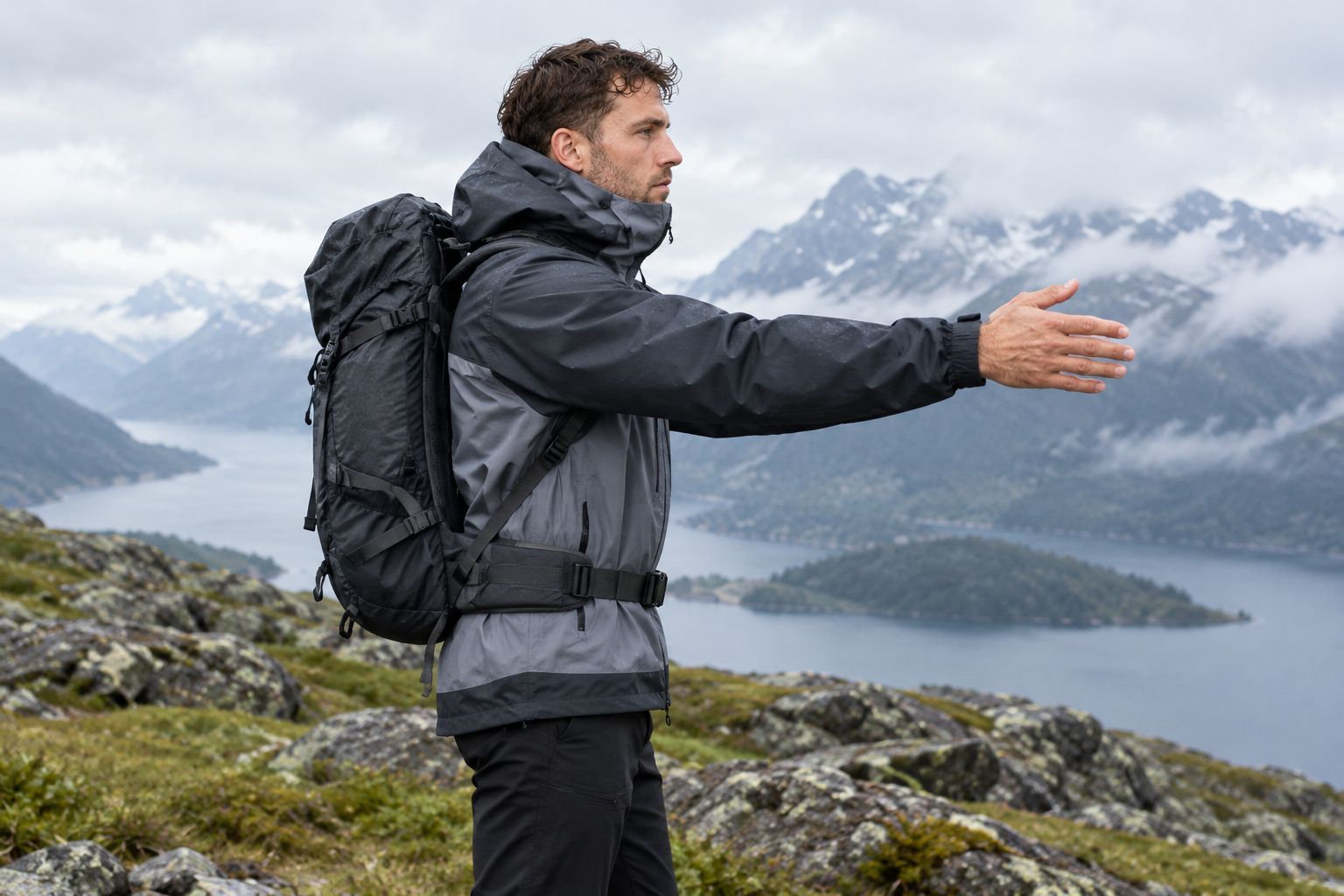
Why waterproof jacket requirements vary
There is no single feature list that suits every walk. Weight your choices using these practical differences:
- Exposure. Open ridges put more emphasis on secure hood adjustment and coverage than sheltered paths.
- Walking effort. Sustained climbing makes accessible ventilation and manageable layering especially important.
- Time in rain. A jacket worn throughout a wet day needs a fit and inner feel you can tolerate continuously.
- Layers underneath. Cold-weather insulation changes the space you need around the shoulders, chest and arms.
- Rucksack use. Shoulder straps and hipbelts affect pocket access, adjustment and how the jacket sits.
- Glove use. Small controls need checking with the hand protection you expect to wear.
Write these requirements down before comparing products. It is easier to reject an unsuitable feature arrangement when you have already decided what the jacket must do.
Where the SS1 Hardshell jacket fits
Swoya’s SS1 Hardshell jacket is for buyers seeking a shell designed for alpine climbing, expeditions and winter mountaineering. That stated purpose makes it relevant to a technical-shell shortlist, but purpose alone does not establish whether its fit and features match your hillwalking.
Best for: buyers whose activities overlap with that intended use and who will check the detailed specification against their kit. Assess the SS1 Hardshell jacket using the same waterproofing, ventilation and movement checks as any other candidate.
The strength of the Swoya SS1 Hardshell jacket’s stated positioning is its clear technical-use focus. The limitation is equally important: a mountaineering brief does not, by itself, prove the right balance of coverage, bulk and ventilation for your particular walks. Check those points before choosing.
How waterproof is a waterproof hiking jacket?
A waterproof hiking jacket needs both a waterproof barrier and construction that protects seams and openings. A hydrostatic-head figure describes fabric performance under a test; it does not describe your hood fit or whether water enters through an open cuff.
For a 2026 purchase, read the construction details alongside the rating. Reject comparisons that reduce the entire garment to one fabric number.
Should a waterproof jacket fit tightly or loosely?
A waterproof jacket should leave room for your intended layers without restricting movement or leaving excessive loose fabric. Close the zip, adjust the hood and reach forward with your rucksack on.
Choose the size that preserves coverage through those movements. Do not size down simply because the jacket looks neater when you stand still.
Can I wear a waterproof jacket all day?
You can wear a waterproof jacket throughout a wet walk, but comfort depends on effort, ventilation, layers and fit. Use adjustments to release heat before you become overheated, and change your layering when conditions allow.
A shell that feels comfortable during a brief indoor try-on still needs checking over your walking kit. Pay particular attention to the neck, shoulders and inner surface.
FAQ
What should I look for first in a waterproof hiking jacket?
Start with waterproof construction, protective coverage and a fit that works with your layers and rucksack. Then assess ventilation and compare fabric ratings using the stated test methods.
Is a higher waterproof rating always better?
A higher hydrostatic-head figure is not a complete measure of jacket suitability. Seams, closures, hood adjustment and fit also affect protection in use.
Is a 3-layer waterproof jacket warmer?
A 3-layer construction describes bonded outer fabric, waterproof barrier and inner backer, not an insulation rating. Choose your insulation separately and check that the shell fits over it.
Do I need underarm vents for hillwalking?
Underarm vents provide a way to release heat, but they are not the only ventilation option. Check whether the jacket’s available adjustments suit your pace and remain usable with your rucksack.
Can I use a softshell instead of a waterproof jacket?
Do not assume a softshell provides waterproof protection. Check its stated construction and carry appropriate waterproof protection when your route and forecast require it.
Is the Swoya SS1 Hardshell jacket designed for technical use?
The Swoya SS1 Hardshell jacket is designed for alpine climbing, expeditions and winter mountaineering. Check its detailed specification, fit and controls against your intended conditions before choosing it.
How should I compare waterproof jackets in 2026?
Compare waterproof jackets in 2026 against the same route, layers and rucksack requirements. Use fabric ratings as supporting information, then check coverage, movement and ventilation yourself.
One last thing
The most useful final check is movement, not the mirror. Before committing, fasten your rucksack, reach forward, look down and operate the hood adjustment. If the jacket loses coverage or obstructs your view, revisit the fit rather than accepting the problem as a technical compromise.