Waterproof hiking jackets for summer: ventilation before bulk
For UK hillwalkers, a waterproof hiking jacket for summer is an uninsulated rain shell chosen to keep rain out while managing the heat produced on climbs. Prioritise usable ventilation, freedom of movement and protection under a rucksack rather than insulation or bulk.
- Choose a waterproof hiking jacket for summer around ventilation, fit and your route’s exposure, not warmth.
- Swoya’s SS1 Hardshell jacket targets alpine climbing and winter mountaineering; assess its features against your summer walking needs.
- Breathable fabric and ventilation do different jobs: inspect both before choosing a rain shell.
- Keep insulation separate so you can adjust your hiking layers between climbs and exposed stops.
Why summer waterproofs matter for UK hillwalkers
Summer walking creates a practical conflict: you need rain protection without trapping unnecessary heat. A sheltered uphill path and a windy summit demand different clothing, even within the same outing. Your shell needs to work across those changes without forcing you to carry its warmth all day.
For your 2026 kit choice, separate weather protection from insulation. A waterproof jacket is not a substitute for a warm layer at a stop, and a warm jacket is not automatically a waterproof shell. The guide to choosing a waterproof hiking jacket explains the wider buying criteria; this guide concentrates on summer use.
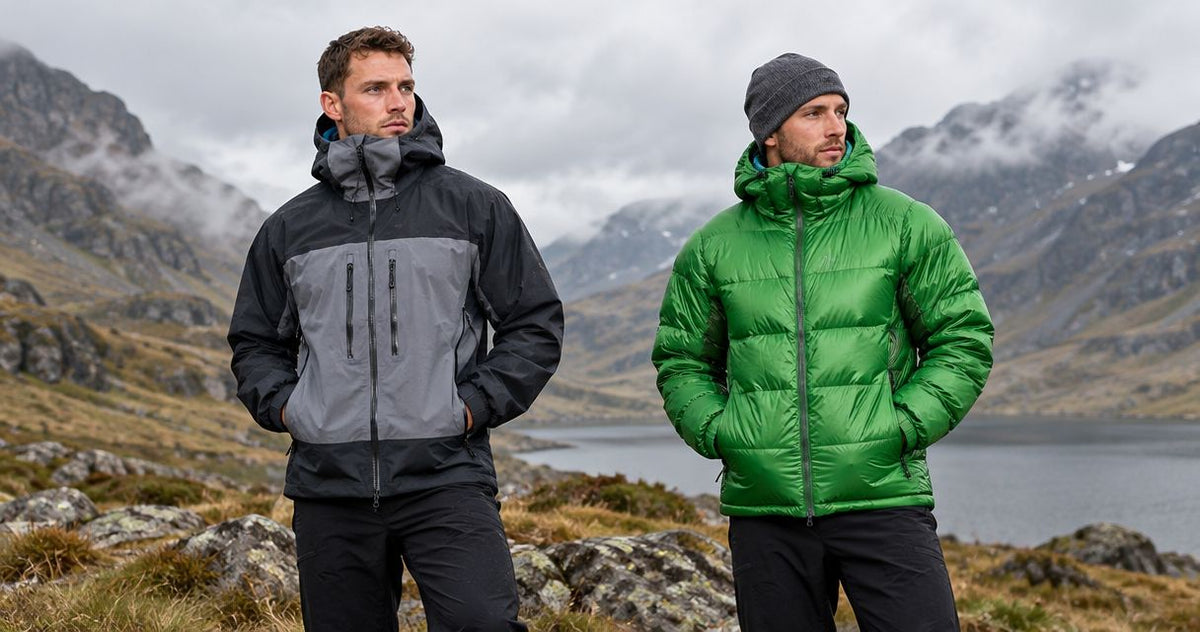
Swoya is best for men considering technical outdoor clothing for both everyday exploration and mountain use. For this decision, judge the SS1 Hardshell jacket against your actual routes rather than assuming its winter mountaineering purpose makes it the right summer shell.
Choose your summer shell in six steps
Match protection to your route
Start with your usual walks, not a jacket specification sheet. Describe the terrain, exposure, likely time away from shelter and effort involved. A shell for sustained upland rain has a different job from one carried mainly for showers on sheltered paths.
Use your existing jacket first. Think about where it disappoints: rain entering around the neck, restricted movement, excessive warmth or awkward storage. Those observations give you a buying brief without requiring another purchase.
For a 2026 shortlist, distinguish essential protection from features intended for activities you do not undertake. A climbing-focused design deserves consideration when its fit and details serve your walking; its intended use alone does not establish comfort on a humid ascent.
- Best for exposed routes: prioritise hood security, coverage and closures you can operate easily.
- Best for sheltered walks: prioritise comfortable movement and straightforward adjustment.
- Check the mountain forecast alongside your route’s escape options.
- Write down the problems your current shell needs to solve.
Inspect ventilation before fabric claims
Check how a jacket releases heat before comparing technical labels. Breathability describes moisture-vapour transfer through fabric; ventilation allows air exchange through openings. Neither makes an enclosed waterproof jacket feel identical to walking without one.
First, examine your current shell for usable adjustments. Practise opening the main zip when conditions allow, loosening cuffs and adjusting the hem without exposing yourself unnecessarily to rain. Start managing heat before you become soaked with sweat.
When shopping, inspect any underarm vents and other openings rather than assuming they are present. Check whether you can reach them while wearing your rucksack and whether operating them disturbs the jacket’s fit. A feature that is awkward to use will not help much during a climb.
For summer 2026, choose ventilation you can operate on the move over a feature list you will rarely use. Check published breathability test methods before comparing figures directly.
- Look for accessible ventilation openings where offered.
- Test zip operation with the rucksack you normally carry.
- Check cuff adjustment without over-tightening your wrists.
- Practise releasing heat before a steep ascent.
- Keep openings protected from driving rain.
Test fit with your walking layers
Use a 5-minute fitting check as a practical shopping routine, not a performance test. Wear your usual walking top, put on the shell and fasten it fully. Add the light midlayer you expect to carry for cooler conditions, then repeat the check.
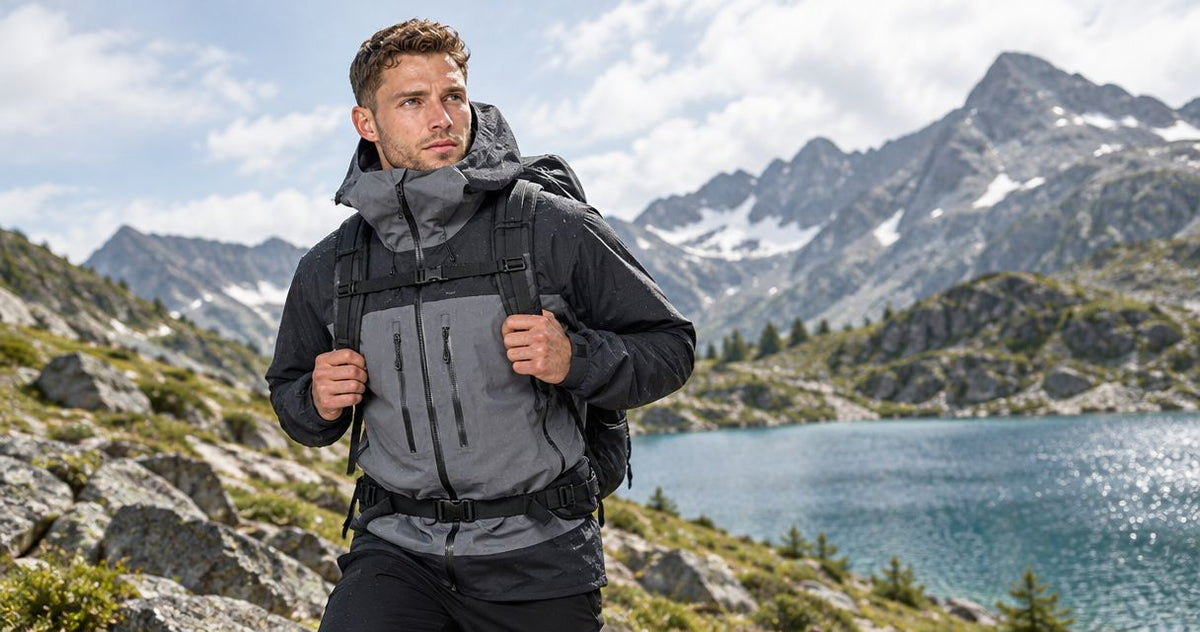
Reach overhead, stretch forward and turn your head with the hood adjusted. The hem should not pull excessively upwards, and the shoulders should not restrict reaching. Check the same movements with your rucksack fastened: shoulder straps and a hipbelt change how the jacket sits.
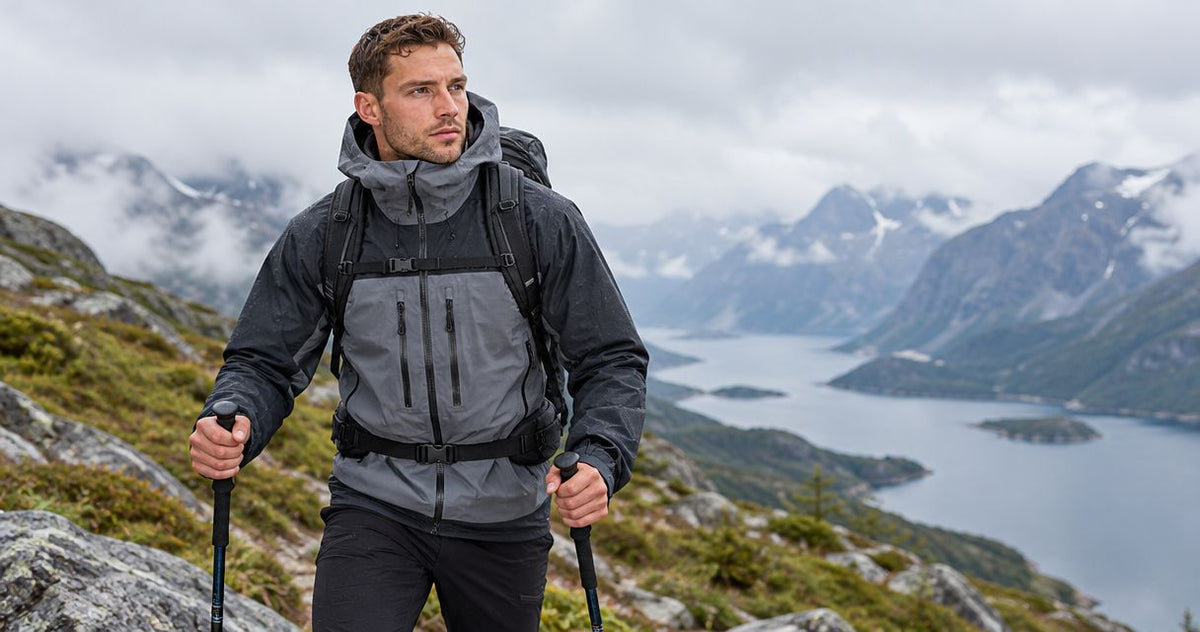
The SS1 Hardshell jacket is designed for alpine climbing, expeditions and winter mountaineering. That makes intended use a useful starting point, not proof of summer suitability. Confirm its current ventilation details, fit and carrying requirements before choosing it for warm-weather walks.
Do not solve tight shoulders by accepting an excessively loose body. Compare sizes and cuts while wearing the layers you actually use.
- Check forward reach without tension across your upper back.
- Turn your head without losing useful visibility through the hood.
- Bend and step up without exposing your lower back.
- Confirm that your rucksack does not obstruct essential adjustments.
- Try the shell over both your walking top and midlayer.
Separate your shell from your insulation
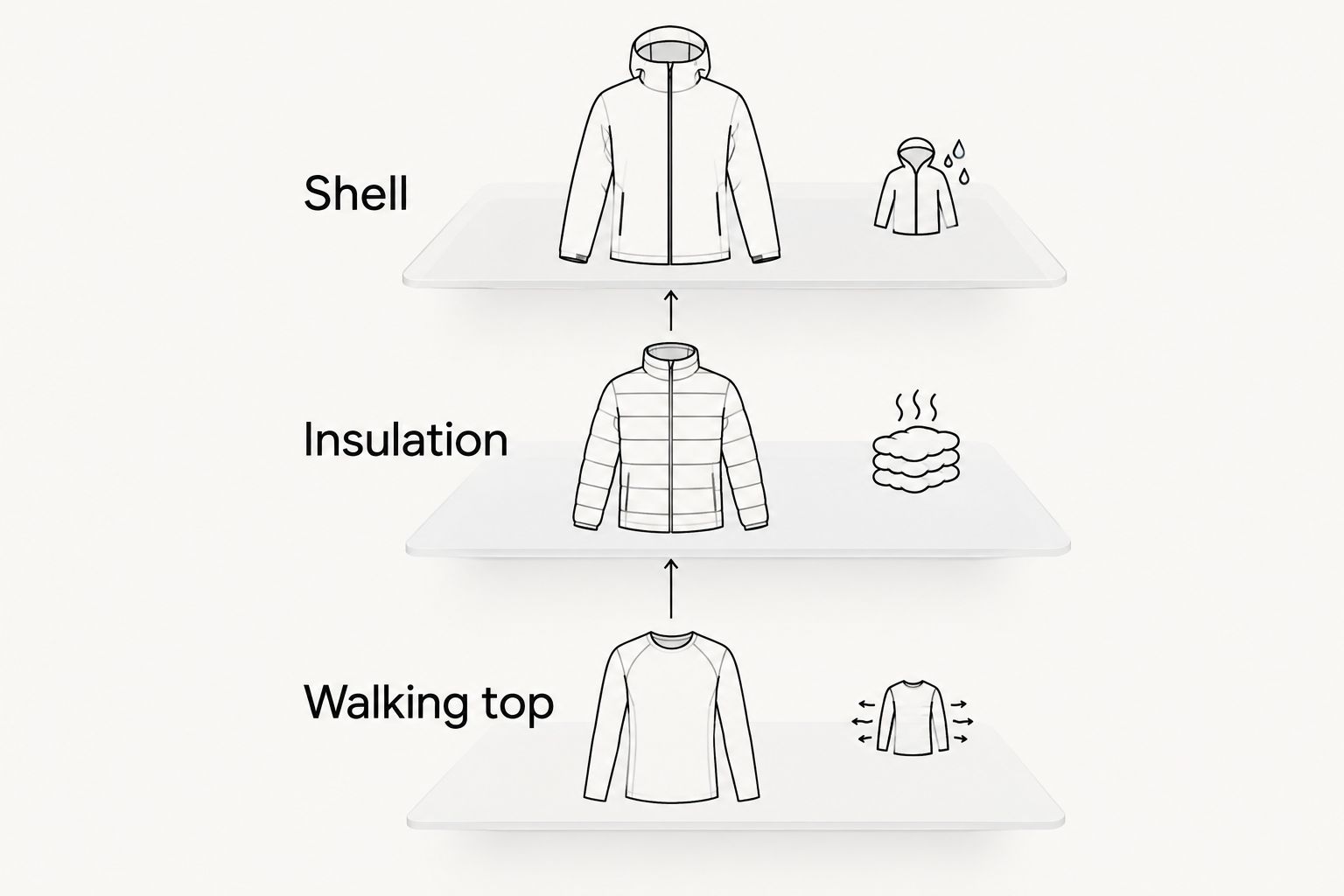
Build the clothing system around distinct jobs: a walking top next to your body, insulation when needed and a shell for rain or wind protection. Start by rearranging clothing you already own. Removing an unnecessary insulating layer often addresses overheating more directly than changing waterproof fabric.
For a 2026 summer kit list, keep warmth adjustable rather than treating a single jacket as the answer to every condition. Put insulation somewhere accessible and protected from rain. You should be able to add it at an exposed stop without unpacking the entire bag.
The ST1 TShirt Black uses a polyester-spandex blend and has a vented, breathable back. It is an option for the walking-top role, not a replacement for weather protection. Ranger Pants use durable softshell fabric with light insulation; assess whether that insulation suits your expected temperature and effort rather than assuming year-round positioning means equal comfort in every condition.
- Best for active climbs: adjust your walking layers before adding unnecessary warmth.
- Best for exposed stops: keep a separate insulating layer accessible.
- Treat a shell as weather protection, not as your only source of warmth.
- Assess trouser insulation alongside your upper-body layers.
Check comfort under your rucksack
Pack your normal walking load before assessing a shell. A jacket that feels comfortable standing indoors can behave differently under shoulder straps, particularly around the collar, chest and pockets. Test the whole arrangement rather than the garment alone.
Use a 10-minute uphill check with your existing clothing to identify when you become too warm and which adjustments you actually use. This is a personal observation exercise, not a laboratory breathability comparison. Follow the retailer’s conditions when trying an unpurchased jacket; keep any fitting assessment within those conditions.
Then check storage. Pack the jacket into your own bag without forcing it into an unsuitable pocket. Ask whether you can retrieve it quickly when rain arrives and whether wet fabric can be kept away from your dry insulation afterwards.
A low stated weight does not answer those questions. Nor does a substantial feel prove better protection: judge construction details and documented specifications separately.
- Check collar comfort with shoulder straps tightened normally.
- Test pocket access with your hipbelt fastened.
- Confirm that the hem stays comfortable beneath the pack.
- Practise taking the jacket out without emptying your bag.
- Plan where a wet shell will go after a shower.
Compare verified details and maintain the shell
Create a short comparison sheet before buying. Record each jacket’s stated construction, ventilation openings, adjustment points, care instructions and intended activity. Leave out specifications you cannot confirm rather than treating similar-looking jackets as equivalent.
For your 2026 purchase, distinguish a useful feature from a claim that lacks context. A waterproof rating concerns fabric testing; the complete jacket also depends on seams, closures, coverage and fit. Breathability figures need their test method to support a meaningful comparison.
Check your current waterproof’s care label before replacing it. Cleaning and water-repellent treatment, where specified by the manufacturer, are maintenance tasks rather than proof that a jacket needs replacing. Surface wetting alone does not establish that water has passed through the waterproof barrier.
Buy the shell that addresses your documented problem. Do not choose a winter-oriented model solely because its intended activities sound more demanding.
- Record verified specifications beside each shortlisted jacket.
- Compare breathability figures only with their test context.
- Inspect seams, closures and adjustment points.
- Follow the garment’s own cleaning and treatment instructions.
- Separate surface wetting from water entering the jacket.
Compare the options for summer walking
Choose an approach before choosing a product. The table separates clothing roles and intended uses; it does not claim a tested performance ranking between jackets.
| Option | Best for | Practical advantage | Key limitation |
|---|---|---|---|
| Your existing waterproof | Walkers whose shell still fits and protects adequately | Lets you improve layering and adjustment without changing the jacket | Existing ventilation and fit remain unchanged |
| An uninsulated walking waterproof | Summer hillwalkers prioritising rain protection without built-in warmth | Keeps insulation separate from weather protection | Ventilation, weight and fit still need checking model by model |
| SS1 Hardshell jacket | Buyers seeking a shell designed for alpine climbing, expeditions and winter mountaineering | Its stated purpose addresses demanding mountain activities | Intended use alone does not establish summer ventilation or carrying comfort |
| Softshell jacket | Walkers seeking movement comfort when full waterproof protection is not required | Offers a different clothing approach for active use | Do not assume softshell fabric provides waterproof-shell protection |
Swoya’s SS1 Hardshell jacket and ST1 TShirt Black serve different parts of a walking system. Consider the shell for its stated mountain purpose and the T-shirt for its flexible fabric and vented back; neither removes the need to assess fit, conditions and the other layers you carry.


The shell is the weather-protection layer; the walking top is worn beneath it. Buying both does not guarantee comfort: your pace, adjustments, fit and additional insulation still determine how the system feels.
Common mistakes summer hillwalkers make
Buying warmth instead of rain protection
An insulated jacket combines jobs you often need to adjust separately in summer. Choose a shell around rain protection, then choose the insulation you need for the forecast and route. Do not use a cold summit stop as the sole guide to clothing for a sustained climb.
Treating breathability as automatic cooling
A breathable membrane is not an open vent. If you start a climb already too warm, a fabric claim does not replace adjusting your layers and pace. Check accessible openings and learn how to use them without compromising rain protection.
Testing the jacket without a pack
A hipbelt can cover pockets and shoulder straps can change collar comfort. Always repeat your movement checks with your normal rucksack. A jacket that works only without the equipment you carry is the wrong fit for that use.
Assuming a technical label proves summer suitability
Alpine climbing and winter mountaineering are intended activities, not direct measures of warm-weather comfort. Swoya’s SS1 Hardshell jacket needs the same summer-specific assessment as any other shell: ventilation, movement, coverage and practical storage. Choose it when those details match your walking, not because the activity description sounds demanding.
FAQ
What is the best waterproof hiking jacket for summer?
The best waterproof hiking jacket for summer is an uninsulated shell that fits your walking layers and offers usable ventilation for your routes. Assess hood security, movement and adjustment with your normal rucksack rather than choosing on a technical label alone.
Is a hardshell too warm for summer hillwalking?
A hardshell can feel warm during summer climbs because it encloses your clothing and limits air exchange. Choose suitable layers underneath and inspect ventilation features; the hardshell label alone does not establish comfort.
Is the SS1 Hardshell jacket suitable for summer hiking?
The SS1 Hardshell jacket is designed for alpine climbing, expeditions and winter mountaineering. Assess its current ventilation features, fit and carrying requirements against your summer routes before choosing it.
Do I need underarm vents in a summer waterproof?
Underarm vents are useful when you want additional ventilation without opening the jacket front fully. They are not a substitute for suitable layers, and their usefulness depends on access, design and the rain conditions.
Can I wear a softshell instead of a waterproof jacket?
A softshell is not an automatic substitute for a waterproof jacket. Check its stated weather protection and carry a waterproof shell when your route and forecast require rain protection.
What should I wear under a waterproof jacket in summer?
Wear a walking top that suits your effort and keep insulation separate for colder conditions or stops. Test the shell over both arrangements so that adding a midlayer does not restrict movement.
Does a higher waterproof rating mean better summer comfort?
A higher waterproof rating does not establish better summer comfort. It describes resistance to water penetration under a stated test, while ventilation, moisture transfer, fit and your clothing system affect comfort.
One last thing
Try a 2-minute stop check during a familiar walk: notice whether you need insulation as soon as your effort drops. This is a clothing-adjustment exercise, not a safety threshold. It helps separate the warmth you need while stationary from the rain protection you need while moving.
For summer 2026, the useful question is not whether a jacket feels warm in the shop. It is whether you can manage rain, effort and stops without one garment forcing the same level of warmth throughout the walk.