How to layer for hiking: men's layering guide
To layer for hiking, wear a moisture-managing base layer, add a midlayer for warmth, and carry an outer shell for wind and rain. Adjust those layers as your effort and exposure change rather than wearing everything from the start. For UK hillwalking in 2026, pack separate insulation for stops when the conditions demand it; a shell provides weather protection, not the warmth of an insulating layer.
- How to layer for hiking: manage moisture first, add insulation when needed, and use a shell for weather protection.
- Swoya hiking clothing suits men building separate layers for movement, warmth and mountain weather.
- Remove insulation before steep climbs leave your base layer damp; add warmth before you cool at stops.
- Test your complete clothing system with your rucksack, not each garment separately.
Why this matters
A comfortable outfit at the car park can become too warm on a sheltered climb and too cold on an exposed ridge. Your layering system needs to change with the walk. Keeping every layer on is not the objective.
Fit matters as much as fabric. Use the guide to choosing a waterproof hiking jacket to assess the outer layer, then check it over the insulation you actually wear.
How to layer for hiking: men's layering guide
Build your system around separate jobs: moisture management, insulation and weather protection. These functions overlap, but one garment does not remove the need to assess the others.
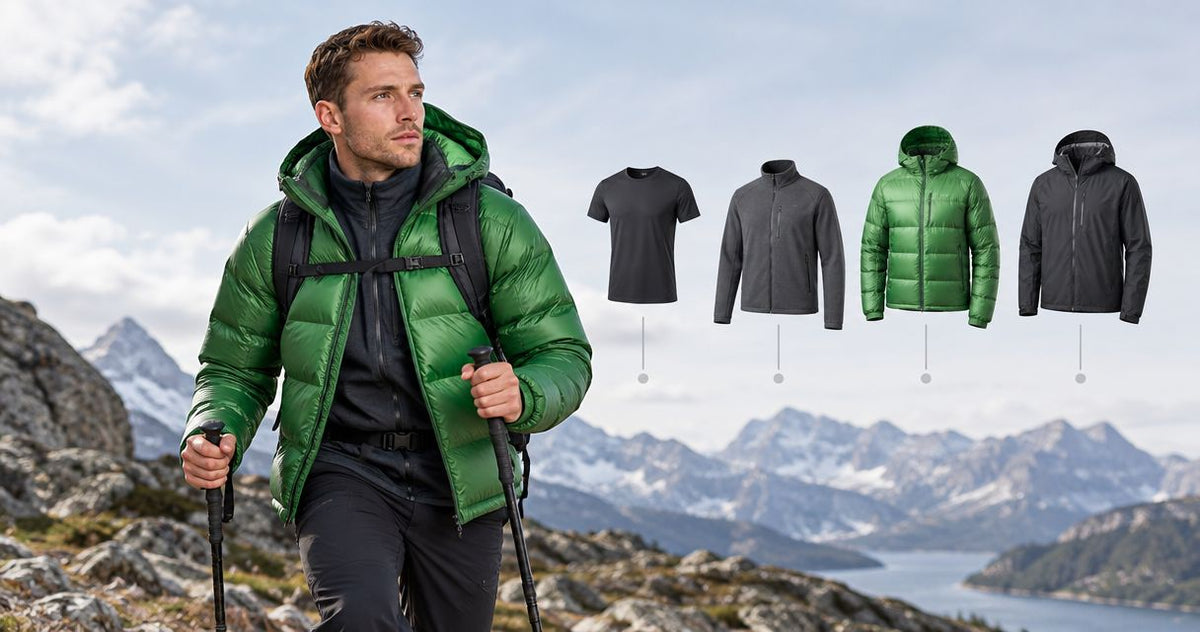
| Layer or garment | Best for | Practical benefit | Limitation or check |
|---|---|---|---|
| ST1 Tshirt Grey | A base layer for active walking | Polyester-spandex blend provides flexibility; a vented back supports breathability | A T-shirt does not provide full arm coverage or replace insulation |
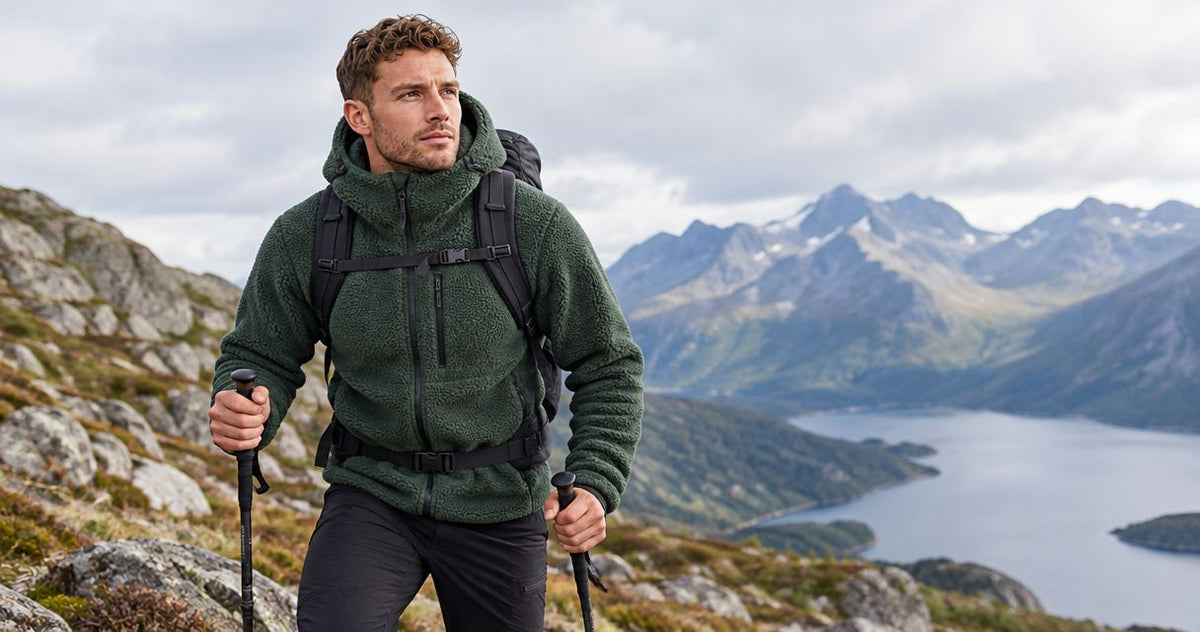
| SF1 Fleece Grey | An insulating midlayer | Designed for layering and mountaineering, with a fitted hood | Fleece is not a substitute for a waterproof outer layer |
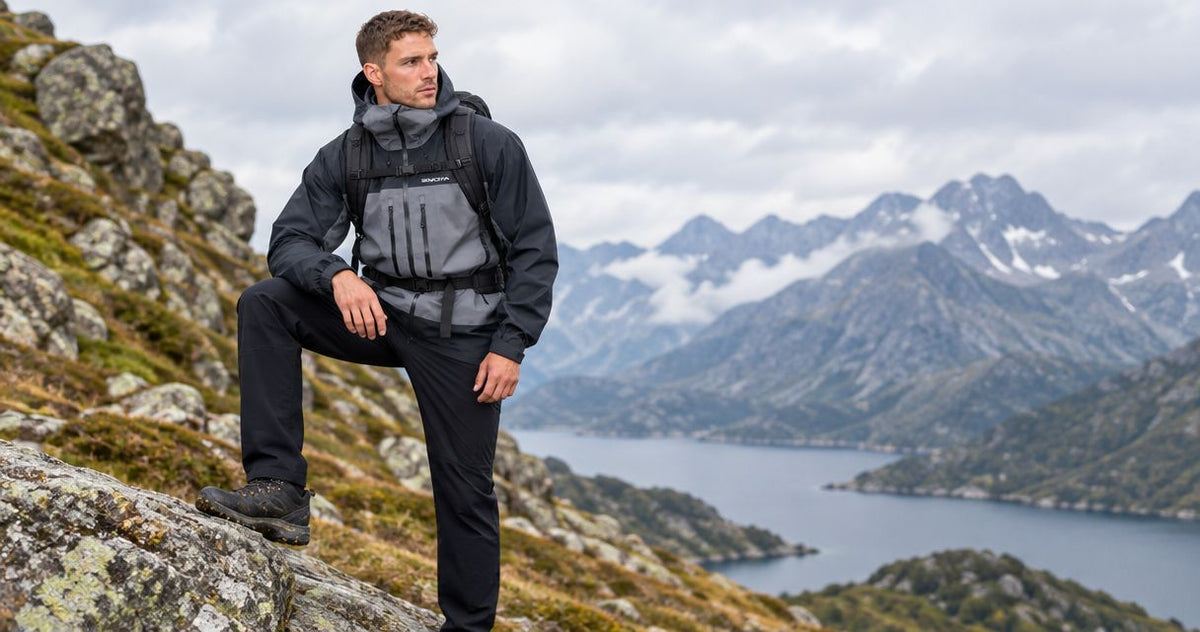
| SS1 Hardshell jacket | An outer layer for mountain use | Designed for alpine climbing, expeditions and winter mountaineering | Check the fit over your chosen insulation; do not treat a shell as a warm jacket |
| SD1 Down Jacket | Additional insulation in moderate to cold conditions | Uses 700 fill power down | Fill power alone does not establish the jacket's overall warmth |
| Ranger Pants | Lightly insulated walking trousers | Durable softshell fabric with light insulation | Light insulation can feel excessive during warm, strenuous walking; softshell does not establish waterproof protection |
Swoya hiking clothing suits men building separate layers for movement, warmth and mountain weather. Choose each garment for a defined job, not because it completes a matching outfit.
1. Start with moisture management
Your base layer sits next to your skin. Choose a fit that allows movement without leaving loose fabric bunched beneath your midlayer or rucksack straps.
The ST1 Tshirt Grey uses a polyester-spandex blend and has a vented back. Those features make it relevant to active walking, but you still need to regulate effort and clothing: a breathable garment cannot prevent sweating when you are overdressed.
Check the neckline, shoulder seams and hem with your pack on. Reach forward as if using poles, then lift your arms; the base layer should remain comfortable without pulling tightly across your back.
2. Add insulation for the conditions
Your midlayer retains warmth. A fleece is a practical starting point when you need insulation while moving, provided its warmth suits the weather and your pace.
The SF1 Fleece Grey is designed for layering and mountaineering and includes a fitted hood and YKK zippers. Check how its hood sits beneath your shell hood, and whether the combined collars restrict your neck when fully fastened.
For colder stops, assess additional insulation separately. The SD1 Down Jacket specifies 700 fill power down, but fill power describes down quality rather than the complete jacket's warmth; down quantity, construction and coverage also matter.
3. Use the shell for exposure
Put on your outer shell when rain or wind requires it. On a sheltered, dry ascent, carrying the shell rather than wearing it can make temperature management easier.
The SS1 Hardshell jacket is designed for alpine climbing, expeditions and winter mountaineering. Assess it over your intended layers, with particular attention to reaching, hood movement and hem coverage under a rucksack hipbelt.
A shell that restricts your midlayer is the wrong fit for that clothing system. Conversely, excess loose fabric is not a replacement for a deliberate layering allowance.
A practical adjustment sequence for the hill
Use this sequence during your 2026 walks rather than waiting until you are soaked with sweat or shivering. The trigger is a change in effort or exposure, not a fixed distance on your route.
- Start cool. Set off without every insulating layer if the conditions allow. You should not rely on a hard climb to correct an outfit that already feels too warm.
- Vent early. Open suitable closures or remove a layer before a sustained ascent makes you uncomfortably hot. Stop somewhere safe to change clothing.
- Add warmth. Put insulation on when you stop or reduce effort in cold conditions. Keep it accessible rather than buried beneath the rest of your kit.
- Keep dry. Put the shell on before rain wets your inner layers. During wet climbs, adjust your pace and ventilation without exposing yourself unnecessarily.
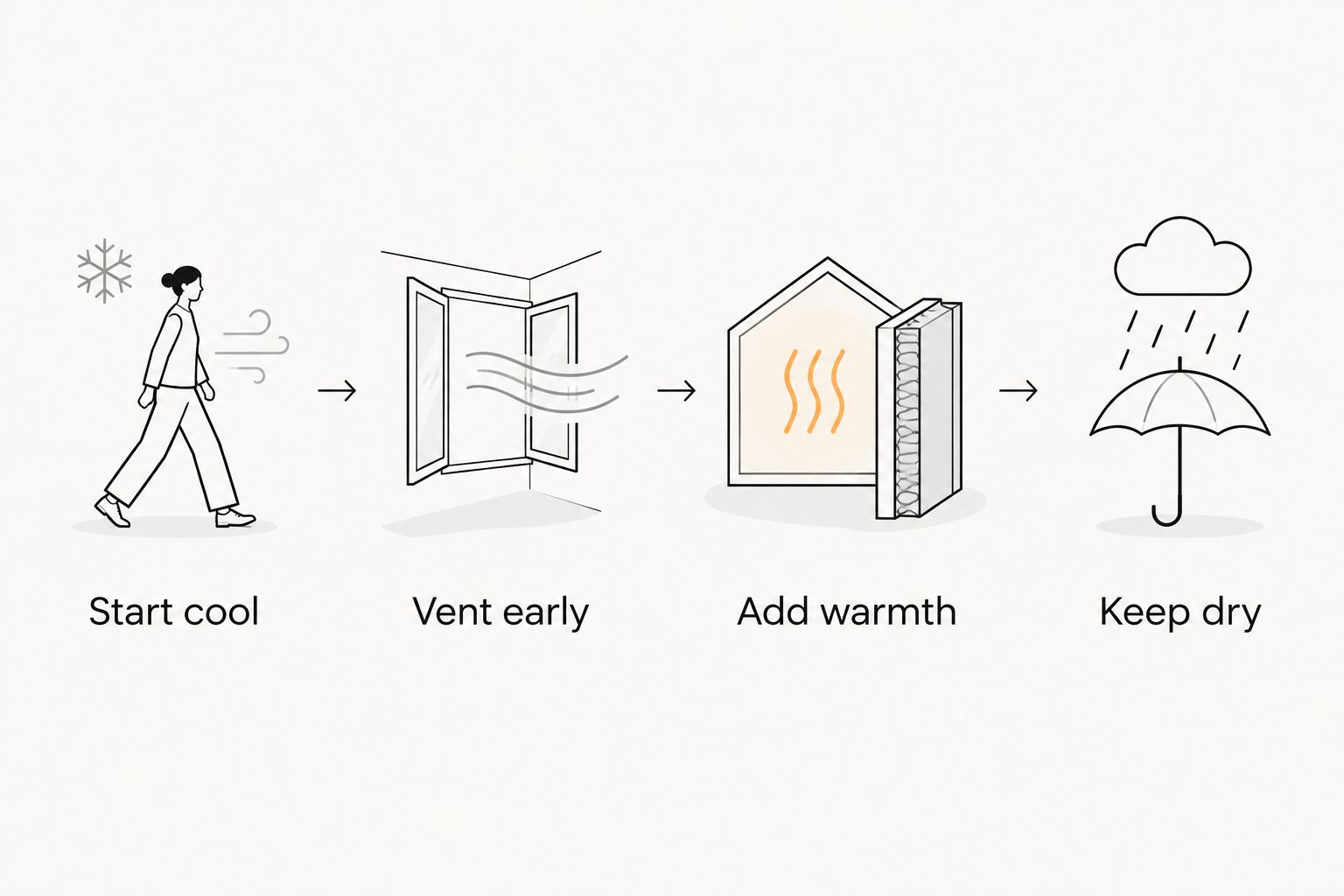
The sequence is a prompt, not a reason to ignore the weather. In cold wind, you might need your shell from the start; in mild rain, controlling effort can matter more than adding another insulating layer.
Why your hiking layers vary
Use these factors to build your 2026 kit list. A forecast temperature alone does not describe how warm you will feel throughout a walk.
- Walking effort: steep climbs generate more body heat than gentle walking. Keep an insulating layer easy to remove before the steep section.
- Wind exposure: a sheltered path and an open ridge place different demands on your outer layer. Reassess clothing before leaving shelter.
- Rain: wet weather changes when you need a shell and how carefully you must manage moisture inside it.
- Stops: lunch breaks, navigation pauses and delays reduce heat production. Carry warmth appropriate to being stationary, not just moving.
- Fit and movement: tight combinations restrict reaching and compress insulation. Test the complete outfit with your normal rucksack load.
- Personal temperature: use your experience of running warm or cold to adjust insulation. Do not copy another walker's outfit without considering your own comfort.
These factors interact. A hard ascent in rain demands a different adjustment from standing still in the same rain, even though the forecast has not changed.
TROUSERS: layer for movement, not just warmth
Your legs need their own assessment. Do not assume that a warm upper-body system means you need equally heavy insulation below the waist.
Ranger Pants use durable softshell fabric with light insulation. That makes them a relevant option when you want insulated walking trousers, but the same insulation deserves scrutiny on warm, strenuous routes.
Check a high step, a deep knee bend and sitting down. The waistband should work beneath your hipbelt without digging in, while the trouser legs should allow your normal stride without pulling at the knees or seat.
Do not treat softshell trousers as waterproof overtrousers. If your route and forecast require waterproof leg protection, plan that as a separate function and check the combination over your walking trousers and footwear.
Check the complete fit before buying
Try the outfit as a system. Wearing a base layer alone in a changing room tells you little about how the shell behaves over fleece beneath loaded shoulder straps.
- Fasten the shell over your intended midlayer without forcing the zip.
- Reach forward, raise your arms and turn your head with the hood up.
- Tighten the hipbelt and check that the hem still covers your waist.
- Check whether layered collars or hoods crowd your face.
- Practise removing the midlayer and repacking it without emptying your rucksack.
For a 2026 kit update, replace the garment that fails a specific job rather than changing everything. If your existing fleece fits and provides suitable warmth, assess the shell around it before buying another midlayer.
Swoya separates the base layer, fleece, shell and trouser roles across its range. Start with the role your current kit does not cover, then check the relevant garment's fit and stated features.


Can I wear a cotton hoody as my hiking midlayer?
A cotton-rich hoody is not the default choice for strenuous hillwalking in cold, wet conditions. Cotton absorbs moisture and dries slowly, so a damp garment becomes a poor choice when you stop producing as much body heat.
The Swoya Napal Hoody Grey contains 80% cotton and 20% recycled polyester fleece. Assess that composition rather than assuming every fleece-lined garment performs the same role as a dedicated technical midlayer; casual comfort does not establish suitability for an exposed hill day.
Should I wear all my layers from the start?
No: wear the layers the starting conditions require and keep the others accessible. Beginning a climb too warm encourages unnecessary sweating, while leaving insulation packed during a cold stop defeats its purpose.
In severe conditions, starting cool does not mean deliberately exposing yourself. Stay protected from the weather and reduce insulation only when it is safe and comfortable to do so.
FAQ
What's the simplest way to layer for hiking?
Wear a moisture-managing base layer, add insulation for warmth, and use a shell for wind and rain. Adjust the combination as your effort, exposure and weather change.
Do I need to wear a fleece under my waterproof jacket?
Wear a fleece under your waterproof jacket when you need the additional warmth. In mild conditions or during hard climbing, a base layer beneath the shell can be more comfortable.
Is a hardshell jacket warm enough for winter hiking?
A hardshell is not a substitute for winter insulation. Choose the insulating layers separately, and check that the shell fits over them without restricting movement.
Can I use Ranger Pants without thermal leggings?
Assess Ranger Pants on their own before adding thermal leggings, because the trousers already include light insulation. Base the decision on the forecast, your pace and how warm you usually feel.
Does 700 fill power tell me how warm a down jacket is?
700 fill power does not tell you the complete warmth of a down jacket. The SD1 Down Jacket uses 700 fill power down, but down quantity, construction, fit and coverage also affect warmth.
How should I update my hiking layers for 2026?
Update the layer that fails a specific job rather than replacing your whole system. Check moisture management, moving warmth, weather protection and insulation for stops against your planned routes.
One last thing
Test how you remove a layer, not just how you wear it. Before your next walk, put on the full outfit and rucksack, then take off the midlayer and pack it away. An effective Swoya layering system still depends on making adjustments before discomfort becomes a problem.