Hardshell vs softshell jackets: which do you need?
Choose a hardshell for sustained rain and exposed, wet conditions; choose a softshell for breathable comfort and freedom of movement during active walking in mostly dry weather. In the hardshell vs softshell decision, the key caveat is that a water-repellent softshell does not replace a waterproof jacket: for changeable UK hillwalking in 2026, wear the comfortable layer and carry the protection your route requires.
- Hardshell vs softshell: choose waterproof protection for sustained rain, breathable comfort for mostly dry, active walking.
- A softshell's water-repellent finish does not make the jacket waterproof.
- Swoya's SS1 Hardshell jacket is designed for alpine climbing, expeditions and winter mountaineering.
- Fit your waterproof jacket over the layers you actually wear, then check reach, hood movement and rucksack compatibility.
Why this matters
A jacket can suit the forecast yet feel wrong once you start climbing. Your pace, insulation and ventilation affect comfort alongside the fabric's weather protection; choosing the most protective outer layer does not remove the need to manage heat.
Separate two questions: what should you wear while moving, and what must you carry for deteriorating weather? This guide to choosing a waterproof hiking jacket covers the protective part of that decision. A softshell addresses a different need: comfortable movement when full waterproof protection is unnecessary.
Hardshell vs softshell jackets: which do you need?
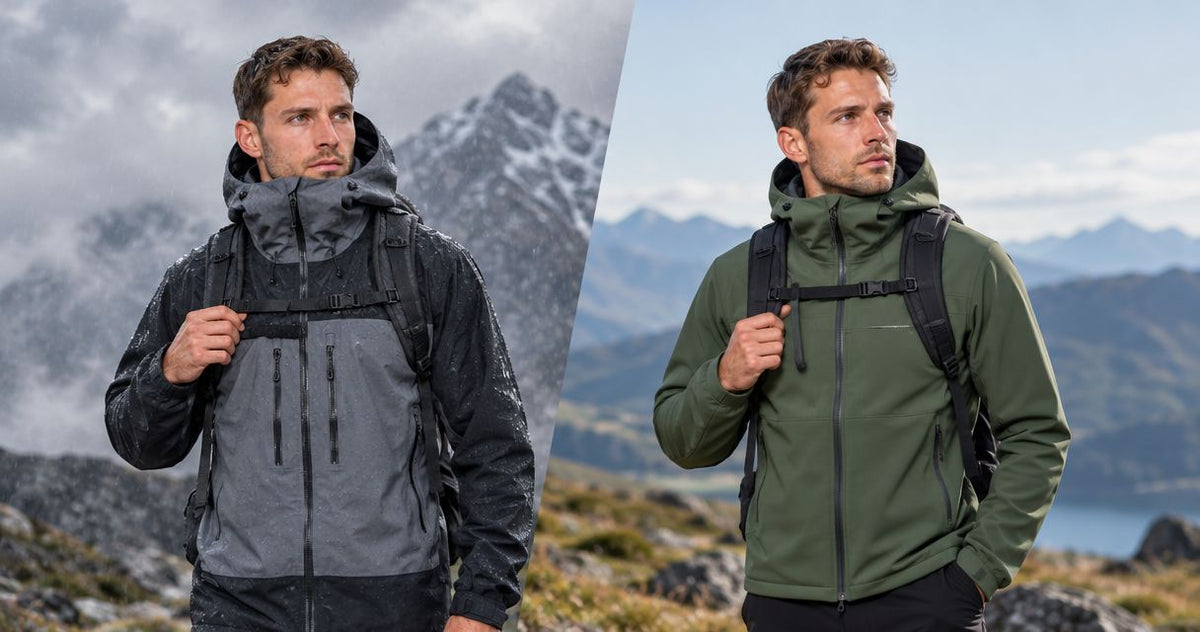
You need a hardshell when keeping rain out is the priority, and a softshell when managing heat and movement matters more than waterproof protection. Carrying a hardshell while walking in a softshell is a valid combination, not a contradiction.
| Jacket type | Best for | Main advantage | Main limitation | Buying decision |
|---|---|---|---|---|
| Hardshell | Sustained rain and exposed wet routes | Waterproof protection when the garment's fabric, seams and openings are designed accordingly | Moisture can accumulate inside during hard effort | Choose for the waterproof role |
| Softshell | Active walking in mostly dry, cool or breezy conditions | Typically combines stretch, breathability and some weather resistance | Water resistance is not a substitute for waterproof construction | Choose for moving comfort |
These are category differences, not guarantees about every jacket. A heavy, fleece-backed softshell behaves differently from a thin stretch-woven version, while waterproof jackets differ in fabric construction, ventilation and cut.
For a 2026 purchase, compare the actual specification rather than treating either category name as a complete description. Waterproofing, insulation and freedom of movement are separate properties; no single label explains all three.
Hardshell: best for sustained rain
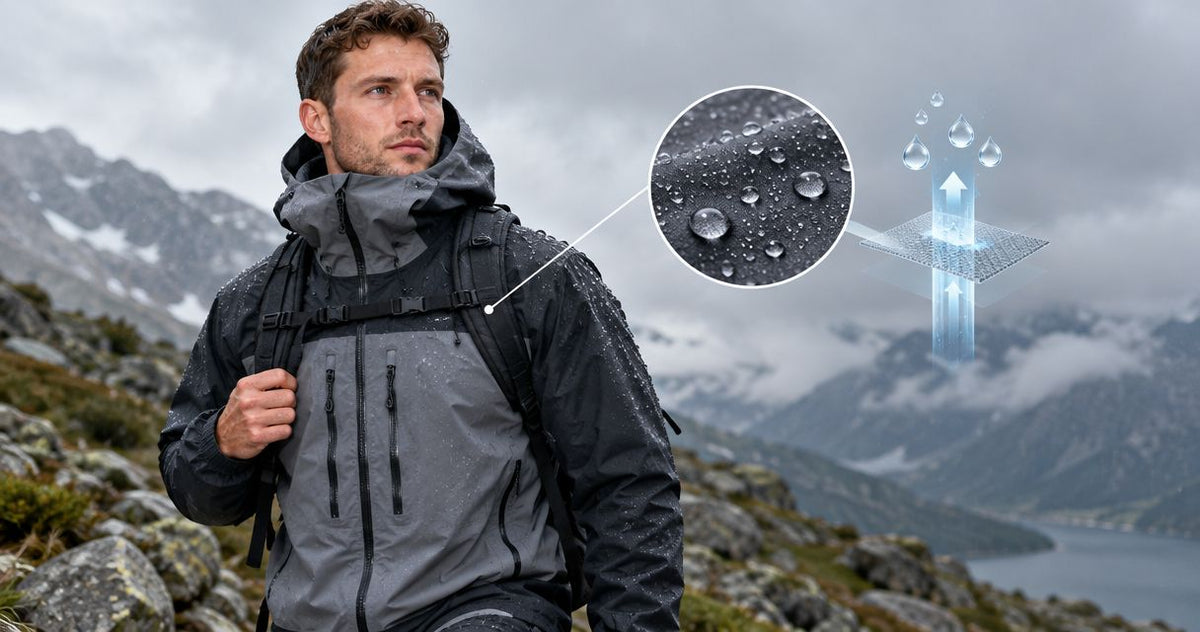
A waterproof hardshell forms the weather-protection layer of your clothing system. Its job is to resist rain and wind, while the layers underneath provide the warmth you need. Do not assume that a substantial-looking outer fabric means the jacket is insulated.
Waterproof fabric alone does not describe the whole garment. Check seam sealing, the front closure, hood coverage and adjustment, because water can enter through openings even when the main fabric resists it.
What a hardshell does well
- Rain protection: a waterproof garment is the appropriate choice for prolonged wet weather.
- Wind protection: the outer layer helps limit wind-driven heat loss on exposed ground.
- Layering flexibility: a separate shell lets you change insulation beneath it as conditions change.
Where a hardshell compromises
Waterproof-breathable fabric does not prevent all internal dampness. During a steep climb, you can produce moisture faster than the clothing system releases it, particularly when you wear excessive insulation underneath.
Vent before you overheat, adjust your pace where necessary and remove surplus insulation when conditions allow. A damp inner surface does not, by itself, establish that rain has passed through the fabric.
Choose a hardshell for its protective function, not as a promise that you will remain sweat-free.
Softshell: best for active walking in mostly dry weather
A softshell usually prioritises movement, breathability and a degree of weather resistance. Many use stretch-woven fabrics; some include insulating backings or membranes, so check the construction rather than assuming all softshells feel or perform alike.
On a cool, mostly dry ascent, a suitable softshell can provide enough protection without requiring you to wear your waterproof. That is its main appeal. You can keep moving in a comfortable outer layer while retaining a separate rain layer in your pack.
What a softshell does well
- Movement: stretch and garment shaping can help with reaching and high steps.
- Active comfort: air-permeable designs allow airflow that can help during exertion.
- Light weather resistance: suitable fabrics and finishes can handle brief light showers, depending on the garment.
Where a softshell compromises
A water-repellent finish encourages droplets to bead on the surface; it does not establish that the jacket is waterproof. Prolonged rain can exceed the protection a non-waterproof softshell provides.
Insulated softshells also add warmth that you cannot remove independently from the outer fabric. That can suit cold, steady walking but work against you on a warm climb.
Choose a softshell for the conditions in which you will wear it, not for the weather you hope to avoid.
Why the right jacket varies
The useful question is not which category wins overall. It is which function your route, forecast and clothing system require.
- Rain duration: brief showers and prolonged rain place different demands on an outer layer. Sustained wet weather calls for waterproof protection.
- Exposure: an open ridge gives you less shelter from wind and rain than a sheltered woodland path.
- Walking effort: steep climbs generate more heat than gentle walking. Adjust insulation and ventilation rather than relying on breathability alone.
- Temperature: a lined softshell adds warmth; an uninsulated shell lets you select warmth separately.
- Route commitment: consider how easily you can shorten the walk or reach shelter if conditions deteriorate.
- Layering space: your jacket needs to accommodate the clothing underneath without restricting movement or leaving excessive loose fabric.
For your 2026 walking kit, start with the wettest credible conditions on the planned route. Then decide what you want to wear during the less demanding parts of the day.
How should you choose before a hillwalk?
Use the forecast and route together. A dry forecast does not remove exposure, and a waterproof jacket does not make an unsuitable route appropriate.
- Check the forecast. Read the relevant mountain forecast, including wind and conditions at height, rather than relying only on a nearby town forecast.
- Assess exposure. Identify exposed ground, sheltered sections and practical options for shortening the route.
- Choose moving layers. Select the clothing you expect to wear while climbing without overheating.
- Pack rain protection. Carry a waterproof jacket when the planned conditions require one, whether or not you start in it.
- Check movement. Test the complete combination with your usual rucksack before committing to the walk.
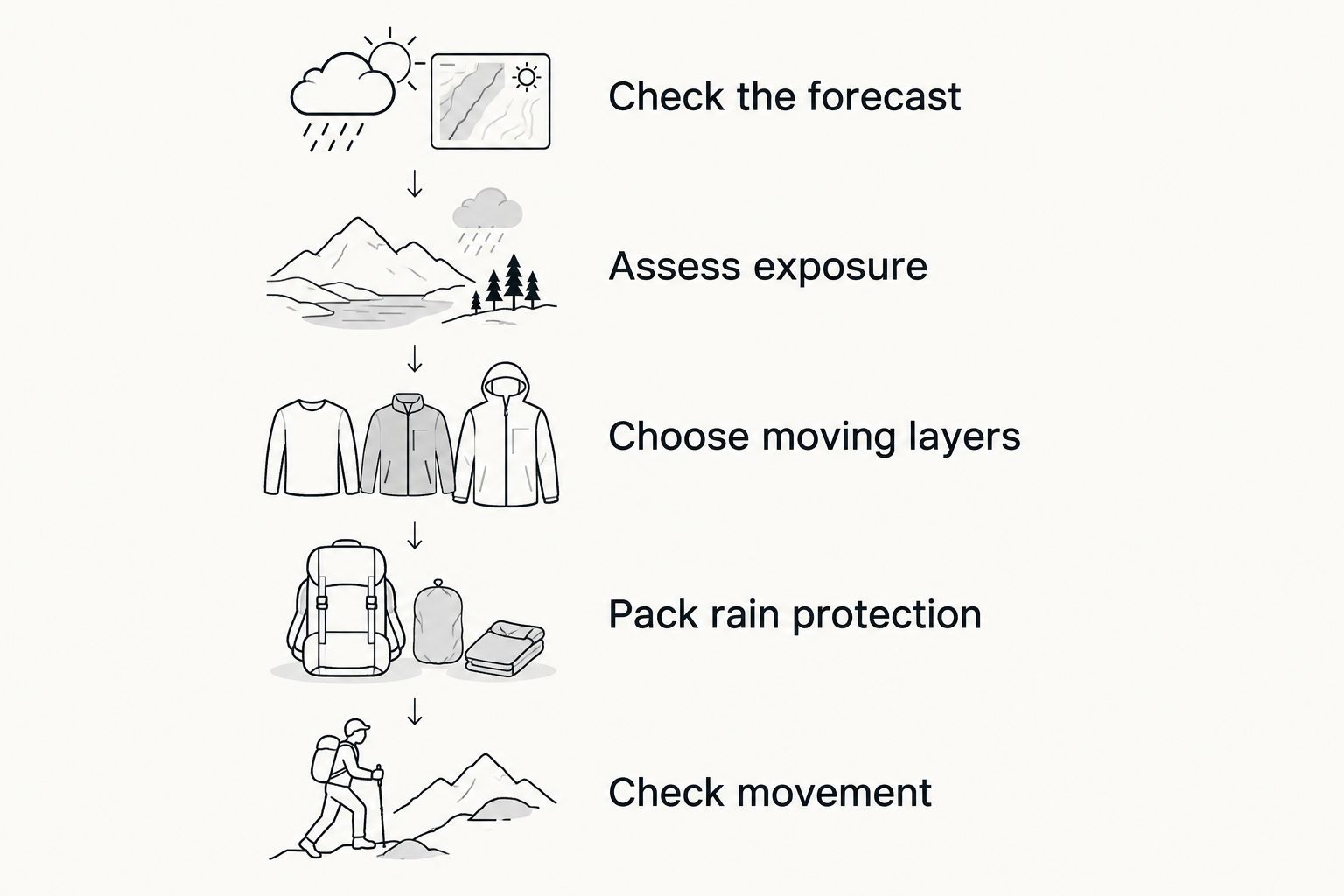
Repeat this process when the route or forecast changes. A jacket combination that suits a sheltered walk is not automatically the right combination for an exposed ridge.
What do fabric layers actually tell you?
Waterproof jacket descriptions often refer to 2-layer, 2.5-layer or 3-layer construction. These terms describe how the waterproof fabric assembly is built; they are not a ranking of warmth or a guarantee of comfort.
| Construction | What the term describes | What to check when buying |
|---|---|---|
| 2-layer | Outer fabric bonded to a waterproof barrier, commonly with a separate lining | Lining, packed bulk and comfort over your layers |
| 2.5-layer | Outer fabric and waterproof barrier with an internal protective print or coating | Inner feel and suitability for your intended use |
| 3-layer | Outer fabric, waterproof barrier and inner backing bonded together | Fabric weight, flexibility and garment construction |
Do not confuse these fabric constructions with the number of garments you should wear. A 3-layer shell is still one jacket; the construction does not tell you how much insulation to put underneath it.
For a 2026 shortlist, read construction alongside seam treatment, hood design and ventilation. A fabric description cannot tell you whether the sleeves pull back when you reach or whether a hip belt blocks the pockets.
How should a shell fit over your walking layers?
A shell should allow your intended layers and walking movements without pulling tight across the shoulders, elbows or seat. Try it with the insulation you actually expect to use, not just a thin top in a warm room.
Raise your arms, reach forward and make a high step. Check that the hem still provides useful coverage, the cuffs do not retreat excessively and the zip does not feel strained across your chest.
Put on your rucksack and fasten the hip belt. Test pocket access and hood adjustment with the pack in place, then turn your head to check that the hood does not obstruct your view.
Use the same checks for a softshell, especially if its fitted cut leaves little space underneath. This guide to waterproof hiking jackets with room for winter layers develops the cold-weather fit checks.
Where Swoya fits into the decision
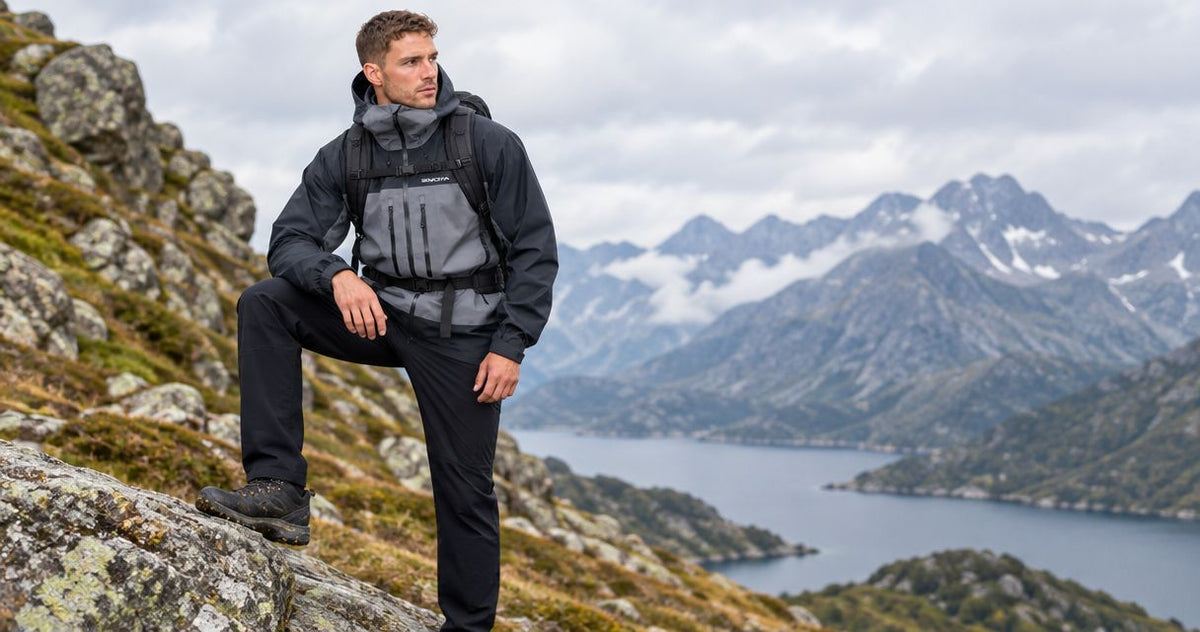
Swoya's SS1 Hardshell jacket is best for walkers seeking a shell designed for alpine climbing, expeditions and winter mountaineering. Those are its stated uses; assess its current technical specification against your own requirements before choosing it for a particular route.
The SS1 Hardshell jacket belongs on the protective-shell side of this comparison, not as a substitute for adjustable insulation. Check waterproof construction, ventilation, hood suitability and fit rather than inferring those details from its intended activities.
For a separate midlayer, the SF1 Fleece Green is described as designed for layering and mountaineering, with a fitted hood and YKK zippers. That makes it relevant to a shell-based clothing system, but fleece is not rain protection and adds warmth you might not need during a hard ascent.
Swoya's hardshell-and-fleece combination therefore addresses separate jobs: outer protection and insulation. The benefit is independent layer adjustment; the trade-off is managing separate garments rather than one insulated outer layer.


Can you wear a softshell under a hardshell?
Yes, a softshell can sit under a hardshell if the combination fits and provides appropriate warmth. Check shoulder movement, sleeve bulk and hood overlap before taking the combination onto the hill.
Do not add the softshell automatically. If a base layer and fleece already provide suitable insulation, another garment can add unnecessary bulk and heat.
Is a hardshell warmer than a softshell?
A hardshell is not automatically warmer than a softshell. An uninsulated waterproof shell mainly provides weather protection, while a fleece-backed softshell includes insulation.
Compare the complete clothing system rather than the outer jackets alone. Wind protection, underlying insulation and your activity all affect how warm you feel.
FAQ
What's the main difference between a hardshell and a softshell?
A hardshell prioritises waterproof weather protection, while a softshell typically prioritises breathable movement and some weather resistance. Check the individual garment because construction varies within both categories.
Is a softshell jacket waterproof enough for UK hillwalking?
A non-waterproof softshell does not replace a waterproof jacket for sustained rain. Use it for suitable moving conditions and carry separate rain protection when your route and forecast require it.
Which jacket should I buy first for hillwalking in 2026?
Prioritise a suitable waterproof hardshell if you do not already have rain protection for your planned walks. A softshell is an additional option for moving comfort, not a replacement for that protection.
Do I need a softshell if I already own a waterproof jacket?
You do not automatically need a softshell. Add one only if it provides useful comfort or weather resistance that your existing walking layers do not provide.
Why do I feel wet inside my waterproof jacket?
Perspiration and condensation can make a waterproof jacket feel damp inside, although leakage is another possibility. Reduce excess insulation and use available ventilation; internal dampness alone does not prove fabric failure.
Can I use a fleece instead of a softshell?
A fleece can provide your moving insulation when conditions suit it. It does not necessarily provide the same wind resistance as a softshell, so assess the full clothing combination.
Does a water-repellent finish make a jacket waterproof?
A water-repellent finish does not make a jacket waterproof. It helps water bead on the surface; waterproof protection depends on the garment's fabric and construction.
One last thing
The jacket you wear most is not necessarily the jacket you most need to carry. A softshell can remain comfortable through much of a walk while a waterproof stays packed, ready for conditions where comfort alone is no longer the deciding factor.
Before your next hillwalk, try the full system with your rucksack. Resolve restricted reach, inaccessible pockets and awkward hood overlap before you encounter them on exposed ground.