Best fleece for hiking in 2026
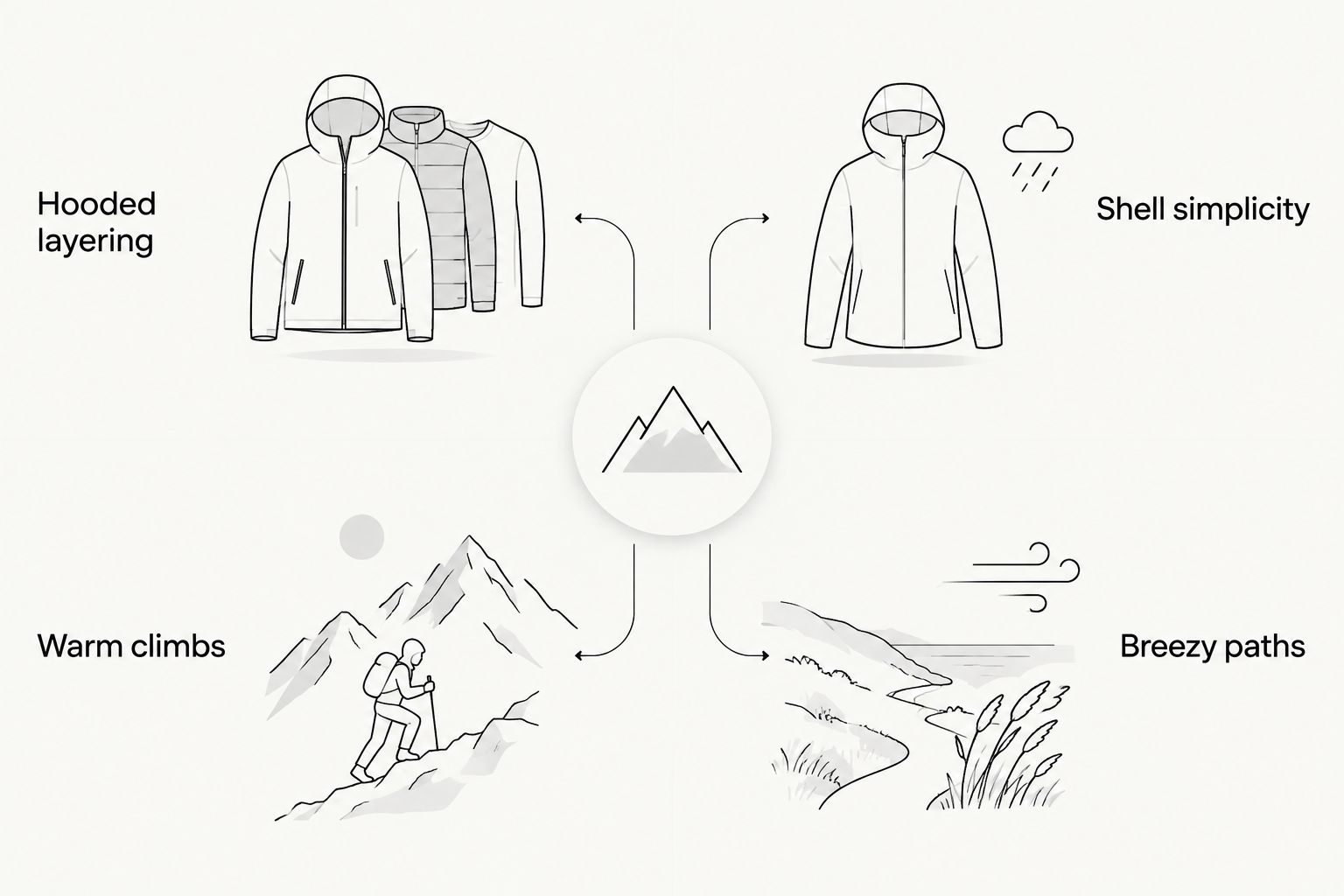
Best overall for hooded layering: SF1 Fleece Grey. Best for simpler shell layering: a hoodless fleece; best for warm climbs: a lightweight grid fleece; best for breezy, dry paths: a wind-resistant fleece. This 2026 guide helps you choose the best fleece for hiking by matching construction, coverage and fit to your walking conditions.
- Swoya SF1 Fleece Grey is the best fleece for hiking when your priority is a fitted hood and midlayer use.
- Choose a hoodless hiking fleece when your waterproof jacket already provides the head coverage you need.
- Choose lightweight grid fleece for warm climbs; add a shell when wind or rain demands protection.
- Judge every midlayer with your walking base layer, waterproof jacket and rucksack on.
Why this matters
A fleece supplies insulation within your clothing system. It does not replace a waterproof jacket, and extra warmth becomes a disadvantage when you cannot shed enough heat on an uphill section.
Swoya SF1 Fleece Grey is best for hillwalkers who want a fitted-hood fleece designed for layering and mountaineering. Its stated features include YKK zips and a zip end guard; those are useful construction details, not evidence that it is warmer or more breathable than another fleece.
For your 2026 shortlist, start with the job your current clothing does badly. A cold head, crowded neckline and overheating back call for different solutions.
What makes the best fleece for hiking?
- Useful insulation: choose warmth for your walking effort, not just the temperature at the car park. A thicker-feeling fleece is not automatically the right climbing layer.
- Layering fit: check shoulder movement and sleeve clearance with your waterproof on. Fabric should not bunch tightly beneath the shell.
- Heat control: assess how easily you can adjust coverage while moving. An accessible opening helps you release heat before perspiration builds.
- Hood compatibility: decide whether you need fleece head coverage. Try the fleece hood beneath your shell hood rather than assessing each separately.
- Rucksack comfort: check seams, zip hardware and gathered fabric under the shoulder straps and hip belt. Small pressure points matter during regular use.
- Construction information: compare stated fabrics, features and care instructions. Do not turn an unlisted fabric weight or breathability figure into an assumed advantage.
Best hiking fleeces at a glance
The named product below has supplied construction details. The remaining entries are fleece types: use them to identify the right design, then check the specifications of the individual garment.
| Option | Best for | Standout feature | Key limitation |
|---|---|---|---|
| SF1 Fleece Grey | Hooded layering | Fitted hood, YKK zips and zip end guard | Hood must work with your shell; no comparative warmth result is established |
| Hoodless fleece | Shell simplicity | Leaves head coverage to your hat or shell | No integrated head insulation |
| Lightweight grid fleece | Warm climbs | Raised fabric sections separated by channels | Open constructions need additional wind protection |
| Wind-resistant fleece | Breezy paths | Construction intended to reduce wind penetration | Wind resistance does not establish waterproof protection |
The ranking is a decision order, not a claim that every hooded fleece beats every grid fleece. Choose the construction for your route before choosing the garment.
1. SF1 Fleece Grey: best hiking fleece for hooded layering
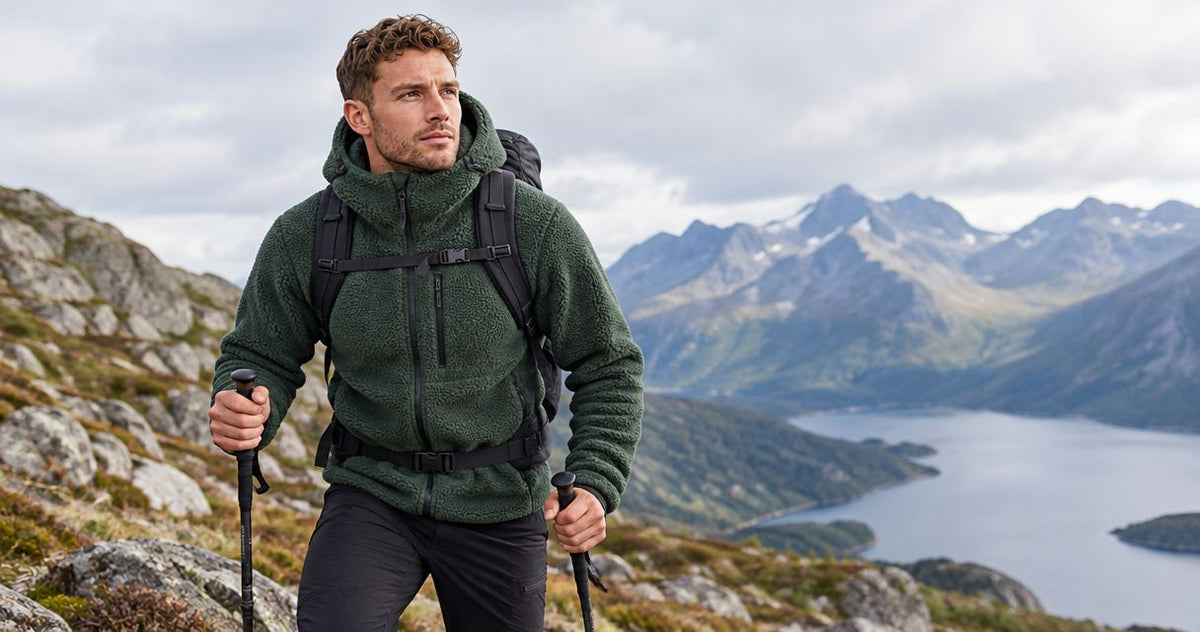
SF1 Fleece Grey is designed for layering and mountaineering, with a fitted hood, YKK zips and a zip end guard. It belongs on your shortlist when you want head coverage built into your midlayer rather than supplied entirely by a separate hat.
That makes fit beneath your waterproof the decisive check. Pull both hoods up, turn your head and look down: the combination should preserve movement without pulling across your throat or shoulders.
SF1 Fleece Grey pros:
- Fitted hood provides integrated head coverage.
- Layering and mountaineering are stated design purposes.
- YKK zips are specified rather than left unidentified.
- A zip end guard is included in the stated construction.
SF1 Fleece Grey cons:
- Integrated hood adds another component beneath a hooded shell.
- The supplied details do not establish garment weight or comparative thermal performance.
Best for: regular hillwalkers seeking a hooded midlayer to assess as part of their existing shell system.
For a Swoya fleece comparison, SF1 Fleece Green is also described with a fitted hood, YKK zips and a zip end guard. The stated features do not support a performance ranking between the colours; make the same fit checks for either.
Verdict: Buy SF1 Fleece Grey if hooded layering is your priority and the combined fit works.


2. Hoodless fleece: best hiking fleece for shell simplicity
A hoodless fleece insulates your torso and arms without adding fabric around your head. It suits walkers who already use a hat and prefer their waterproof hood to remain the only hood in the system.
Do not assume hoodless means lightweight. Fabric thickness, cut and construction still determine how the garment feels beneath a shell, so compare the whole garment rather than the neckline alone.
Hoodless fleece pros:
- Removes fleece-hood overlap beneath a waterproof hood.
- Lets you select head insulation separately.
- Keeps unused hood fabric out of the back of your collar.
Hoodless fleece cons:
- Provides no integrated insulation for your head.
- Requires a separate hat when you need head warmth.
Best for: walkers who dislike stacked hoods or already have a headwear arrangement that works.
During your 2026 fit check, fasten the fleece collar and shell together. A hoodless design still fails if the collars press against your throat or interfere with each other's zips.
Verdict: Buy a hoodless fleece when simpler shell layering matters more than integrated head coverage.
3. Lightweight grid fleece: best hiking fleece for warm climbs
Grid fleece uses raised sections of fabric separated by lower channels. In lightweight, open constructions, this gives you an alternative to a dense fleece when sustained uphill effort makes heat management the priority.
The grid pattern alone does not tell you how warm or breathable a garment is. Check the actual fabric specification and density; different grid fleeces are not interchangeable.
Lightweight grid fleece pros:
- Gives warm-running walkers a construction to compare against denser fleece.
- Channels reduce continuous fabric coverage compared with an equivalent solid surface.
- Lightweight versions suit a layering approach built around adjusting coverage.
Lightweight grid fleece cons:
- Open constructions offer limited protection from moving air.
- A lightweight climbing layer is not automatically sufficient for cold stops.
Best for: walkers who overheat on sustained climbs and already carry suitable weather protection and stop insulation.
Try the fleece with your rucksack rather than judging airflow while standing indoors. The back panel and straps cover parts of the garment, changing where heat escapes.
Verdict: Buy lightweight grid fleece for heat management; skip it as your only cold-weather insulation.
4. Wind-resistant fleece: best hiking fleece for breezy paths
Wind-resistant fleece is intended to reduce the cooling effect of air passing through the garment. Depending on construction, that role comes from the fabric itself or an added barrier.
Check which approach the garment uses. A wind-resistant label does not establish waterproofing, and it does not tell you how comfortable the fleece will feel during a hard climb.
Wind-resistant fleece pros:
- Addresses wind penetration rather than insulation alone.
- Suits dry conditions where moving air is the main discomfort.
- Gives walkers an outer-layer fleece option to assess.
Wind-resistant fleece cons:
- Extra wind blocking can reduce airflow during exertion.
- Does not replace a waterproof shell in rain.
Best for: walkers prioritising wind protection on dry routes over maximum airflow during uphill effort.
If you normally keep a waterproof jacket over your fleece, question whether additional wind resistance answers a real need. Assess the layers together rather than buying overlapping features by default.
Verdict: Buy wind-resistant fleece for breezy, dry walking; skip it when unrestricted airflow is your main requirement.
Fit the fleece into your walking system
Check movement before warmth
Wear your usual walking base layer and reach forward as though using poles. Lift your arms, bend your elbows and turn your torso; check for pulling across the shoulders and sleeves that retreat uncomfortably.
Next, add your waterproof and rucksack. A fleece that fits alone still needs to pass the shell-and-pack check. Do not solve restricted movement by assuming the fabric will stretch enough later.
Separate weather protection from insulation
For a 2026 layering shortlist, give each garment a clear job. The SS1 Hardshell jacket is described as designed for alpine climbing, expeditions and winter mountaineering; check its current full specification and fit before pairing it with a fleece.
Ranger Pants use durable softshell fabric and light insulation. Assess leg warmth separately: an insulated trouser does not change how much upper-body coverage you need on an exposed stop.
Read the fibre label
A fleece-lined casual garment is not automatically a technical hiking midlayer. The Swoya Napal Hoody Grey, for example, is described as a relaxed-fit garment with an 80% cotton and 20% recycled polyester fleece composition.
Those percentages identify the blend, not its suitability for your route. Cotton absorbs moisture and dries more slowly than typical polyester hiking fabrics, so distinguish everyday comfort from the requirements of sustained exertion and wet conditions.
How we ranked
This 2026 selection prioritises intended use, hood compatibility, heat management, rucksack comfort and the construction details available. It does not claim field testing, measured drying times or a warmth comparison between named products.
SF1 Fleece Grey takes the hooded-layering slot because its stated design and fitted hood directly match that use. The other entries identify different buying needs rather than unsupported winners from competing brands.
Which hiking fleece should you choose?
Choose SF1 Fleece Grey if you want a fitted-hood midlayer and it works beneath your waterproof. Choose hoodless construction for less hood overlap, lightweight grid fleece for warm climbs, or wind-resistant fleece when dry-weather wind protection takes priority.
If you remain undecided, start with your current fleece's specific failure. Replace excess warmth with lighter construction, collar crowding with a simpler neckline, or inadequate head coverage with a compatible hood—not merely a different logo.
FAQ
What's the best fleece for hiking in 2026?
SF1 Fleece Grey is the recommended option here for hooded layering. Choose a different construction if your priority is less hood overlap, greater airflow or dry-weather wind protection.
Is a hooded fleece better than a hoodless fleece for hillwalking?
A hooded fleece is better when you want integrated head insulation; a hoodless fleece is better when you want less overlap beneath a shell hood. Check the complete clothing system before choosing.
Can I wear SF1 Fleece Grey beneath a waterproof jacket?
SF1 Fleece Grey is designed for layering and mountaineering. Confirm that your waterproof accommodates its fitted hood and allows comfortable shoulder movement.
Is grid fleece warmer than ordinary fleece?
A grid pattern alone does not establish greater warmth. Fabric thickness, density, fit and wind exposure all affect insulation in use.
Does wind-resistant fleece replace a waterproof jacket?
Wind-resistant fleece does not replace a waterproof jacket. Wind resistance and waterproof protection are different properties, so check the garment's stated specification.
Should my hiking fleece fit tightly?
Your hiking fleece should allow comfortable movement without excessive fabric bunching beneath your shell. Test it with your usual base layer, waterproof and rucksack.
Are SF1 Fleece Grey and SF1 Fleece Green different performance options?
The supplied descriptions state the same fitted hood, YKK zips and zip end guard for both colours. Those details do not establish a performance difference between them.
One last thing
Make your final 2026 fit check with your rucksack fastened and both hoods raised. Turn your head as though checking behind you: if the combination pulls, blocks your view or crowds your throat, change the layering combination before buying.