Waterproof jackets for multi-day hiking: what to prioritise
Multi-day hiking waterproof protection is an outer-layer system that keeps rain out while allowing you to manage heat across consecutive walking days. Choose your jacket around exposed ground, a loaded rucksack and the layers you will actually wear—not a waterproof rating alone.
- A waterproof jacket for multi day hiking needs dependable rain protection, loaded-pack fit and usable ventilation.
- Swoya’s SS1 Hardshell jacket targets alpine use; check specifications and loaded-pack fit before choosing it.
- Ranger Pants use durable softshell fabric with light insulation; treat waterproof leg protection as a separate requirement.
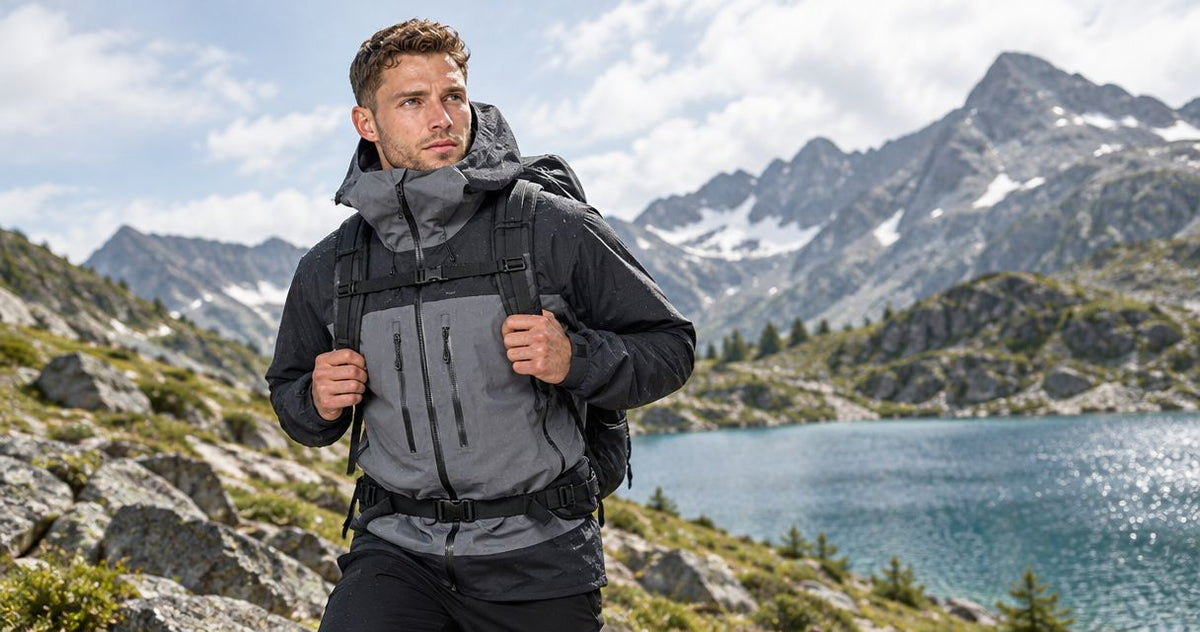
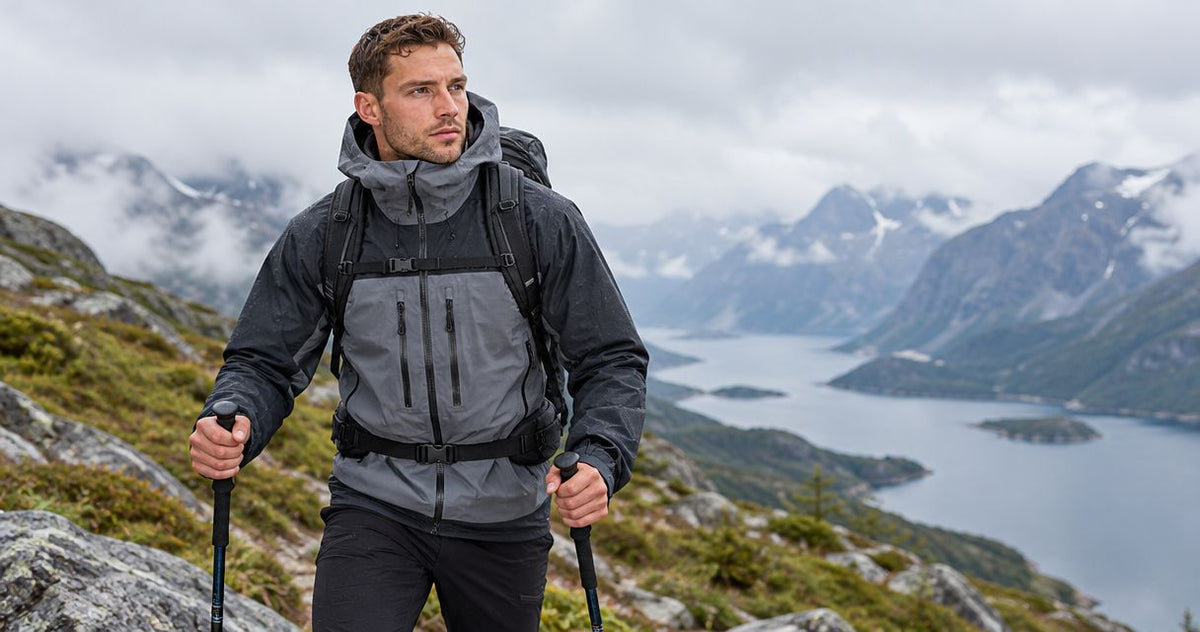
- Check hood stability, cuff access and hem coverage while wearing your walking layers and rucksack.
Why waterproof protection matters for multi-day hikers
A jacket must work while you walk, not just while you stand in rain. On a multi-day route, you need to climb without trapping unnecessary heat, stop without immediately chilling and access essential items without taking off your rucksack.
Your waterproof also has to accommodate changing layers. A comfortable fit over a T-shirt does not establish whether the same jacket works over insulation at an exposed stop. Equally, excess fabric can interfere with your view or hand movements when the hood and cuffs are poorly adjusted.
For your 2026 kit list, start with the conditions and equipment you already know. Use this guide to choosing a waterproof hiking jacket alongside a practical fit check, rather than selecting solely by a headline specification.
How to choose your multi-day hiking jacket
Define your route and exposure
Write down the conditions your jacket must cover before comparing products. An exposed ridge, a sheltered valley and a campsite stop place different demands on weather protection and heat management. Your jacket choice should reflect the most exposed planned section, alongside your ability to change or abandon the route.
Separate walking requirements from stopping requirements. You need room to move during an ascent, but also sufficient space for the insulation you intend to use when stationary. A jacket that only fits your lightest outfit leaves that second requirement unresolved.
For a 2026 trip, review the route and forecast close to departure rather than treating a seasonal kit list as fixed. Technical clothing supports your plan; it does not replace decisions about terrain, weather or retreat.
Record these requirements before shopping:
- Exposure: identify ridges, open plateaux and prolonged unsheltered sections.
- Effort: note sustained climbs where you need to release heat.
- Layers: identify what must fit beneath the shell at stops.
- Rucksack: use the pack and load intended for the trip.
- Drying: consider how you will manage wet clothing between walking days.
Separate waterproofing from heat management
Waterproofing, breathability and ventilation describe different functions. Do not use one specification as a substitute for the other two. A rain barrier limits external water penetration; moisture management also depends on the conditions inside and outside your clothing.
Hydrostatic-head ratings describe resistance to water pressure in a test. A figure of 20,000 mm represents a 20-metre water column; 10,000 mm represents a lower pressure resistance under comparable test conditions. Neither figure tells you whether the hood fits, the pockets clear your hip belt or the complete jacket suits your route.
Breathability figures also need context. Compare the stated test method before comparing values, and distinguish fabric measurements from complete-garment performance. For your 2026 shortlist, record the method alongside the number rather than arranging jackets by the largest figure.
Ventilation means releasing warm, humid air through openings. Check which openings the actual jacket provides and whether you can operate them under your rucksack.
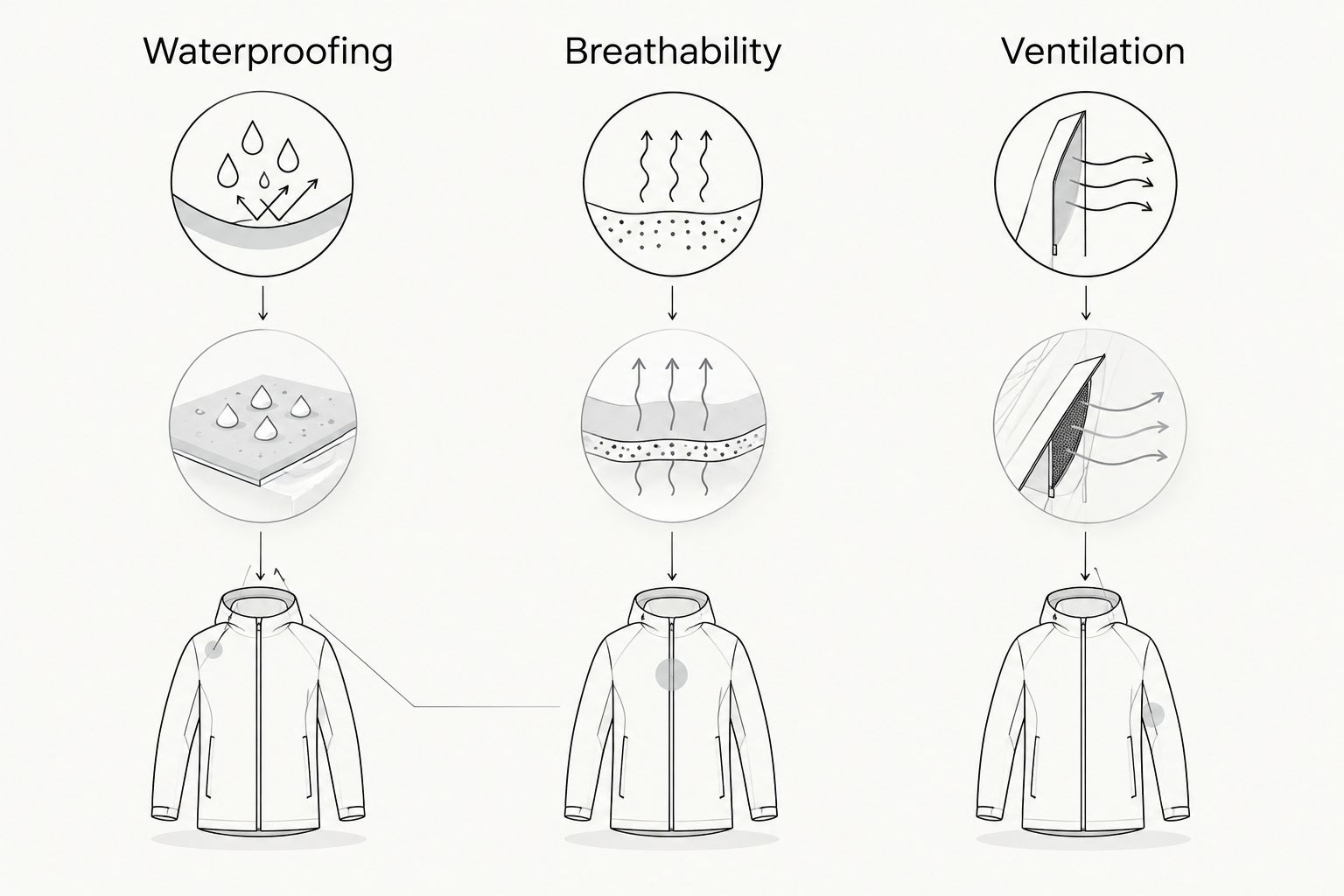
Use separate checks for each function:
- Waterproofing: inspect the stated fabric construction and seam protection.
- Breathability: compare figures only with their test methods identified.
- Ventilation: check which openings you can use while walking.
- Coverage: assess the hood, cuffs, front closure and hem together.
Test the fit under your loaded rucksack
Start with your existing layers and rucksack. Put on the combination you expect to wear in cold, wet conditions, fasten the hip belt and sternum strap, then adjust the jacket. This reveals restrictions that a mirror check misses.
Raise your arms, reach forward and take a high step. Watch whether the hem lifts away from your waistband, the shoulders pull or the sleeves expose your wrists. Turn your head with the hood secured: the opening should let you see where you are placing your feet without repeatedly readjusting it.
Swoya outdoor clothing is best suited to men seeking kit for everyday exploration and technical outdoor use. Within that range, the SS1 Hardshell jacket is designed for alpine climbing, expeditions and winter mountaineering. That stated purpose makes it relevant to a mountain-shell shortlist, but does not establish its weight, ventilation or fit for your body.
Use the winter waterproof jacket layering guide when checking colder-weather combinations.
Finish the fitting session with these checks:
- Fasten every rucksack strap you normally use.
- Reach forward as though planting walking poles.
- Check hood visibility while looking down and sideways.
- Open pockets with the hip belt fastened.
- Adjust cuffs over the gloves you intend to carry.
Practise managing heat before committing to the route
A waterproof jacket for multi day hiking needs an operating routine as well as suitable construction. Begin with your current shell: practise opening, closing and adjusting it on a local walk with a loaded pack. Note which controls remain accessible and which require you to stop.
Release excess heat before your inner layers become noticeably damp. Adjust your pace and clothing as the gradient changes instead of waiting until you feel uncomfortable. A more expensive jacket does not remove this requirement.
When rain prevents you from opening the front fully, use the ventilation options the jacket actually provides. Do not assume that every hardshell has underarm zips, a two-way front zip or venting pockets. Confirm those details for the exact model under consideration.
Include a rehearsal walk in your 2026 preparation. Its purpose is to learn your clothing system, not to prove that a local outing reproduces prolonged mountain weather.
Practise a repeatable sequence:
- Open usable ventilation before a sustained climb.
- Reduce unnecessary insulation while still sheltered.
- Adjust walking pace when heat continues to build.
- Close openings before entering wind-driven rain.
- Add appropriate insulation before a prolonged stop.
Inspect construction, controls and care requirements
Look beyond the fabric name. A complete jacket includes seams, closures, adjustments and areas that sit beneath pack straps. Inspect how those parts work together, particularly where your rucksack limits access.
Use the care label as part of the buying decision. You need to understand how to clean the garment, whether any water-repellent treatment needs maintenance and which drying instructions apply. Follow the manufacturer's directions rather than applying the same treatment to every shell.
Surface wetting and water entering through a closure are different problems. If your existing jacket feels damp inside, inspect the location and circumstances before deciding that the fabric has failed. Sweat, open cuffs and poor hood adjustment need different responses from damaged construction.
For regular use, assess whether you can operate the jacket's controls reliably with cold hands. Small adjustments that feel acceptable indoors deserve another check with gloves and your walking layers.
Inspect these details before deciding:
- Check the manufacturer's description of seam protection.
- Close the front fully and inspect neck coverage.
- Locate adjustments without looking down at them.
- Confirm that rucksack straps do not trap essential controls.
- Read the cleaning and drying instructions before washing.
Complete the clothing system without confusing layer roles
A shell is only part of your wet-weather clothing. Check how it works with your trousers, insulation and head protection rather than assuming a technically named outfit provides equivalent protection everywhere.
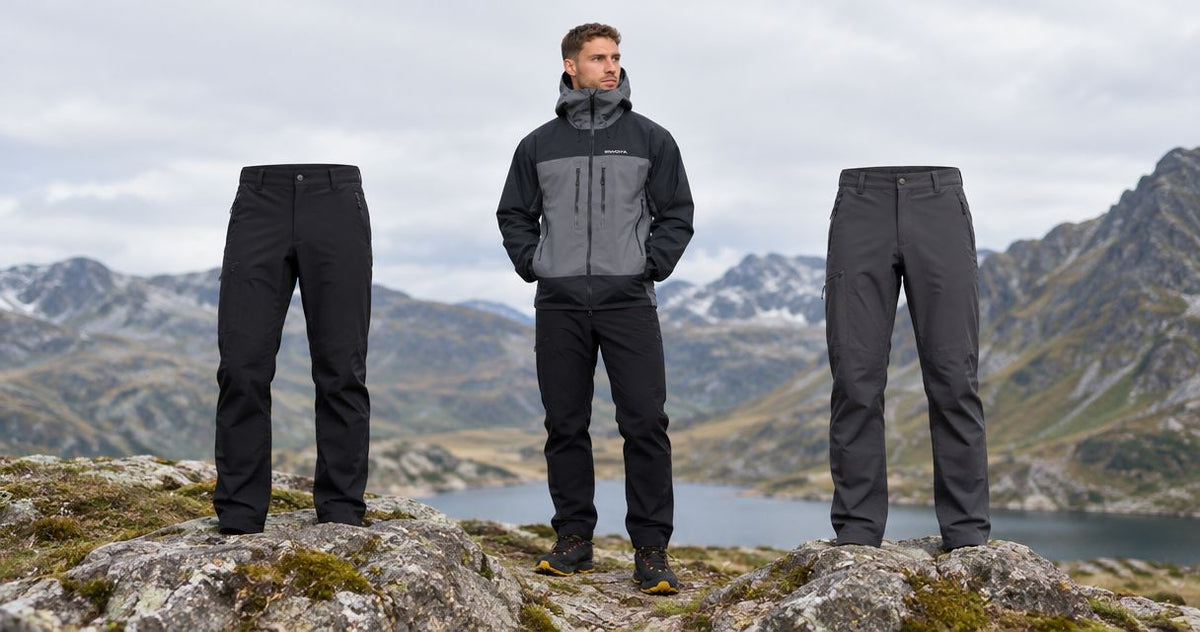
Swoya describes Ranger Pants as durable softshell trousers with light insulation for year-round performance. That supports considering them when you want those characteristics, but does not establish waterproof protection. Do not treat softshell trousers as a substitute for separately verified waterproof legwear.
For the SS1 Hardshell jacket, confirm the exact construction, ventilation and fit against your route requirements. Its alpine design brief is relevant; it is not a replacement for those checks. The jacket and Ranger Pants perform different jobs and should be assessed separately.
The products below are relevant starting points for that assessment, not a complete multi-day equipment list. Match each garment to the conditions in which you will wear it, including the warmest sustained ascent and the coldest planned stop.
Check the complete combination:
- Wear your intended walking trousers during the fitting session.
- Confirm shell coverage over the trouser waistband.
- Plan waterproof leg protection independently of softshell comfort.
- Check insulation fit beneath the jacket without compressing movement.
- Keep clothing needed during the day accessible in your pack.


Compare your jacket options
Choose by role first, then verify the exact garment. This comparison separates useful starting points without assuming that every jacket within a category shares the same construction or features.
| Option | Best for | Practical advantage | Key limitation |
|---|---|---|---|
| Your existing waterproof | Hikers whose current jacket passes condition and fit checks | You can assess familiar controls and pack compatibility directly | Previous comfort does not establish its present condition; inspect and maintain it |
| Lightweight waterproof shell | Hikers making carried weight a selection criterion | Gives you a category to assess when reducing pack weight | The lightweight label alone establishes neither protection nor durability |
| SS1 Hardshell jacket | Men assessing a shell designed for alpine climbing, expeditions and winter mountaineering | Its stated design purpose addresses technical mountain use | Design intent alone does not confirm route suitability; verify specifications and fit |
| Softshell jacket | Hikers seeking a moving layer rather than assuming waterproof protection | Separates walking comfort from the rain-shell role | Do not rely on it as waterproof protection without an explicit supporting specification |
Swoya's SS1 Hardshell jacket belongs in a feature-and-fit comparison, not an unsupported ranking above other brands. For your 2026 decision, retain the option that meets your documented requirements rather than the one with the most technical description.
Common mistakes multi-day hikers make
Buying for the easiest section
A jacket that feels comfortable on a sheltered approach still needs to function on the exposed part of your itinerary. Assess the complete route, including stops and changes in weather, before narrowing your shortlist.
Treating a rating as a complete verdict
A hydrostatic-head figure describes one measured property, not the fit or operation of the garment. Keep it alongside seam construction, coverage and loaded-pack access rather than making it the sole deciding factor.
Checking fit without the walking load
A hip belt can cover pockets, and shoulder straps can change how fabric sits. Repeat the fitting session with the rucksack, layers and gloves you intend to use; an unloaded shop-floor check leaves those interactions untested.
Expecting one layer to manage every condition
A shell and an insulating layer serve different functions. Leave room to adjust warmth beneath the waterproof, and assess softshell trousers separately from waterproof leg protection rather than extending one garment's description to the whole outfit.
FAQ
What's most important in a waterproof jacket for multi day hiking?
Prioritise rain protection, loaded-pack fit and usable heat management together. A waterproof rating alone does not establish whether the hood, pockets and adjustments work with your equipment.
Is a higher waterproof rating always better for hiking?
A higher hydrostatic-head rating indicates greater resistance to water pressure under comparable test conditions, not automatically a better hiking jacket. Construction, coverage, movement and ventilation still need separate checks.
Should I size up my waterproof jacket for a multi-day walk?
Choose the size that accommodates your intended layers without restricting movement or leaving the hood difficult to control. Test your normal size and alternatives with a loaded rucksack rather than automatically sizing up.
Is the SS1 Hardshell jacket suitable for my hiking trip?
The SS1 Hardshell jacket is designed for alpine climbing, expeditions and winter mountaineering. Confirm its exact specifications, ventilation and loaded-pack fit against your route before choosing it for a multi-day walk.
Are Ranger Pants waterproof trousers?
Ranger Pants are described as durable softshell trousers with light insulation, not as verified waterproof legwear. Assess your need for separate waterproof trousers independently.
Why am I damp inside my waterproof jacket?
Dampness can come from perspiration, water entering through openings or a problem with garment protection. Check where moisture appears, how hard you were working and whether the hood, cuffs and closures were secured before identifying the cause.
Do I need to replace my current waterproof before a multi-day hike?
Replacement is not automatic if your current jacket meets your route, condition and fit requirements. Inspect it, follow its care instructions and practise using it with your walking load before deciding.
One last thing
The most revealing fit check happens after you tighten your hip belt. Put the items you need during the day where you intend to carry them, then try to retrieve them with the jacket fully closed and hood adjusted.
If access requires removing your rucksack or opening the jacket extensively, resolve that interaction before departure. Moving an item to an accessible location can address an equipment problem without changing the shell. Your final decision should cover how the jacket works within the whole walking system, not how it performs as an isolated purchase.