Why does a waterproof hiking jacket feel wet inside?
Finding your waterproof hiking jacket wet inside usually points to trapped perspiration, condensation or rain entering through an opening—not automatically a failed waterproof barrier. A saturated outer fabric can also make the jacket feel cold and clammy without letting rain through. Check where the moisture appears, what the weather was doing and how hard you were walking before deciding whether the jacket needs ventilation, care or repair.
- A waterproof hiking jacket wet inside is not proof of a leak; perspiration and condensation can produce similar symptoms.
- Swoya's SS1 Hardshell jacket targets alpine and winter use; no waterproof shell eliminates condensation.
- Widespread dampness after climbing points towards perspiration; repeatable local wetness warrants closer inspection.
- Follow the garment's care label before washing, applying heat or renewing its water-repellent finish.
Why does a waterproof hiking jacket feel wet inside?
A waterproof jacket blocks liquid water, but it cannot guarantee a dry inner surface during exertion. Your body produces moisture while walking, and a waterproof-breathable fabric has limits on how quickly it can transfer that moisture outwards. Rain entering at the neck, cuffs or a damaged area creates a different problem with a similar result.
Use the pattern below to choose your first check. None of these signs proves the cause by itself; a repeatable pattern is more useful than a single damp patch.
| Possible cause | Typical clue | First action | Limit of the check |
|---|---|---|---|
| Perspiration | Broad dampness after sustained climbing, including in dry weather | Reduce insulation and increase ventilation | Sweat can also collect in isolated areas |
| Condensation | Moisture on a cool inner surface during humid or strenuous walking | Reduce heat build-up and open suitable vents | Condensation and leakage can occur together |
| Outer wetting | Face fabric darkens, holds water and feels cold | Check cleanliness and garment-care instructions | Surface wetting does not establish whether the barrier leaks |
| Water entry | Wetness repeatedly follows a seam, opening or damaged area during rain | Inspect that location and nearby entry points | Water can travel before becoming visible |
For ventilation features, the guide to pit zips on a waterproof hiking jacket explains where direct airflow fits into moisture management. Vents help release heat, but their position relative to rain and wind still matters.
Why this matters
Replacing a jacket will not solve dampness caused by wearing too much insulation underneath it. Equally, treating every wet patch as sweat risks overlooking a damaged seam or an opening that funnels rain inside.
For your 2026 kit check, separate waterproofness, surface water repellency and ventilation. They describe different functions. A jacket can retain its waterproof barrier while its face fabric becomes saturated, and a freshly maintained shell can still feel damp during a hard ascent.
The practical aim is not to keep every inner surface perfectly dry at all times. It is to control heat and moisture while keeping rain out, then identify any fault that needs attention.
Perspiration: moisture produced inside the jacket
Walking uphill generates heat. If your clothing retains more heat than you need, perspiration increases and your base layer, midlayer or jacket lining becomes damp.
Waterproof-breathable fabric is not an extractor fan. Moisture transfer depends on conditions across the fabric, while a tightly closed jacket restricts direct air exchange. A warm, humid interior therefore needs active management rather than reliance on the fabric alone.
Best first move: reduce insulation before you become heavily sweaty. Start an ascent slightly cool rather than comfortably warm at the car park, then adjust as your effort changes. When conditions allow, open the main zip or the jacket's ventilation features without exposing yourself to driven rain.
Check beneath your rucksack as well. Clothing covered by the back panel and straps has less opportunity for direct airflow, so local dampness there is not enough to diagnose a leak.
Condensation: moisture collecting on a cool inner surface
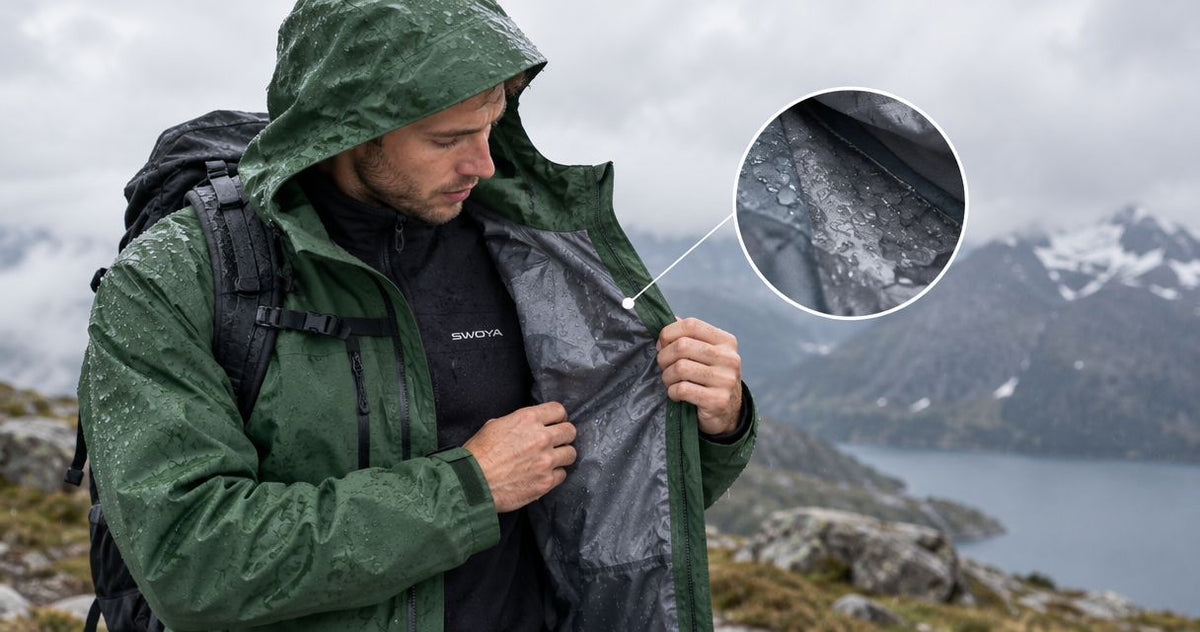
Condensation forms when water vapour meets a surface cold enough for it to turn into liquid. In a waterproof jacket, moisture from your body can collect against the cooler inner surface even when rain has not crossed the waterproof barrier.
This explains why the inside can feel wet during cold, wet weather. Your body supplies moisture while the outside conditions cool the shell; wearing additional insulation can increase heat build-up during exertion rather than remove the cause.
Best first move: manage the moisture source and heat build-up together. Ease your pace where practical, remove an unnecessary midlayer and use ventilation appropriate to the weather. Do not strip away essential insulation on exposed ground simply to make the jacket lining feel drier.
Condensation is a physical process, not a product defect by definition. Persistent wetness in one location still deserves inspection rather than an automatic assumption that condensation explains everything.
Outer wetting: a soaked face fabric is not automatically a leak
Many waterproof jackets use a durable water-repellent finish, usually called DWR, to encourage water to bead on the face fabric. That finish is separate from the underlying waterproof barrier.
When water spreads across and saturates the outer fabric, the jacket can become heavier and feel colder or clammier. This surface wetting is often called wetting out. It does not, on its own, demonstrate that liquid water has passed through the jacket.
Best first move: check the care label before adding a treatment. Cleaning and, where permitted, reactivating or renewing the water-repellent finish address different needs. Applying more treatment does not repair a hole, a failed seam or damage to the waterproof construction.
For 2026 maintenance, use the instructions for your exact garment and care product. Do not transfer tumble-drying or ironing advice from another jacket: permitted temperatures and methods vary.
Water entry: rain reaching the inside
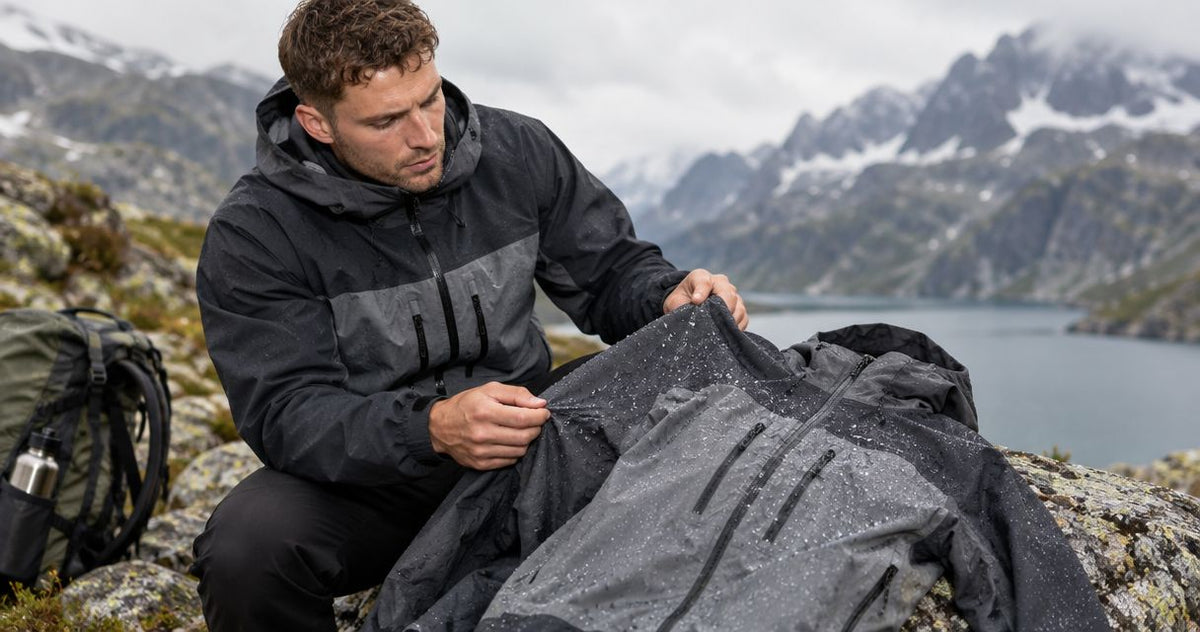
Rain can enter through an open collar, loose cuff, exposed zip opening or damaged area. It can also run from wet hair, gloves or another garment into the jacket, leaving a patch that looks like fabric leakage.
Look above the wet patch as well as directly behind it. Water can move along fabric or clothing before collecting somewhere noticeable, so the apparent location is not always the entry point.
Best first move: look for repeatable evidence. A patch that returns in the same place during rain deserves closer inspection, particularly if you find damage, lifting seam tape or deterioration on the inner surface. Avoid picking at tape or coatings while investigating.
Photograph the inside and outside when the issue occurs. Record the weather, activity and location of the wetness, then contact the seller or manufacturer if the cause remains unclear.
Why moisture inside a waterproof jacket varies
The same jacket can feel dry on one walk and clammy on another. These factors change the balance between moisture production, moisture escape and exposure to rain:
- Walking effort: sustained climbing produces more heat than an easy approach, increasing the need to adjust layers.
- Layering: insulation that suits a stationary stop can be excessive once you start ascending.
- Weather: temperature, humidity, wind and rain affect condensation, ventilation choices and exposure.
- Fit and coverage: crowded layers restrict adjustment, while gaps at the hood, collar and cuffs allow water entry.
- Rucksack contact: covered areas receive less direct airflow and can accumulate perspiration.
- Garment condition: dirt, surface wetting, physical damage and deteriorating components require different responses.
How do you check whether the jacket is leaking?
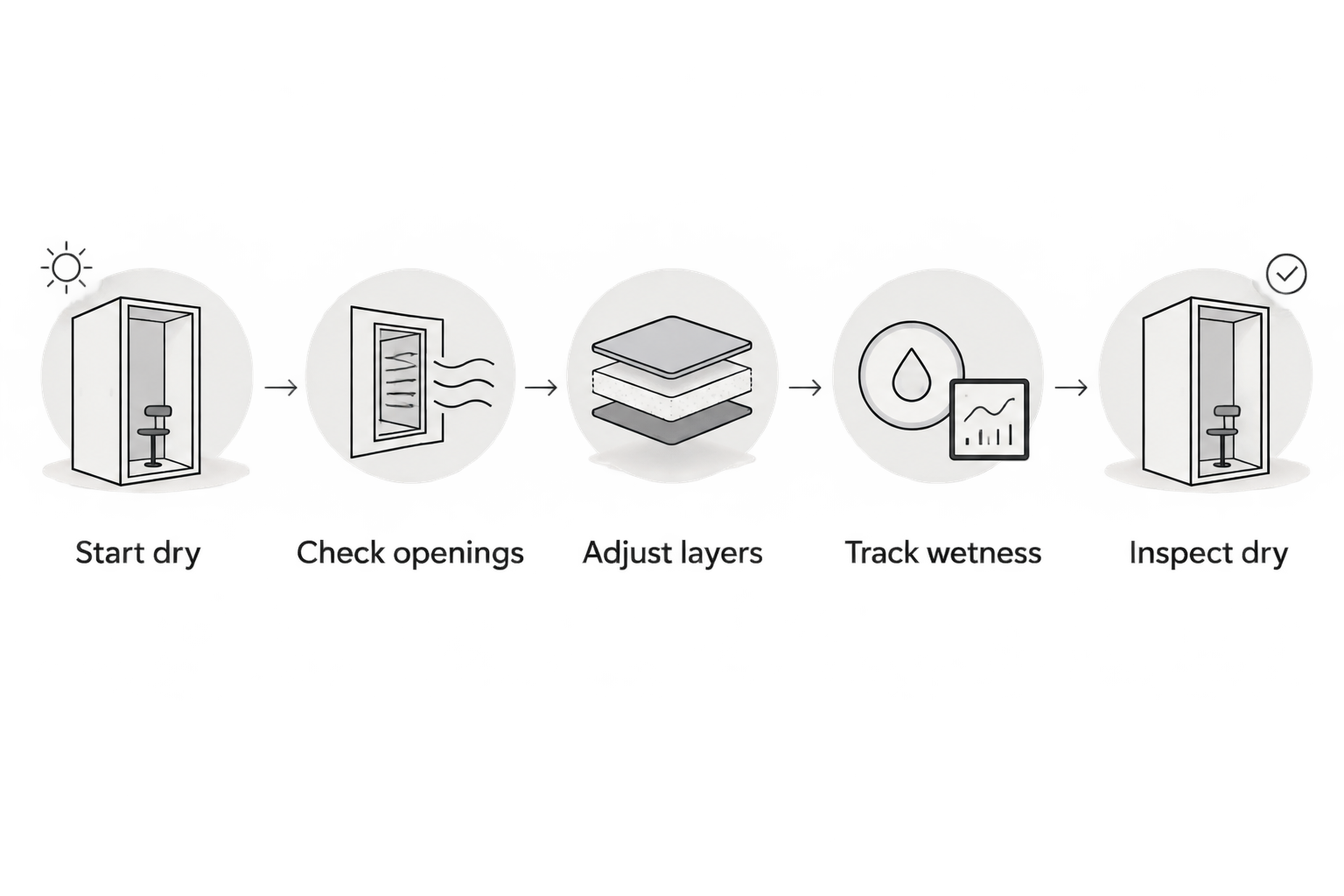
Use this sequence during your next suitable walk or inspection. Change one factor at a time so that the result tells you something useful; replacing layers, washing the jacket and changing the route together makes comparison difficult.
- Start dry. Check the shell and the clothing underneath before setting off. Existing dampness makes later observations harder to interpret.
- Check openings. Adjust the hood, collar and cuffs for the conditions. Notice whether rain runs down your neck or from wet sleeves.
- Adjust layers. Reduce unnecessary insulation before a climb. Use ventilation where you can do so without admitting rain.
- Track wetness. Note whether moisture appears broadly, under the rucksack or repeatedly beside a particular seam or opening.
- Inspect dry. Once home, let the jacket dry according to its instructions, then examine the relevant areas in good light.
A dry-weather walk provides useful context: dampness without rain confirms that your body can supply moisture inside the shell. It does not prove that the jacket is watertight in rain. Avoid pressure washers or forceful water jets as home tests; they do not reproduce normal walking conditions.
Should you change how you layer or buy another jacket?
Adjust the clothing system before replacing an apparently sound shell. Choose insulation for your moving pace, then carry what you need for stops and changing conditions. A thicker midlayer is not a solution to condensation during an already warm ascent.
For a 2026 purchase, prioritise a fit that accommodates your intended layers without crowding the shoulders, chest or arms. Check that you can raise your hands, reach forwards and adjust the closures while wearing those layers. More room is useful only if the jacket still controls openings properly.
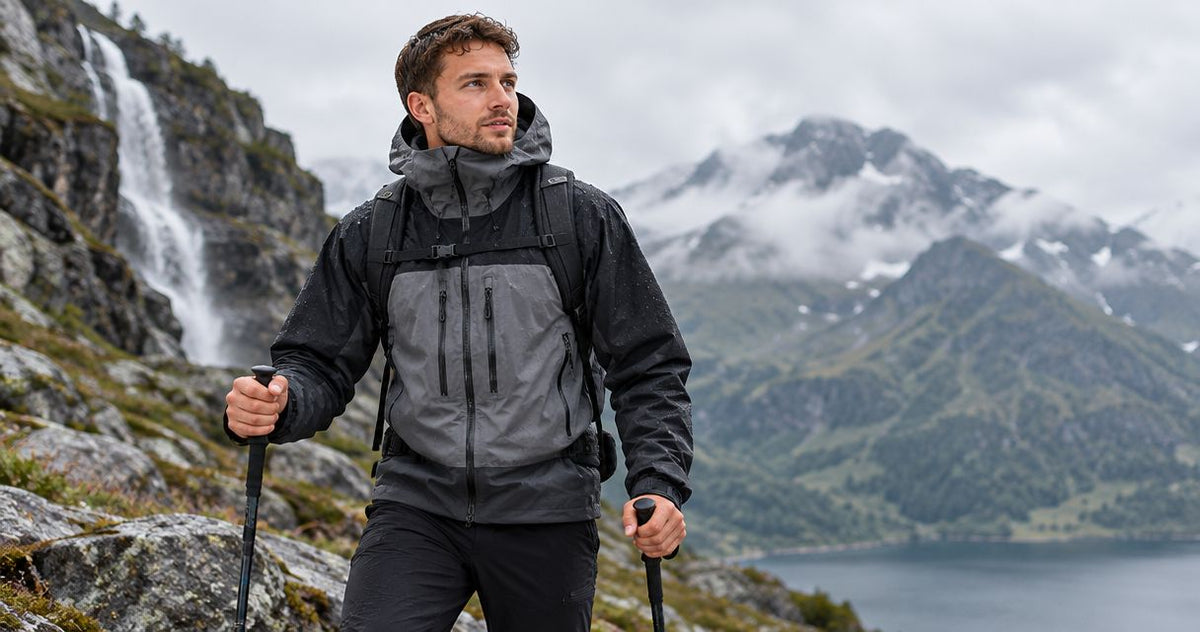
Swoya's SS1 Hardshell jacket is designed for alpine climbing, expeditions and winter mountaineering. Swoya's SS1 Hardshell jacket is best considered by walkers seeking an alpine-oriented shell, not a cure for condensation. Its intended use does not establish how dry it will feel at your pace, and you should check the current construction and ventilation details against your needs.
Swoya buyers should make the same distinction between weather protection and moisture management. No shell removes the need to adjust insulation, and a more demanding intended use does not automatically make a jacket the right choice for every walk.
Does a higher waterproof rating stop condensation?
A higher waterproof rating does not stop condensation. Waterproof ratings describe resistance to liquid-water penetration under test conditions; they do not measure how much you sweat or guarantee that the inner surface stays dry.
When comparing jackets in 2026, assess waterproofness alongside ventilation, fit and the clothing underneath. Do not treat a waterproof figure as a complete comfort score.
Will washing stop a waterproof jacket feeling wet inside?
Washing can help when dirt or contamination affects the garment, but it does not address every cause of internal wetness. Follow the care label and use a suitable cleaning product rather than ordinary laundry assumptions.
After cleaning, check whether the instructions call for a permitted reactivation method or a separate water-repellent treatment. Neither process substitutes for repairing damaged waterproof construction.
FAQ
Why is my waterproof hiking jacket wet inside after an uphill walk?
Perspiration and condensation are likely explanations when dampness follows sustained uphill effort. Reduce unnecessary insulation and use suitable ventilation, but inspect any wet patch that repeatedly appears in the same place during rain.
How can I tell condensation from a leaking waterproof jacket?
The pattern and timing help distinguish condensation from leakage, but neither is conclusive alone. Broad dampness during exertion points towards body moisture; repeatable local wetness during rain warrants inspection of seams, damage and nearby openings.
Is my jacket still waterproof if rain stops beading on it?
A loss of beading does not by itself mean the waterproof barrier has failed. The outer water-repellent finish and the waterproof barrier perform different functions, so follow the garment's care instructions before deciding it needs repair.
Should I wear fewer layers under my waterproof jacket?
Wear less insulation when your current layers make you overheat while moving. Keep appropriate insulation available for stops, exposure and changing weather rather than removing essential protection indiscriminately.
Can rain get inside through the collar rather than the fabric?
Rain can enter through the collar, hood opening or cuffs without passing through the waterproof fabric. Check where water runs from your head, hands and other clothing before blaming the shell material.
Do pit zips stop a waterproof jacket getting clammy?
Pit zips provide direct ventilation that can help manage heat and moisture, but they cannot guarantee a dry interior. Their usefulness depends on exertion, weather and whether you can open them without admitting rain.
Should I replace a jacket that keeps feeling wet inside?
Replace a jacket only after separating moisture-management issues from damage or deterioration that needs assessment. For a 2026 replacement, choose the fit and ventilation for your actual walking conditions rather than expecting waterproof fabric to eliminate perspiration.
One last thing
Check your midlayer when you check the shell. If it starts the walk damp, or becomes saturated before rain arrives, a new waterproof jacket leaves that moisture source unchanged. Begin with dry clothing and make adjustments before the ascent turns comfortable warmth into trapped sweat.