How do you wash a waterproof hiking jacket safely?
To wash a waterproof hiking jacket safely in 2026, follow its care label, use a compatible cleaner, rinse thoroughly and dry it only by an approved method. Avoid fabric conditioner and unapproved heat: cleaning removes contamination, but it does not repair damaged fabric, seams or waterproof construction.
- How to wash waterproof hiking jacket: follow the care label before choosing cleaner, wash settings or drying method.
- Swoya waterproof jacket care starts with the garment label, not a universal temperature or tumble-drying rule.
- Clean before reproofing; surface wetting alone does not prove the waterproof membrane has failed.
- Use heat to reactivate water repellency only when the garment's care instructions permit it.
Why this matters
A waterproof jacket has different jobs to perform. Its waterproof construction keeps rain out, while the outer fabric's water-repellent treatment helps droplets bead and roll away rather than soak into the face fabric.
Dirt, body oils and unsuitable laundry products interfere with that system. Regular care belongs alongside fit and ventilation in your 2026 kit routine; if you are also replacing a shell, start with how to choose a waterproof hiking jacket.
Wash according to the garment, not according to the word waterproof. Jackets use different fabrics, treatments and components, so a setting that suits one shell is not automatically suitable for another.
How do you wash a waterproof hiking jacket safely?
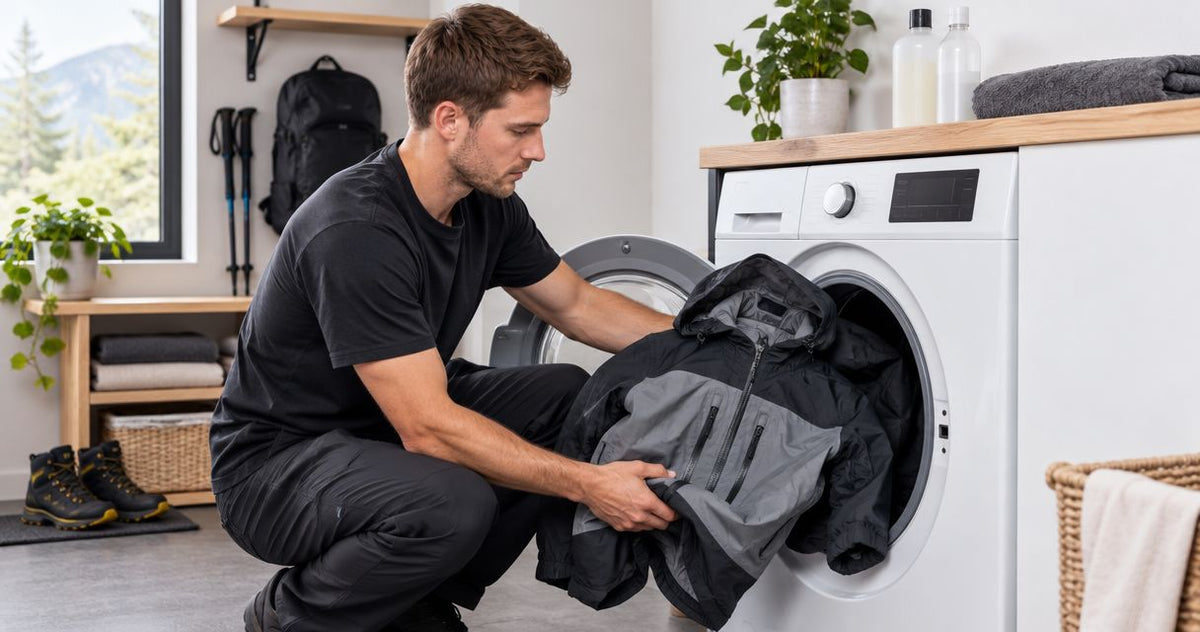
The safe sequence is inspection, preparation, washing, rinsing and approved drying. Check the garment label and the cleaner's directions together before starting; neither replaces the other.
1. Read the care label and inspect the jacket
Find the washing, bleaching, drying, ironing and professional-cleaning symbols. Check any written instructions as well. If the label is unreadable, get the manufacturer's instructions before choosing a programme.
Inspect the shoulders, cuffs, hood, hem and inside seams. Look for peeling seam tape, flaking material, tears and areas where bonded layers are separating; these need assessment rather than a stronger wash.
Empty every pocket and remove loose debris. Check detachable parts separately because a removable component does not necessarily share the shell's washing instructions.
2. Prepare the jacket and washing machine
Follow the garment instructions for zips, pocket closures, flaps and adjustment cords. Secure hook-and-loop fasteners so exposed hooks do not catch the fabric during washing.
Remove visible detergent and fabric-conditioner residue from the dispenser. Follow your washing machine's instructions for cleaning the drawer and accessible areas; do not dismantle anything beyond the machine's maintenance guidance.
Wash the shell separately from heavily soiled clothing, towels and items with exposed hooks. Give the garment room to move rather than forcing it into a packed drum.
3. Choose a compatible cleaner
Use a cleaner approved for the jacket's waterproof fabric and construction. A specialist technical wash is an option, but the garment instructions remain the deciding reference.
Measure the cleaner according to its directions for the machine, load and water conditions. Extra cleaner is not extra protection: it creates more residue to remove.
Do not add fabric conditioner. Avoid bleach, stain removers and other laundry additives unless the garment manufacturer explicitly permits them. Treat stubborn marks only with an approved method, rather than scrubbing the shell with a household cleaner.
4. Select the permitted wash programme
Set the temperature, agitation and spin according to the care label. There is no universal waterproof-jacket programme, and a machine's outdoor setting still needs checking against the garment instructions.
Do not assume that a hotter wash will restore performance. Heat tolerance depends on the complete garment, including seam tape, trims and bonded components, not just its main fabric.
If handwashing is required, follow the same rules on cleaner and temperature. Avoid aggressive rubbing, twisting or wringing; gentler handling does not make an unsuitable cleaning product safe.
5. Rinse thoroughly
Complete the rinse programme and check for obvious cleaner residue. Use an additional rinse when the cleaner or garment instructions call for one, rather than adding more product to solve a poor result.
Keep fabric conditioner out of the rinse stage too. If you accidentally use it, consult the jacket manufacturer's advice before trying repeated washes or further treatments.
6. Dry and check before reproofing
Use the drying method shown on the label. Air-dry when instructed; tumble-dry only when permitted, using the specified setting rather than choosing heat by guesswork.
Some water-repellent treatments respond to approved heat after washing. That is not permission to use a radiator, hairdryer or iron: use only the method the garment manufacturer allows.
Once the jacket is dry, assess its condition and surface water repellency. If the outer fabric still wets out after cleaning and any permitted reactivation, consider a compatible reproofing treatment.
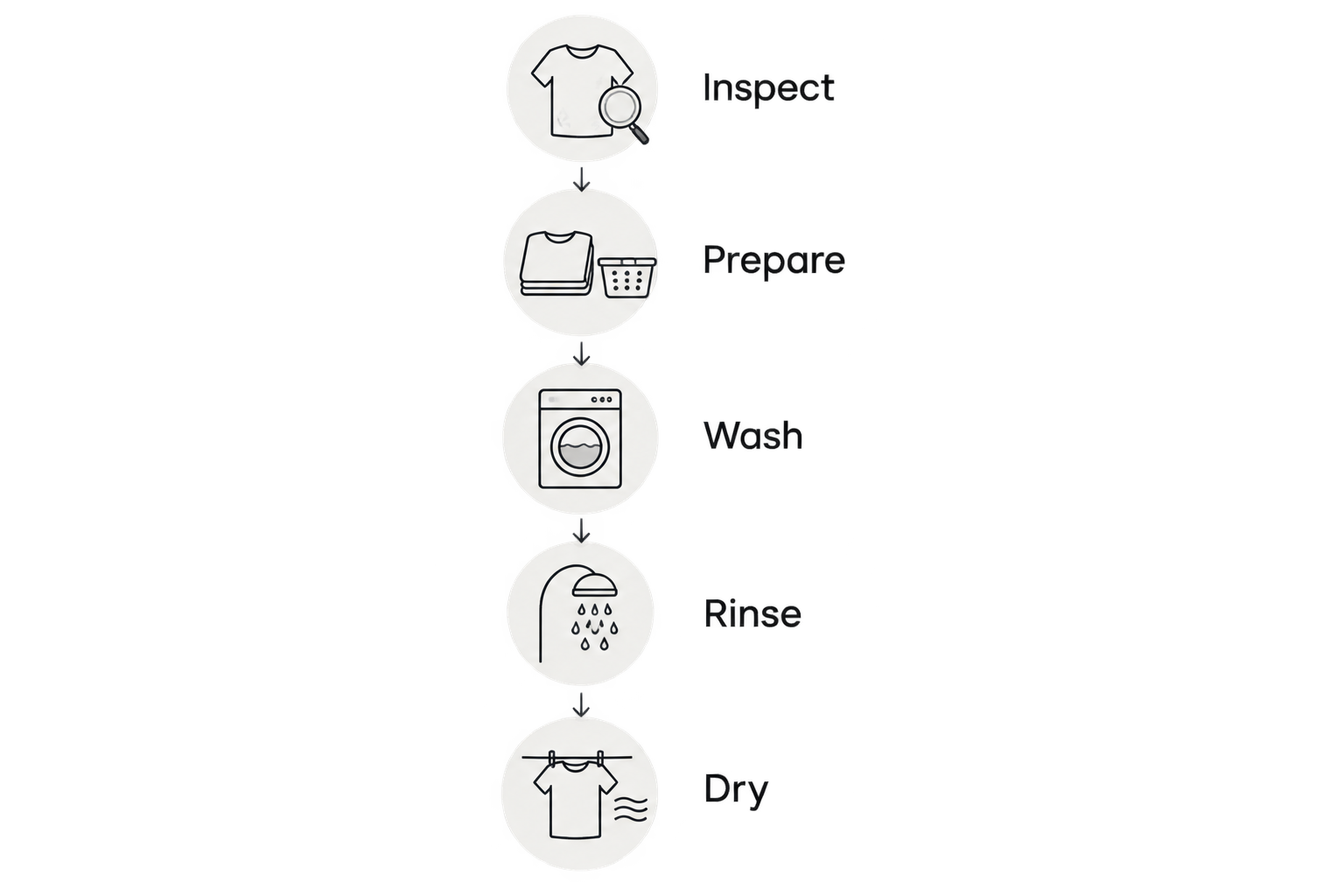
The sequence matters more than a particular cleaner name. Finish cleaning and approved drying before deciding whether the jacket needs another treatment.
Machine washing, handwashing and reproofing: different jobs
Choose the method by the care label, not by which sounds gentlest. Reproofing belongs after cleaning and is not a substitute for it.
| Method | Best for | Advantage | Limitation |
|---|---|---|---|
| Machine washing | Garments labelled as machine washable | Provides a controlled wash and rinse programme | The wrong programme, additives or overloaded drum can undermine safe care |
| Handwashing | Garments whose instructions specify or permit it | Lets you handle the shell directly without machine agitation | Thorough rinsing requires care; rubbing and wringing remain unsuitable |
| Reproofing | Clean garments whose surface repellency needs restoring | Renews the water-repellent treatment when correctly matched | Does not repair holes, failed seam tape or a damaged membrane |
The best method is the permitted method. Handwashing is not automatically safer, and reproofing a dirty jacket leaves the underlying contamination in place.
Why waterproof jacket care varies
Your 2026 washing routine should follow the jacket's construction and actual use. These factors explain why copying another walker's settings is unreliable:
- Fabric construction: membranes, coatings, linings and bonded layers require compatible cleaning and drying methods.
- Care-label restrictions: temperature, agitation, spin and drying permissions apply to the finished garment.
- Surface treatment: the water-repellent finish determines which reactivation or renewal instructions apply.
- Contamination: mud, sweat, body oils and previous laundry residue create different cleaning demands.
- Garment condition: loose seam tape, tears or separating layers need assessment; cleaning does not reverse structural damage.
- Use pattern: frequent, sweaty walks create a different care need from occasional outings with little contamination.
For Swoya waterproof jacket care, use the instructions supplied with the specific garment rather than transferring settings from another shell. The same principle applies when two jackets look similar but use different materials.
How often should you wash a waterproof hiking jacket?
Wash a waterproof hiking jacket when its care instructions and condition call for cleaning, rather than following a fixed calendar interval. Visible dirt, sweat contamination and deteriorating surface beading are reasons to check the garment and its care guidance.
After a muddy walk, remove loose dirt using an approved method before storage. After a sweaty walk, open the jacket and let it dry fully; leaving a damp shell compressed in a pack is not a care routine.
Build your 2026 maintenance around use. A jacket worn regularly through wet weather needs more frequent inspection than one kept clean and dry between occasional outings, but neither needs an invented wash schedule.
Does washing remove a jacket's waterproofing?
Correct washing is part of maintaining a waterproof jacket, not proof that you are stripping away its waterproof construction. The waterproof barrier and the outer water-repellent finish perform different functions.
When droplets stop beading, the face fabric can darken as it takes up water. That is surface wetting, often called wetting out; it does not by itself establish that rain is passing through the membrane.
Inspect what is happening inside the shell as well. Dampness can come from perspiration and condensation, while water entering through a damaged seam is a separate problem. Do not treat every damp patch as a reason to add more reproofing.
Should you tumble-dry a waterproof hiking jacket?
Tumble-dry a waterproof hiking jacket only when its care label permits it. Use the stated setting and follow any instructions on the compatible cleaning or reproofing product.
If tumble-drying is prohibited, air-dry as directed. Do not replace the tumble dryer with concentrated heat from a radiator or another appliance; an improvised heat source is not equivalent to an approved drying method.
Check the label again during your 2026 kit-care review, especially if you own several shells. Remembering the instructions for one jacket is not enough when another garment has different restrictions.
What should you check before wearing it again?
Let the jacket dry completely, then inspect its closures, seams and fabric in good light. Check that zips operate normally and that no cleaner residue remains around folds or cuffs.
Assess surface beading using the manufacturer's guidance. If water repellency still needs attention, choose a treatment approved for the garment and follow its application instructions without combining products at random.
Swoya is for UK men seeking technical outdoor clothing for everyday exploration. Care supports that regular use, but it cannot change a garment's intended role or repair worn-out construction.
Keep the distinction clear when reviewing your kit: cleanliness, surface repellency and waterproof integrity are separate checks. A clean-looking shell does not automatically pass all of them.
FAQ
Can I use ordinary laundry detergent on a waterproof hiking jacket?
Use ordinary laundry detergent only if the jacket manufacturer permits that detergent type. Otherwise, choose a compatible technical cleaner and follow its dosing instructions; do not add fabric conditioner.
What's the safest wash temperature for a waterproof hiking jacket?
The safest wash temperature is the one specified on the garment's care label. Do not copy a temperature from another jacket or assume your washing machine's outdoor programme is suitable.
Do I need to reproof my jacket every time I wash it?
You do not need to assume reproofing is required after every wash. Clean and dry the jacket as directed, complete any permitted reactivation, then assess its surface water repellency.
Can I dry my waterproof jacket on a radiator?
Do not use a radiator unless the garment manufacturer explicitly approves that drying method. Follow the label's air-drying or tumble-drying instructions instead of applying concentrated heat.
Why does my waterproof jacket feel damp inside after washing?
Dampness inside a waterproof jacket does not identify a single cause. Check that it dried fully, then distinguish perspiration or condensation during use from water entering through damaged fabric or seams.
What should I do if seam tape is peeling?
Peeling seam tape needs assessment rather than another wash or a reproofing treatment. Ask the manufacturer or a suitable repair specialist about the garment's condition before relying on it in rain.
Has the safe way to wash a waterproof jacket changed in 2026?
In 2026, the garment's current care instructions remain the reference for safe washing. Check those instructions and the chosen cleaner's directions rather than treating a general guide as permission for a particular temperature or drying method.
One last thing
Photograph the care label while it is still readable and keep the image with your kit information. Include any separate care instructions supplied with the garment; those details are easier to find before the jacket is wet and waiting beside the washing machine.
Check the label before the detergent goes in. That single habit prevents the most avoidable decision in jacket care: choosing a wash first and checking compatibility afterwards.